

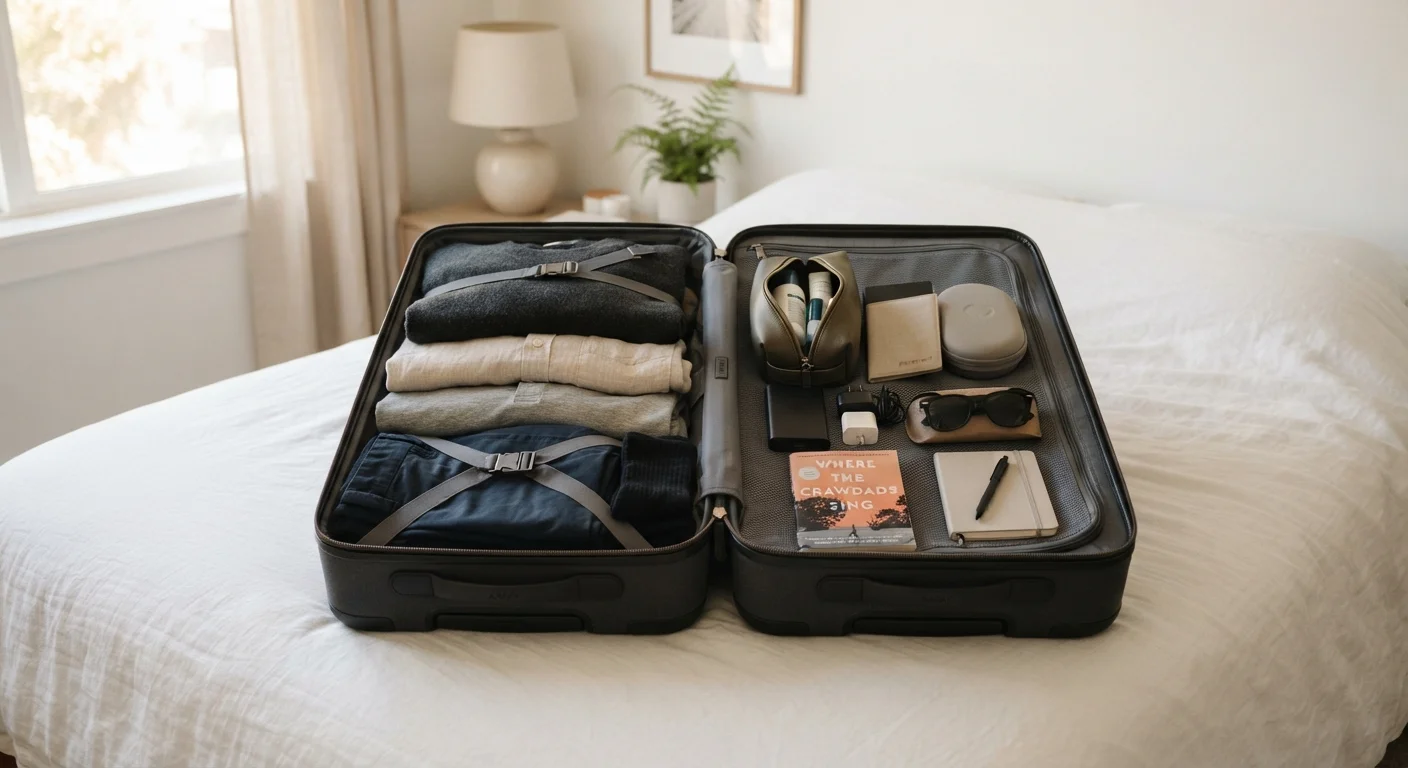
Key Takeaways
- The carry-on only mindset is a philosophy first — the packing decisions follow from it.
- Most travelers overpack out of anxiety, not genuine need.
- Versatile clothing choices and intentional editing are the core practical skills involved.
- Avoiding checked bags can save time, money, and the stress of lost luggage.
- Cold-weather and longer trips require more planning but are still achievable with the right approach.
Carry-On Only Mindset
The carry-on only mindset is a packing philosophy that challenges travelers to fit everything they need for a trip into a single bag that meets airline cabin size limits — eliminating the need to check luggage. It's less about fitting into a strict bag size and more about questioning which items genuinely earn their place in your bag. The shift is as much psychological as it is logistical.
Most US carriers allow a carry-on up to approximately 22 x 14 x 9 inches, though limits vary. Always verify dimensions with your specific airline before travel.
What the Carry-On Only Mindset Actually Means
The phrase "carry-on only" is often treated as a logistical constraint — something you either can or can't pull off based on trip length or destination. That framing misses the point. The carry-on only mindset is a deliberate shift in how you think about what travel actually requires, and it starts before you open your closet.
At its core, it's about honest self-assessment: distinguishing between items you'll use and items you're packing as insurance against remote possibilities. Most seasoned travelers reach the same conclusion — the things they worried about leaving behind rarely mattered once they arrived. What slowed them down was the weight they chose to carry.
This philosophy sits within a broader continuum of light-travel approaches. For a deeper look at where carry-on only fits relative to more minimalist methods, the one-bag travel philosophy offers a useful contrast. And if you want to understand the habits and anxieties that drive overpacking in the first place, why overpacking happens covers that ground directly.
The Real Cost of Checked Luggage
Checked bags aren't just a line item on an airline receipt — they shape the entire travel experience. Time spent at the check-in counter, at baggage claim, and in the anxiety of waiting for bags to appear on the carousel adds up across a trip. When bags are delayed or lost, the disruption can derail the first day or more of travel entirely.
There's also a less obvious cost: the psychological weight of managing more stuff. More luggage means more to keep track of, more to move through transit systems, and less flexibility to change plans on the fly. Travelers who switch to carry-on only often report that the freedom of movement is the benefit they didn't anticipate.
28%
Checked bags that arrive delayed or damaged
According to the U.S. Department of Transportation's Air Travel Consumer Report, mishandled baggage rates vary by carrier, with industry-wide figures historically ranging in the low single-digit percentages per 1,000 passengers — though individual trip risk perception is often higher.
$35–$40
Typical one-way checked bag fee
Most major US carriers charge between $35 and $40 for the first checked bag on domestic routes as of recent published fee schedules; fees vary by airline, fare class, and loyalty status.
20–30 min
Average time spent at baggage claim
Industry estimates suggest domestic passengers typically wait 20 to 30 minutes for bags to appear at baggage claim, with international arrivals often longer.
For travelers focused on reducing trip costs overall, avoiding checked bag fees is one of the more straightforward levers available. The saving on travel hub covers a wider range of strategies for cutting costs before and during a trip.
How to Actually Edit Your Packing List
The practical work of adopting a carry-on only approach comes down to one repeated question: does this item solve a problem I'm likely to encounter? Not a possible one — a probable one.
Start by building a full packing list without any constraints, then evaluate each item against three criteria: frequency of use, replaceability at the destination, and weight-to-value ratio. Items that score low on all three are the first to go. A second pair of dress shoes for a trip that involves one formal dinner, for instance, rarely survives honest scrutiny.
Clothing choices are where the most space is recovered. A versatile wardrobe built around neutral colors and mix-and-match pieces reduces total item count without reducing outfit options. Fabrics that resist wrinkles and odors extend the life of each garment between washes. For trips to colder destinations, the approach to packing light for cold weather shows how layering logic can replace bulk.
Toiletries are another high-yield area. Solid shampoos, concentrated products, and decanting into small containers all reduce volume. Common packing beliefs around toiletry rules often backfire — toiletry packing myths is worth reviewing before your next security line experience.
Try the Two-Week Rule Before Your Next Trip
Pull out everything you're planning to pack, then set it aside for 48 hours. When you return to the pile, remove anything you didn't think about during that time. Items that don't stay top of mind are rarely items you'll miss in the field. This simple delay introduces a useful filter between impulse packing and intentional packing.
Setting Yourself Up Before You Board
Committing to carry-on only isn't just about what goes in the bag — it's about how the bag is organized. A well-structured carry-on keeps necessities accessible and maximizes usable space. Tools like packing cubes don't create space, but they impose order that makes the most of what's available. The full picture on packing cubes clarifies exactly what they do and don't accomplish.
What goes in your bag matters, but so does the bag itself. Size, weight, and structure all affect how much you can realistically carry. The specs that matter when choosing a travel bag gives a clear breakdown of what to look for.
Once the bag is packed, a final check against a core essentials list is worth the two minutes it takes. For a practical rundown of what belongs in a carry-on before you board, see what every carry-on should have. And for travelers building a system that works across multiple trips rather than repacking from scratch each time, building a capsule packing system is a natural next step.