

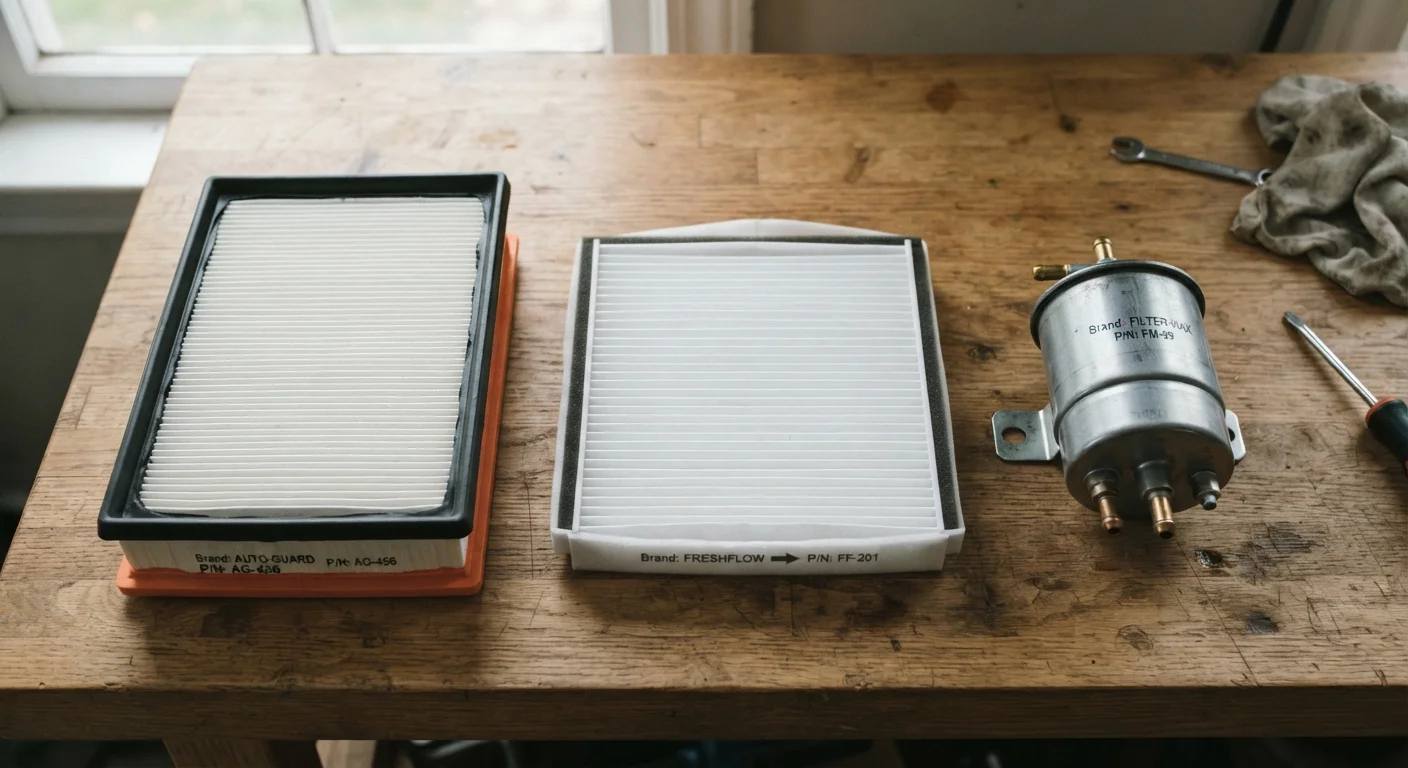
Key Takeaways
- The engine air filter, cabin air filter, and fuel filter each serve a completely different purpose in your vehicle.
- A clogged engine air filter can reduce performance and fuel efficiency over time.
- The cabin air filter affects the air quality you breathe inside the car - not engine function.
- Fuel filters protect fuel injectors from debris and are often overlooked during routine maintenance.
- Each filter has its own replacement interval; check your owner's manual for your specific vehicle.
Three Filters, Three Jobs
Most drivers know their car has filters - but it's surprisingly common to mix up what each one actually does. Replace the wrong filter at the wrong time, or skip one entirely, and you may be leaving real problems unaddressed. Understanding the difference between the engine air filter, the cabin air filter, and the fuel filter gives you a clearer picture of how your car stays clean and running well.
These three filters work in different systems, catch different contaminants, and fail in different ways. None of them is interchangeable with the others. This guide breaks down each one plainly so you know what you're dealing with - whether you're doing the work yourself or discussing service options with a mechanic. For broader context on when these replacements fit into your overall service routine, see your car's maintenance schedule explained.
Engine Air Filter: Protecting Combustion
The engine air filter sits in the air intake system - typically inside a plastic housing under the hood. Its job is straightforward: it prevents dust, pollen, insects, and airborne debris from entering the engine's combustion chambers.
Internal combustion engines mix air with fuel to generate power. If dirty or unfiltered air enters the engine, abrasive particles can wear down cylinder walls, pistons, and other precision components over time. The air filter is the first line of defense against that wear.
Signs it may need replacing:
- Reduced acceleration or a sluggish throttle response
- Slightly lower fuel efficiency than usual
- A visibly grey or black filter element when you pull it out for inspection
- Occasional rough idling
Most manufacturers recommend inspecting the engine air filter every 15,000 to 30,000 miles, though this varies by vehicle and driving environment. The filter itself is generally accessible without special tools, making visual inspection a reasonable DIY task for most drivers.
The engine air filter keeps abrasive debris out of combustion chambers, protecting critical engine components.
Cabin Air Filter: Protecting You
The cabin air filter is completely separate from the engine air filter - it has nothing to do with how the engine runs. Instead, it filters the air that flows through your car's heating, ventilation, and air conditioning (HVAC) system into the passenger compartment.
It catches pollen, dust, mold spores, and other fine particles before they enter the cabin. For drivers or passengers with allergies or respiratory sensitivities, a functioning cabin air filter can make a meaningful difference in day-to-day comfort.
Signs it may need replacing:
- Reduced airflow from the vents even at high fan settings
- Musty or unpleasant odors when the HVAC system is running
- Increased dust accumulation on the dashboard
- Allergy symptoms that seem worse inside the car than outside
Cabin air filters are commonly located behind the glove box or under the dashboard. Many are accessible without tools, though the exact location varies by vehicle model. Replacement intervals are typically 15,000 to 25,000 miles, but check your owner's manual for the figure specific to your car.
The cabin air filter protects the air you breathe inside the car - not the engine.
Fuel Filter: Protecting Fuel Delivery
The fuel filter sits along the fuel line between the fuel tank and the engine. Its role is to strain out rust particles, sediment, and other contaminants that can make their way into the fuel supply. Without it, those particles could reach and damage the fuel injectors - the precision components that spray fuel into the engine.
Modern fuel-injected engines are particularly sensitive to fuel contamination. Injectors have very small openings, and even minor debris buildup can affect how fuel is atomized (broken into a fine spray) and delivered to the engine.
Signs it may need replacing:
- Hard starting or longer cranking time before the engine fires
- Engine sputtering or hesitation under acceleration
- Stalling, especially at low speeds or idle
- Noticeable loss of power when the engine is under load
On many modern vehicles, the fuel filter is integrated into the fuel pump assembly inside the tank, which makes it a job for a qualified mechanic rather than a DIY task. On older vehicles with an accessible inline fuel filter, replacement intervals are often around 30,000 miles - but again, your owner's manual is the authoritative source. Car maintenance myths that waste your money covers why skipping service items like this can cost more in the long run.
A clogged fuel filter can starve the engine of clean fuel, leading to hard starts and hesitation.
Knowing When to Act
None of these filters fail suddenly with an obvious alarm - they degrade gradually, which makes it easy to miss the signs until a problem is already affecting your driving experience or your car's health. Staying familiar with the symptoms described above gives you a practical edge.
Make Filter Checks Part of Your Routine
When your vehicle goes in for an oil change, ask the technician to visually inspect all three filters at the same time. Engine and cabin air filters are usually easy to pull and check in seconds. Catching a clogged filter early costs far less than addressing the downstream damage it can cause.
Keep in mind that driving conditions matter. Vehicles regularly driven on dusty rural roads, through heavy traffic, or in areas with poor air quality may need filter replacements more frequently than the standard intervals suggest. Always treat your owner's manual as the baseline, then adjust based on your real-world conditions.
If you're working to understand your vehicle more fully, fluid checks every driver should know is a natural next step - many of the same visual inspection habits apply there too. And if you've ever wondered whether filter neglect actually hurts fuel economy, it's worth reviewing fuel economy myths that are quietly costing you money to separate fact from fiction.
This article is intended for general informational purposes. Always consult your vehicle's owner's manual and, where appropriate, a qualified mechanic before performing maintenance tasks.