

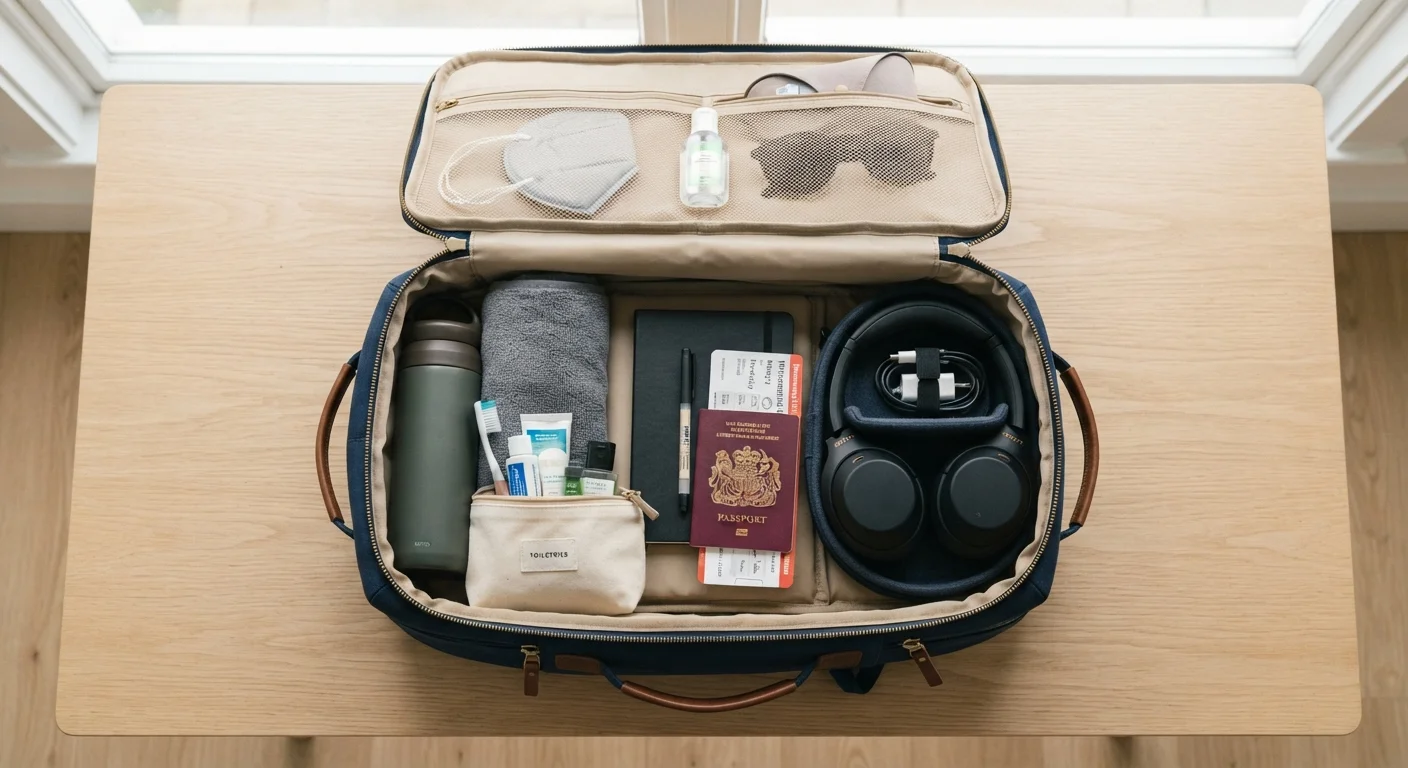
Key Takeaways
- Pack your carry-on assuming checked luggage may be delayed or lost — it sometimes is.
- A small personal item bag can hold the highest-priority essentials within arm's reach during the flight.
- Comfort items are not luxuries on long-haul or delayed flights — they affect how you arrive.
- Digital copies of key documents offer a reliable backup when physical ones go missing.
- Staying hydrated and medicated on your own terms reduces dependence on flight crew availability.
Summary
22 items · 20–40 minutes
Why Your Carry-On Deserves More Thought Than Your Checked Bag
Most travelers spend hours agonizing over what to check and minutes throwing things into a carry-on at the last moment. That's backwards. Your carry-on is the only bag guaranteed to travel with you — through delays, diversions, missed connections, and the occasional airline misroute. Packing it intentionally means you arrive functional regardless of what goes wrong.
The items below cover four practical categories: documents and access, health and comfort, in-flight productivity, and delay preparedness. Run through this checklist before every trip, not just international ones. Domestic flights get delayed, too, and a four-hour tarmac wait is a lot more bearable with the right bag.
Before you even think about what goes in the carry-on, make sure your pre-trip groundwork is solid. The pre-trip planning checklist covers the details many travelers miss until it's too late — including visa requirements, travel insurance, and booking confirmations.
Documents and Access
Health and Comfort Essentials
In-Flight Comfort
Delay and Diversion Preparedness
Tools That Help You Pack Smarter
You don't need specialized gear to build a solid carry-on, but a few practical items make the process faster and the bag more functional. These are not optional upgrades — they're the infrastructure that makes everything else work.
Packing cubes
Compress and separate carry-on contents by category, making it faster to locate items mid-flight without unpacking.
TSA-compliant quart-size bag
Required at US security checkpoints for liquids under 3.4 oz — having one ready prevents last-minute repacking at the checkpoint.
Portable power bank
Keeps devices charged during long delays or flights without functional seat power.
Travel document organizer
Centralizes passport, boarding pass, cards, and currency so nothing gets buried under in-flight snacks.
Luggage scale
Lets you verify carry-on weight before arriving at the gate and facing unexpected fees.
What to Do If Your Carry-On Is Already Overstuffed
If you're struggling to close the bag, the answer is rarely to squeeze harder — it's to audit by category. Start with the health and comfort tier: identify what you'd actually reach for on the plane versus what you're packing out of habit. A full-size shampoo bottle, a book you won't read, and a backup outfit for a two-hour flight are common culprits.
Move anything you won't need mid-flight — souvenirs, extra shoes, workout gear — to checked luggage. What stays in the carry-on should pass this test: Would I need this if my checked bag arrived two days late? If the answer is yes, it belongs in the carry-on. If no, it can go below.
TSA Liquid Rules Still Catch Travelers Off Guard
All liquids, gels, and aerosols in a carry-on must be in containers of 3.4 oz (100 ml) or less and fit in a single quart-size clear bag. This applies to full toiletry kits, duty-free liquids purchased before the checkpoint, and even some food items. Check the TSA website before your trip for the current list of permitted and prohibited items — rules can change, and what cleared security last year may not today.
For travelers hitting the road before or after a flight, the same prepare-for-contingencies mindset applies on the ground. The pre-drive safety walkthrough offers a parallel checklist framework for long-distance driving legs of your journey.