

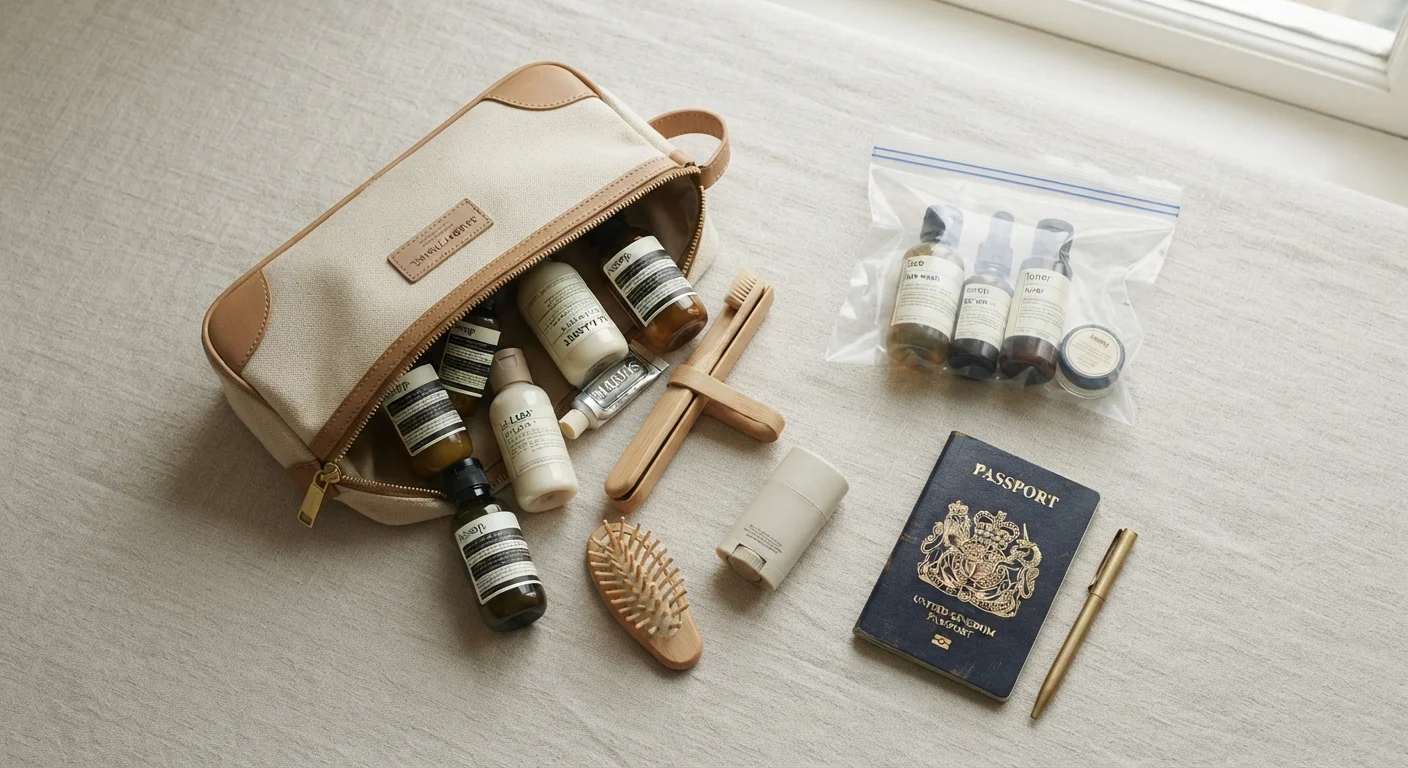
Key Takeaways
- The TSA 3-1-1 rule applies to all carry-on liquids, not just toiletries — container size is what triggers screening.
- Mini bottles aren't always necessary; solid toiletries and bars sidestep liquid rules entirely.
- Buying basics at your destination can be a practical alternative, not a risky gamble.
- A single well-organized clear quart bag is all TSA requires — not multiple pouches.
- Full-size toiletries in checked bags still add significant weight and eat up luggage space.
Why Toiletry Packing Myths Persist
Toiletry packing sits at an uncomfortable intersection of security rules, personal habit, and low-grade anxiety about being caught without something you need. That combination is fertile ground for myths. Travelers pass along half-remembered TSA encounters, conflate rules from different countries, and assume that bringing more is always safer. The result: overstuffed toiletry bags, hold-ups at security checkpoints, and checked luggage fees that could have been avoided.
Understanding what the rules actually say — and what smart packing really looks like — can save you time, money, and frustration. If you're rethinking your whole approach to what you carry, the carry-on only mindset guide is a useful companion read.
Myth
You can bring full-size toiletries as long as they're in your checked bag — it doesn't matter how big they are.
Fact
Checked bags have no liquid-size restrictions, but weight and space still matter. Full-size toiletries add meaningful bulk and can push you over airline weight limits.
There's no TSA container-size rule for checked luggage, so technically a full bottle of shampoo is allowed. But airline weight limits are real, and toiletries are surprisingly heavy. A collection of full-size bottles can account for several pounds of your allowance — weight you're paying to transport products you could access locally or replace with concentrated travel versions.
Myth
As long as each bottle is under 3.4 oz, you can bring as many as you want in your carry-on.
Fact
All liquid containers must fit together in a single quart-sized clear bag. The limit is on total volume in that bag, not just individual container size.
This is one of the most common misreadings of the 3-1-1 rule. Ten 3-oz bottles will not all fit in a standard quart bag — and if they don't fit, they don't fly. The practical capacity of a quart bag is roughly six to eight small containers depending on shape. Prioritize what you'll actually use daily and leave the rest.
Myth
Solid toiletries like shampoo bars are a niche option that most travelers find impractical.
Fact
Solid toiletries have grown significantly in quality and availability, and they sidestep liquid rules entirely while lasting longer per ounce than their liquid equivalents.
Shampoo bars, conditioner bars, solid sunscreen sticks, and toothpaste tablets are no longer hard-to-find specialty items. They don't count as liquids under TSA rules, meaning they free up your quart bag for items that genuinely need to be liquid. Many travelers find solid formats last longer than equivalent liquid volumes, making them a practical option for trips of any length.
Myth
You need a separate toiletry bag for each type of product to stay organized at security.
Fact
TSA only requires one clear quart-sized bag for liquids. Extra pouches add bulk and slow down the screening process.
Bringing multiple pouches — one for skincare, one for hair products, one for medications — is a personal organization system, not a security requirement. At the checkpoint, screeners only need to see your single liquid bag. Extra pouches that aren't clear can actually create delays if an officer wants to inspect contents. Keep one clear bag, pack it well, and let the rest of your kit live in your toiletry bag without liquid-rule anxiety.
Myth
Buying toiletries at your destination is risky because you might not find what you need.
Fact
Most travel destinations — including international ones — have pharmacies or supermarkets stocking standard toiletry brands within easy reach of tourist areas.
For travelers visiting major cities or established tourist destinations, finding toothpaste, deodorant, or basic skincare is rarely a challenge. The calculus changes for remote destinations or very short trips where shopping isn't practical. But for a typical long-weekend or week-long trip to a city, buying a few basics on arrival can be more convenient than the weight and security hassle of transporting them.
The Real Rules Around Liquids and What They Mean for Your Bag
The TSA's 3-1-1 rule is widely cited but frequently misunderstood. Each liquid container must be 3.4 ounces (100ml) or smaller; all containers must fit in one quart-sized, clear, resealable bag; and each traveler gets one such bag. That's it. The confusion usually comes from travelers who think the rule only applies to obvious liquids — but gels, creams, pastes, and aerosols all count. A full-size tube of toothpaste will be flagged just as quickly as a water bottle.
3.4 oz
Maximum liquid container size for carry-on
TSA's 3-1-1 rule caps each individual container at 3.4 fluid ounces (100ml) — a limit that applies to all liquids, gels, creams, and aerosols in carry-on bags.
1 quart
Total carry-on liquid allowance per traveler
All qualifying liquid containers must fit within a single, clear, resealable quart-sized bag — one bag per passenger, per TSA guidelines.
The practical upshot: a single organized clear bag, packed deliberately, is enough. Overfilling it — or bringing multiple pouches — creates security delays and doesn't actually get more liquid through screening. Solid alternatives (shampoo bars, solid conditioner, toothpaste tablets) bypass the liquid category entirely, which is why seasoned travelers increasingly rely on them. For more ideas on what experienced packers actually carry, see underrated packing items seasoned travelers swear by.
Aerosols and Gels Count as Liquids
Dry shampoo sprays, hairspray, shaving gel, sunscreen lotion, and even peanut butter are treated as liquids under TSA rules. If it pours, sprays, smears, or squirts, assume it counts. Packing these in carry-on without fitting them in your quart bag is one of the most common reasons toiletries are confiscated at security checkpoints.
Rethinking What You Actually Need to Bring
A major source of toiletry bloat is the assumption that everything must travel with you. Hotels above budget-hostel level almost universally provide shampoo, conditioner, body wash, and soap. Pharmacies, convenience stores, and supermarkets in most international destinations carry the same core toiletry brands you use at home — often at comparable prices. Bringing a full backup of everything is a hedge against a problem that rarely materializes.
This doesn't mean packing recklessly. Specialty items — prescription skincare, specific medications, products for particular hair types — are worth carrying because substitutes may genuinely be hard to find. But a full-size bottle of shaving cream for a three-night trip is a space decision, not a necessity. The habits that push travelers toward overpacking toiletries are the same ones that fill suitcases with backup outfits. If that pattern sounds familiar, why overpacking happens and how to stop it breaks down the psychology behind it.
A useful reframe: think in trip-days. Calculate roughly how much of each product you'll use and pack that amount — not a full container. For first-time travelers building these habits from scratch, travel packing for first-timers offers a step-by-step foundation.
Don't Rely on Hotel Toiletries for Specialty Needs
While standard hotel amenities cover basics, travelers with specific skincare conditions, particular hair textures requiring specialist products, or prescription topicals should not assume substitutes will be available at the destination. For these items, carrying your own supply — even in travel-size format — remains the practical choice. When in doubt, pack what you genuinely cannot do without, and buy the rest locally.