

Key Takeaways
- Match your bag size to trip length and airline rules before buying anything.
- A written packing list reduces both overpacking and forgotten essentials.
- Packing cubes and rolling clothes dramatically improve space and wrinkle management.
- TSA liquid rules apply regardless of how short your trip is — plan accordingly.
- A final walk-through 30 minutes before leaving catches most last-minute mistakes.
Start here
Choosing the Right Bag for Your Trip
Next
Building Your Packing List
Then
How to Organize What Goes Inside
Don't skip
Toiletries, Liquids, and Security
Final step
Last-Minute Checks Before You Zip Up
Choosing the Right Bag for Your Trip
The bag you choose shapes every packing decision that follows. Get this wrong, and you're either hauling dead weight or cramming a week's worth of gear into something too small.
For most first-timers, the choice comes down to three formats: a rolling suitcase, a travel backpack, or a duffel. Rolling suitcases work well for trips with minimal walking between transit points — airports, hotels, paved sidewalks. Travel backpacks are better for destinations where you'll be moving frequently or navigating uneven terrain. Duffels sit between the two in flexibility but offer less structure.
Volume matters as much as format. As a rough guide: 20–35 liters covers weekend trips, 40–50 liters handles one to two weeks, and anything above that starts crossing into checked-bag territory. That said, bigger isn't better — a larger bag tends to get filled regardless of trip length.
Carry-on
A bag small enough to fit in an overhead bin or under the seat in front of you on a plane, without being checked. Size limits vary by airline.
Checked bag
Luggage handed to the airline at check-in and stored in the cargo hold during the flight. Usually subject to fees and size or weight limits.
Packing cubes
Lightweight fabric containers used inside a bag to organize and compress clothing by category, making items easier to find and fitting more in less space.
TSA liquid rule
A US Transportation Security Administration security requirement that liquids in carry-on bags must be in containers of 3.4 oz (100 ml) or less, placed in one quart-sized clear bag.
Liter (bag volume)
The unit used to describe a bag's total interior capacity. Higher liters means more space; most carry-on travel bags fall between 20 and 50 liters.
Before purchasing or borrowing any bag, verify your airline's carry-on size and weight limits. These vary by carrier and cabin class, and non-compliance means gate-checking or fees. For a deeper look at the specs that matter most when evaluating bags, see this reference on bag weight, fabric, and volume.
Building Your Packing List
A packing list is not a suggestion — it's the tool that separates efficient packers from stressed ones. Write it out before you touch a single item.
Start with categories: clothing, footwear, toiletries, documents, electronics, and any trip-specific items. Under clothing, plan actual outfits rather than loose items — this reveals redundancy and gaps immediately. For a 7-day trip, aim for 5 days of clothing and plan to rewear or hand-wash one or two pieces.
Once your list is drafted, cut it by 20%. Most first-timers write lists based on anxiety rather than reality. Ask yourself: Would I actually miss this if I left it behind? If the answer is uncertain, it probably stays home.
Pack Your List, Not Your Worries
If you find yourself adding items 'just in case,' pause and ask whether the item solves a specific, likely problem. Most 'just in case' items go unused and add weight you'll carry everywhere. Sticking to your list after one honest review almost always produces a lighter, better bag.
For a broader look at the mental side of packing decisions, understanding why overpacking happens is a useful companion read. And if carry-on travel interests you, the carry-on only mindset walks through how experienced travelers rethink what they truly need.
How to Organize What Goes Inside
How you place items in a bag affects both space efficiency and daily usability. Disorganized packing means digging through everything every morning.
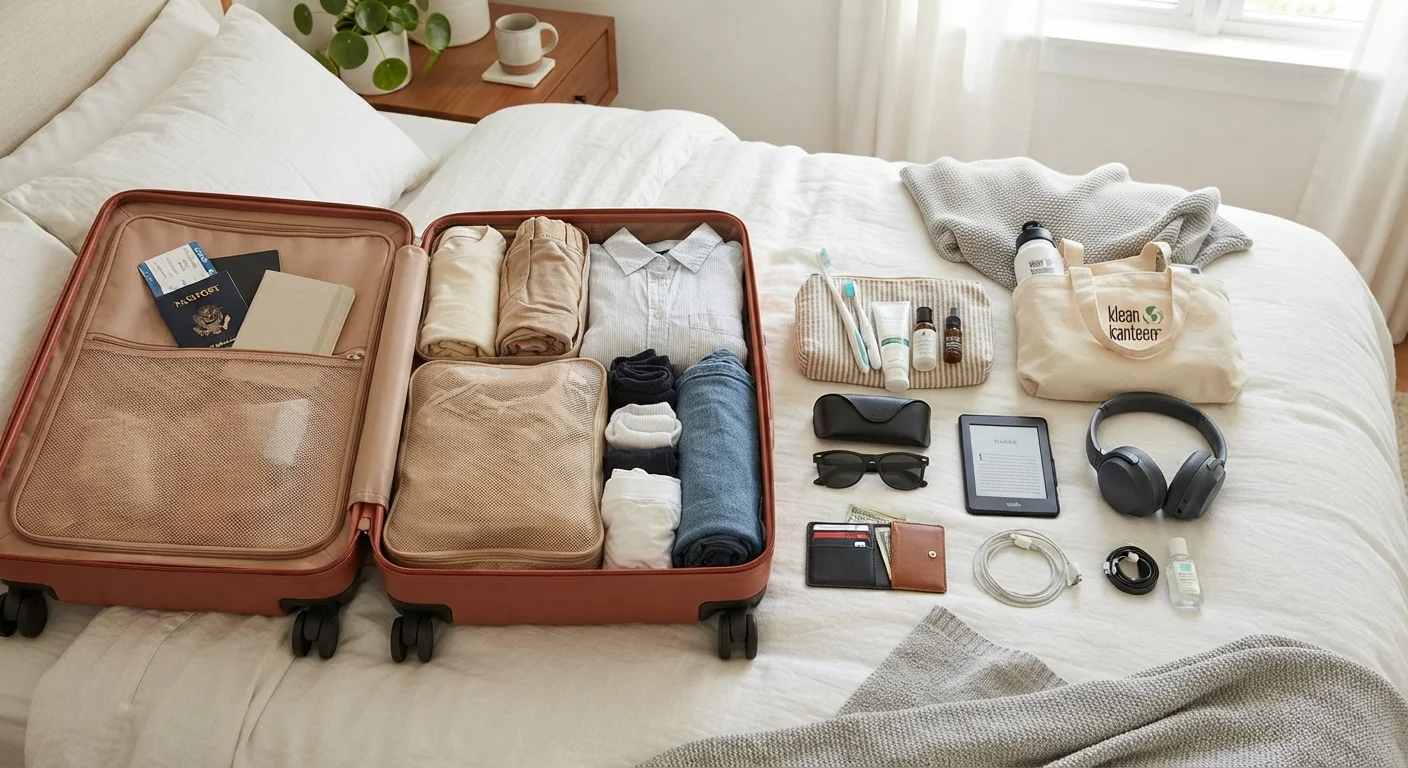
Packing cubes — small fabric compartments that compress clothing — are widely used for good reason. They let you group by category (tops, bottoms, underwear) and locate items without unpacking your entire bag. Rolling clothes before placing them in cubes reduces volume and wrinkles on most fabrics.
Heavy items like shoes and electronics go toward the back or bottom (the side closest to your back in a backpack, or nearest the wheels in a suitcase). Lighter, frequently accessed items go on top or in exterior pockets. Shoes can double as storage for socks or small items.
Leave a small amount of space intentionally. Returning travelers almost always accumulate something — even just a souvenir or a few items bought at a destination. Planning for zero extra room is a setup for frustration. For gear ideas that seasoned travelers find genuinely useful, underrated packing items worth knowing about is worth a look.
Toiletries, Liquids, and Security
Toiletries cause more packing headaches and security delays than almost anything else. Most of the trouble is avoidable.
In the US, TSA rules require that all liquids, gels, and aerosols carried through security be in containers of 3.4 oz (100 ml) or less, packed together in a single quart-sized clear, resealable bag. One bag per traveler. This applies to everything from shampoo to toothpaste to contact lens solution — the container size matters, not how full it is.
A common mistake is assuming you need to bring full-size versions of everything. Many accommodations provide basics like shampoo and soap; checking ahead can save significant space. Solid alternatives — bar soap, shampoo bars, solid deodorant — bypass liquid rules entirely and tend to be more compact.
For a full breakdown of what travelers commonly get wrong here, toiletry packing myths that waste space and cause delays covers the topic in detail.
Last-Minute Checks Before You Zip Up
The hour before you leave is not the time to start packing — it's the time to verify. Use your original list as a checklist, not a starting point.
Run through a physical check of the items that matter most and are most commonly forgotten: passport or ID, phone charger, any medications, travel documents (confirmations, hotel addresses), and your wallet with local payment options. If you're traveling internationally, verify your adapter type in advance — not at the airport.
Don't Pack Medications in Checked Luggage
Any prescription medication you need during the trip should travel in your carry-on, not your checked bag. Checked bags can be delayed, misdirected, or temporarily inaccessible. Keep at least a day's supply in your personal item or carry-on at all times.
Do one final sweep of your home before leaving: check bathroom counters, charging stations, and any spot where you routinely leave items. These are the places that hold the things people call hotels asking about.
Packing well is a skill that improves with repetition. Your first trip won't be perfect — that's expected. The goal is to arrive with what you need, move comfortably, and not spend the trip managing your luggage. For context on where packing fits within the bigger picture of trip preparation, trip planning from start to finish covers the full sequence.