

Key Takeaways
- Overpacking is driven more by anxiety and habit than by genuine travel needs.
- Packing a week before departure — not the night before — dramatically reduces panic-driven decisions.
- A written packing list tied to your actual itinerary is the most effective tool against overpacking.
- Wearing your bulkiest items on travel day frees significant bag space without sacrificing comfort.
- Most destinations have stores where forgotten items can be purchased inexpensively.
The Real Reason Your Bag Is Always Too Heavy
Overpacking is rarely a logistics problem. It is a psychological one. Most travelers do not overpack because they genuinely need everything in their bag — they overpack because packing is where travel anxiety gets expressed. The bag becomes a security blanket: the fuller it is, the safer the trip feels.
Understanding that dynamic is the first step toward changing it. Packing light is not about deprivation. It is about replacing vague, fear-driven decisions with specific, trip-grounded ones. If your itinerary involves three days of city walking and one beach afternoon, your bag should reflect that — not every climate and occasion you can imagine.
Overpacking your bag and overpacking your schedule are related problems. Both stem from a reluctance to commit to a plan. If you find yourself cramming options into every hour of your trip, that tendency has real costs worth understanding too.
Packing for every possible scenario rather than the actual trip planned.
Why it happens: Travelers mentally run through worst-case situations — unexpected cold, a formal dinner, a sudden rainstorm — and pack defensively for each one. This 'what if' thinking feels responsible but reflects anxiety more than realistic planning.
Choosing the largest bag available under the assumption that extra space is always useful.
Why it happens: A bigger bag feels like insurance. Travelers assume unused space is harmless, but bags tend to fill to capacity regardless of the original plan.
Packing duplicate or redundant items out of habit rather than necessity.
Why it happens: People pack the way they live at home — with backups for everything. At home, redundancy makes sense; on a trip, it multiplies weight without adding real security.
Ignoring toiletry volume and defaulting to full-size products.
Why it happens: Full-size items are what people use at home, so they get tossed in without a second thought. The actual quantity needed for the trip is rarely calculated.
Packing clothes that have never been worn together or tested for travel comfort.
Why it happens: People select items they like individually without considering outfit combinations or how fabrics hold up over a full day of movement.
Waiting until the night before to pack, which triggers panic-driven additions.
Why it happens: Last-minute packing compresses decision-making, and under time pressure, the default is to add rather than evaluate. Fatigue compounds poor judgment.
How to Build a Packing Habit That Actually Sticks
One-time packing hacks rarely hold. What works long-term is a repeatable system that removes the anxious decision-making from the process.
Start every trip with a written list tied to your specific itinerary — not a generic checklist downloaded from the internet. What are you actually doing each day? Who will you see? What is the weather forecast? Let those answers dictate what goes in the bag.
Packing 'Just in Case' Adds Up Fast
Each 'just in case' item on its own seems harmless, but collectively they can add several pounds to your bag. Challenge every item that falls into this category by asking: how likely is this scenario, and could I solve the problem another way if it arose? If the honest answer is 'unlikely' and 'yes,' leave it behind.
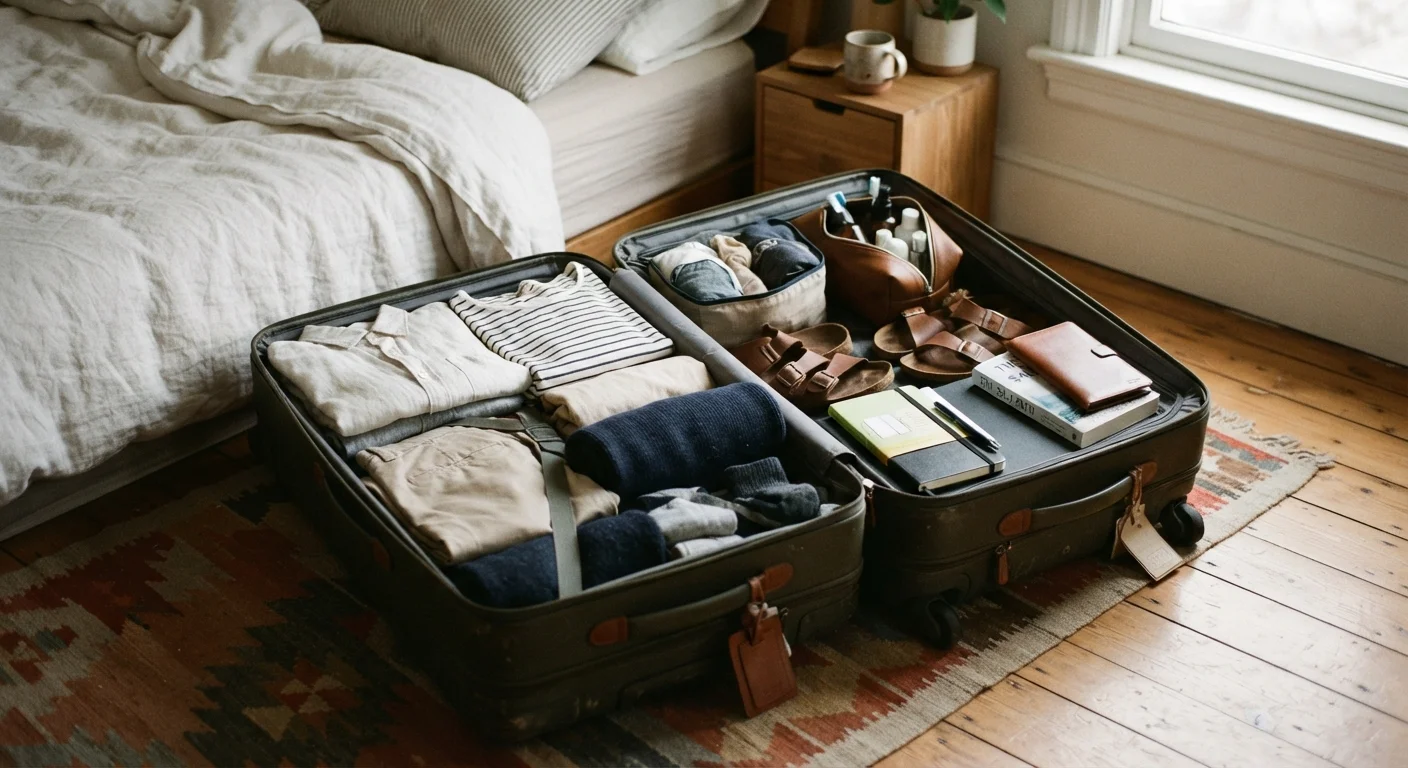
Once your list exists, use the physical layout test: spread every item on a bed before packing. This makes redundancy visible and forces a moment of honest evaluation. Then apply a simple rule — if an item does not correspond to a specific day or activity on your itinerary, it needs a strong justification to make the cut.
Experienced travelers also rely on a handful of versatile, low-profile items that solve real problems without adding bulk. What seasoned travelers actually pack tends to look very different from what first-timers throw in. And for those early in their packing journey, this step-by-step packing guide for first-timers covers the full process from bag selection to final zip.
Luggage Fees Can Exceed Your Budget
Checked bag fees vary widely by airline and route, and oversized or overweight bags carry steep surcharges on top of standard fees. Before assuming you need a large checked bag, review your airline's current weight limits and fee structure. What seems like a convenience at home can become a costly inconvenience at the airport.
Finally, give yourself permission to trust the destination. Most cities and towns have pharmacies, grocery stores, and shops where a forgotten item can be replaced without drama. The contingency plan does not have to live in your suitcase.