

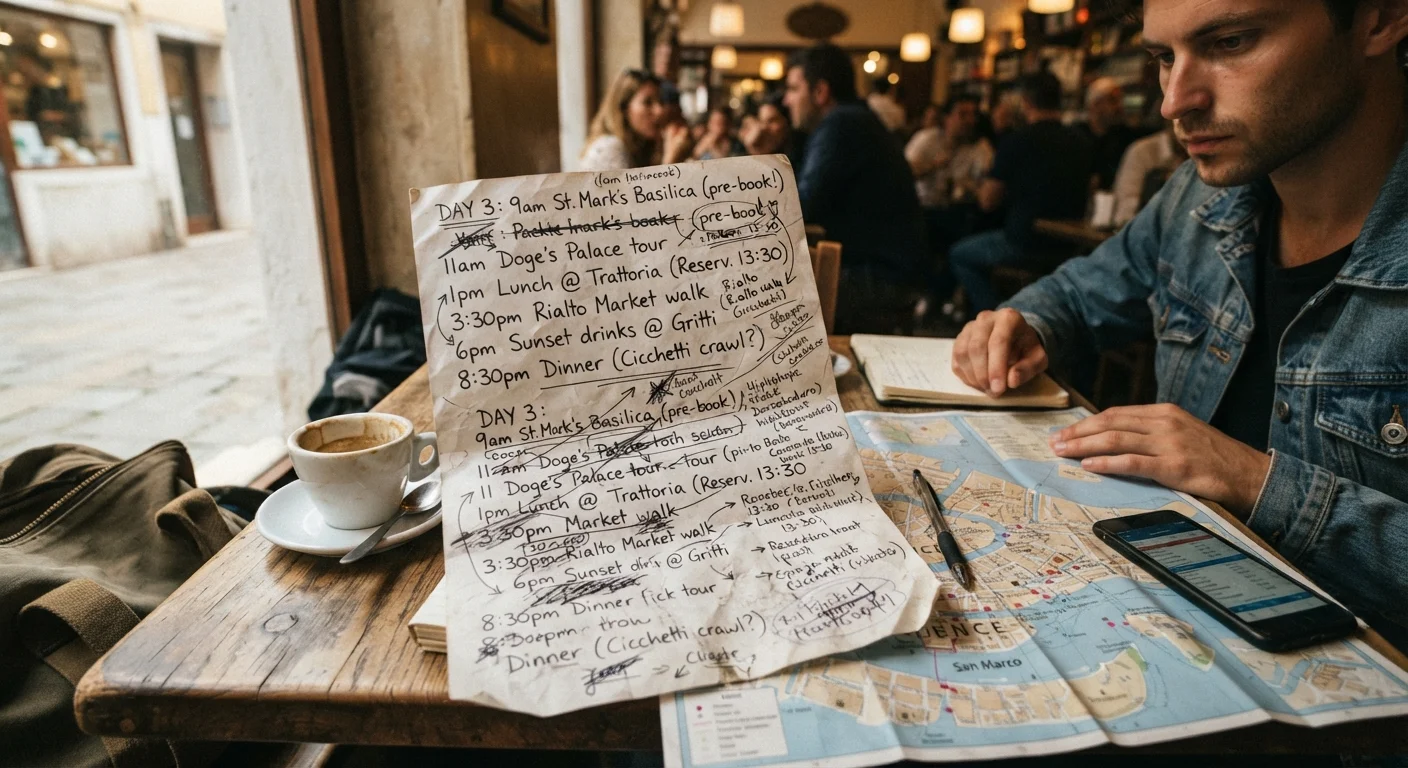
Key Takeaways
- Cramming too many activities per day is one of the most common — and correctable — trip planning mistakes.
- Overscheduled itineraries lead to fatigue, frustration, and missed experiences that mattered most.
- Building buffer time and choosing fewer priorities per day produces more satisfying, memorable trips.
- Realistic planning accounts for transit time, meals, and the unexpected — not just attraction opening hours.
The Real Cost of an Overpacked Schedule
An overpacked itinerary doesn't just wear you out — it quietly undermines the entire point of travel. When every hour is accounted for, there's no room to linger at a viewpoint that stopped you in your tracks, explore a side street, or simply sit at a cafe and feel present somewhere new. You end up checking boxes instead of collecting experiences.
The frustration compounds quickly. One delayed train or longer-than-expected museum visit cascades into a rushed lunch, a skipped second stop, and an evening spent feeling behind rather than relaxed. By day three of this pattern, the trip that was supposed to recharge you is draining you instead.
Understanding what a well-built itinerary actually needs is the first step toward planning one that holds up in reality, not just on paper.
Buffer Time Is Not Wasted Time
Many travelers treat gaps in the schedule as inefficiency. In reality, unscheduled blocks are what allow you to stumble into a local market, recover from a delayed train, or simply sit and absorb where you are. Without them, one hiccup can cascade into a stressful day. Build at least 90 minutes of unscheduled time into every full travel day.
Mistakes That Pack Your Days Too Tight
Most overscheduling isn't careless — it comes from genuine enthusiasm and a desire to make the most of limited time. But the habits below consistently backfire, turning well-intentioned planning into a stressful slog.
Scheduling more than two or three major activities per day.
Why it happens: Travelers want to maximize every hour, especially on shorter trips. The fear of missing out drives a 'more is more' approach to daily planning.
Ignoring realistic travel time between locations.
Why it happens: Planning happens at home with a map app, which doesn't capture on-the-ground friction: unfamiliar transit systems, luggage, crowds, or language barriers.
Not accounting for meals as time, not just fuel.
Why it happens: At home, meals are quick. Traveling, they're often an experience — and one that takes longer than expected, especially at popular local spots.
Planning the same pace every single day with no recovery time.
Why it happens: Rest days feel like wasted vacation days on paper, so travelers eliminate them entirely — particularly on trips of seven days or fewer.
Treating the itinerary as a contract rather than a guide.
Why it happens: Detailed planning creates psychological ownership of a schedule, making deviations feel like failure rather than flexibility.
Transit Time Is Almost Always Underestimated
Google Maps shows you travel time under ideal conditions. Factor in finding the entrance, buying tickets, waiting for timed entry, locating restrooms, and getting back to the street. A 20-minute transit estimate can easily become a 50-minute reality. Plan accordingly — or find yourself perpetually running late the entire trip.
How to Plan With Breathing Room Built In
Smarter itinerary planning isn't about doing less — it's about choosing more deliberately. Start by listing everything you want to do, then cut the list by a third before you finalize anything. What remains should be the things you'd genuinely regret missing, not every attraction that received a mention in a travel guide.
Group activities geographically so you're not crisscrossing a city unnecessarily. Anchor each day around one centerpiece experience, and let everything else orbit it loosely. If you're traveling with others, use a shared planning process early — coordinating group trip logistics works far better when everyone agrees on priorities before the itinerary is built.
Finally, use a proper pre-trip planning checklist to catch structural gaps before you leave home — like confirming entry times, pre-booking tickets that require it, and identifying where your plan is most likely to slip.
62%
Travelers who report vacation stress
A widely cited American Psychological Association survey found that a majority of Americans report some level of stress related to trip planning and packed schedules.
3–4 hrs
Average meaningful time at major attractions
Travel researchers and museum visitor studies consistently find that cognitive fatigue sets in after 2–4 hours at major cultural sites, regardless of how much remains to see.