

Key Takeaways
- A capsule packing system is built around interchangeable items that work across climates, occasions, and trip lengths.
- Auditing what you actually used after each trip is the fastest way to refine your kit over time.
- Neutral colors and layerable fabrics do more work per item than specialized single-use pieces.
- Separating your gear list from your clothing list helps you maintain and update each system independently.
- The goal is a kit you can pull off a shelf and trust — not rebuild from scratch every trip.
What a Capsule Packing System Actually Is
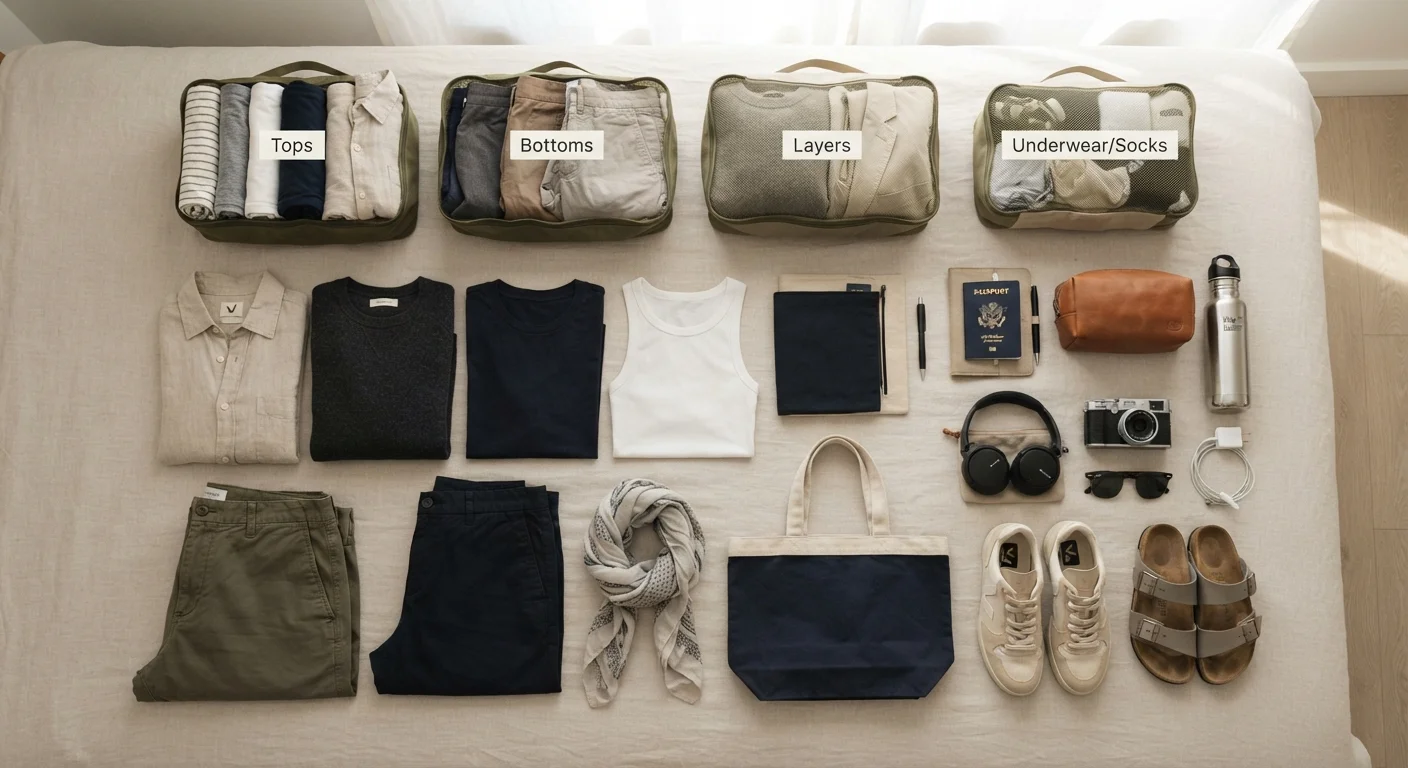
A capsule packing system is a curated, fixed collection of clothing and gear that you reuse across multiple trips with minimal additions. The concept borrows from capsule wardrobe fashion — a small set of versatile, mix-and-match pieces — but extends it to everything you carry: toiletries, electronics, and travel accessories included.
The value isn't minimalism for its own sake. It's repeatability. When your core kit is already assembled, trip prep shrinks from hours to minutes. You're not hunting for your travel adapter or debating whether to bring a fourth shirt. The decisions are already made.
This approach suits a wide range of travel styles, from carry-on-only travelers to those who check a bag on longer trips. The system scales; the philosophy stays the same.
Best Practices for Building a System That Lasts
Getting the foundation right matters more than optimizing any single item. These practices separate a durable capsule system from a one-trip experiment.
Build your clothing list around a single, consistent color palette
Neutral or tonal palettes — think navy, grey, olive, black, white — make every top compatible with every bottom. This multiplies outfit combinations without multiplying items. It also reduces the mental load of getting dressed on the road.
Choose fabrics that perform across multiple uses before washing
Merino wool and synthetic blends resist odor, dry quickly, and resist wrinkles — all traits that matter when you're living out of a bag. Choosing performance fabrics means you carry fewer items and wash less frequently.
Separate your gear list from your clothing list and manage each independently
Clothing and gear have different replacement cycles and different trip-to-trip variability. Keeping them as distinct lists makes it easier to update one without accidentally disrupting the other.
Set a firm item count and stick to it unless the trip genuinely demands an exception
Open-ended packing lists expand to fill available space. A defined limit — say, seven clothing items for trips up to two weeks — forces trade-offs and keeps the system honest over time.
Pre-pack your toiletries kit and keep it stocked between trips
Rebuilding a toiletries bag from scratch before every trip wastes time and invites forgotten items. A permanently stocked travel-size kit — refilled after each return — means one less thing to think about.
Test your system on a short trip before relying on it for a longer one
A weekend trip is a low-stakes way to expose gaps in your kit. Missing items or uncomfortable choices are much easier to address when you're close to home and not midway through a two-week international itinerary.
Starting Points: Quick Actions That Pay Off Fast
If you're building your first capsule system or overhauling an existing one, a few targeted actions deliver outsized results. These won't require a complete wardrobe overhaul — just focused decisions on the pieces that travel most.
For colder-destination trips, the same logic applies — layering strategy and fabric choice can dramatically reduce bulk without sacrificing warmth.
Maintaining and Evolving the System Over Time
A capsule system only stays useful if you tend to it. After every trip, run a quick audit: What did you wear? What stayed in the bag? What did you wish you'd brought? Items that go untouched on two consecutive trips are strong candidates for removal.
Capsule Systems Aren't One-Size-Fits-All
A capsule system for a frequent business traveler looks very different from one built for weekend hiking trips or international backpacking. The principles — versatility, repeatability, intentional selection — apply across contexts, but the specific items should reflect your actual travel pattern, not an idealized version of it. Build for the trips you actually take, not the ones you might take someday.
Keep a simple running list — a notes app works fine — of items you wanted but didn't have. Review it before your next trip, not the night before departure. Over several trips, patterns emerge: you always need a packable layer, you never use the backup shoes, the gear pouch is always overstuffed.
For a broader view of how packing strategy connects to the overall trip experience, the complete guide to packing and gear covers the full picture from bag selection to on-the-ground adjustments. And if your daily itinerary is as dialed-in as your packing, see how to build a day-by-day travel plan that holds up in practice.
~50%
Clothing packed that typically goes unworn
Travel behavior surveys consistently suggest that roughly half of packed clothing goes unused on typical leisure trips, pointing to significant room for system refinement.
2–3 lbs
Average weight saved switching to a carry-on only system
Packing and gear experts commonly cite a 2–3 pound reduction when travelers move from a checked bag to a disciplined carry-on kit built around interchangeable pieces.