

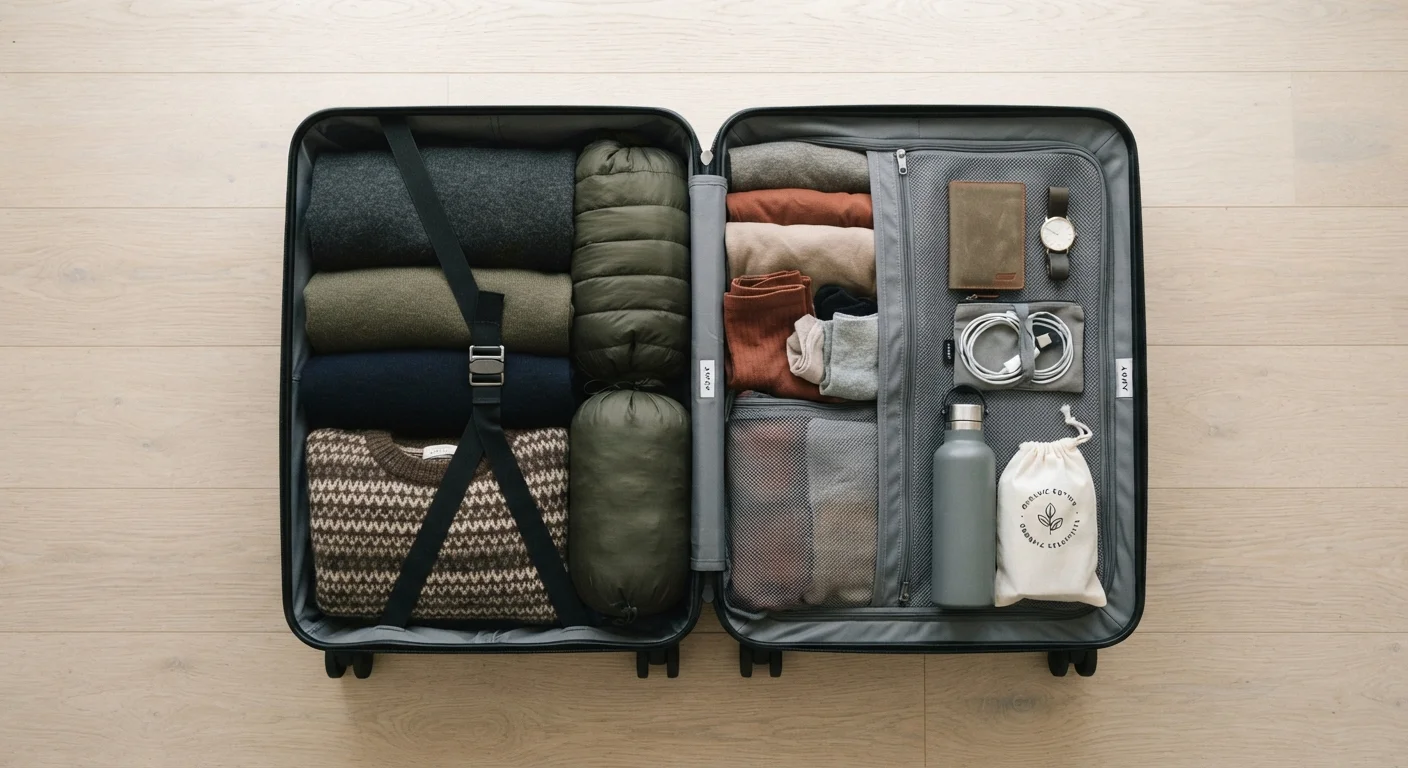
Key Takeaways
- Layering with merino wool and a packable insulating mid-layer replaces bulky single-purpose coats.
- Choosing versatile, neutral-colored pieces means fewer total items that still cover more situations.
- Compression packing and rolling techniques reclaim significant space in cold-weather bags.
- Your outer shell does the heavy lifting — it doesn't need to be the warmest item, just the most protective.
- Planning around one pair of cold-weather shoes eliminates the biggest volume culprit in winter packs.
What you will need
Why Cold-Weather Packing Goes Wrong
Most travelers overpack for cold destinations because they think in terms of warmth per garment rather than warmth per pound. A thick cable-knit sweater feels reassuring to fold in — but it takes up half a bag and only does one job. The smarter approach treats your clothing as a system, not a collection.
Cold-weather packing fails in three predictable ways: over-relying on a single heavy coat instead of layering, choosing cotton over technical or merino fabrics, and packing shoes as an afterthought. Fix these three habits and the rest of the problem largely solves itself.
If you're rethinking your overall luggage philosophy, the carry-on only mindset is a useful starting point before you get into cold-weather specifics.
What you will need
The Layering System That Makes It Work
A practical cold-weather layering system has three tiers, each with a specific job:
- Base layer: Sits against your skin and manages moisture. Merino wool is worth the investment — it regulates temperature, resists odor across multiple wears, and packs down small. One or two merino base layer tops can replace three or four cotton equivalents.
- Mid layer: Provides insulation. A packable down or synthetic-fill jacket compresses to the size of a water bottle and adds substantial warmth. This is your primary warmth source, not your coat.
- Outer shell: Blocks wind and rain. It doesn't need heavy insulation if your mid-layer is doing that work. A lightweight, packable shell weighs far less than a traditional puffer coat and can be worn over varying levels of mid-layer depending on temperature.
Two base layer tops, one mid-layer, and one shell replace what most people pack as three heavy sweaters plus a coat. The total volume is dramatically lower.
Merino Pays for Itself in Fewer Items
Merino wool's natural odor resistance means a single base layer top can be worn two to three days in a row without issue — a meaningful difference when every item counts. It also dries quickly if hand-washed overnight. Two merino tops can effectively replace four cotton ones on a week-long trip.
Choosing and Organizing Your Pieces
Once the layering logic is in place, apply the same thinking to every other category.
Bottoms: Fleece-lined or wool-blend pants work for most cold-weather destinations and can double as casual or smart-casual depending on cut. Thermal leggings worn underneath extend their temperature range significantly. Aim for two pairs of pants maximum.
Accessories: A merino beanie, lightweight gloves, and a scarf add warmth with minimal volume. Thin liner gloves can be worn alone in mild cold or under heavier gloves in serious cold — one pair does two jobs.
Footwear: Shoes are the single biggest volume item in any cold-weather bag. Commit to one pair of waterproof boots with good insulation and pack a pair of lightweight indoor shoes or slip-ons for hotels and flights. Wearing the boots on travel days keeps them out of the bag entirely.
For how to physically fit everything once you've chosen it, the comparison in rolling vs. folding vs. bundle wrapping is worth a read — soft merino layers roll exceptionally well and compress without creasing.
Seasoned travelers also rely on a few overlooked items that solve real cold-weather problems on the road. Underrated packing items seasoned travelers swear by covers some of the most useful ones.
Don't Pack for Worst-Case Cold Throughout
A common mistake is packing for the coldest day of the trip as if every day will be that cold. Check the actual forecast range for your destination and pack for the average, with your layering system handling the outliers. Over-preparing for extreme cold is the fastest route to an overweight, overstuffed bag.
How to Pack It All In
With the right pieces selected, packing efficiently comes down to order and compression. Follow the steps below to go from pile to packed bag.
Lay everything out before a single item goes in the bag
Place every item you intend to pack on a flat surface. Group by category: base layers, mid-layers, shell, bottoms, accessories, footwear, and toiletries. This visual audit almost always reveals duplicates or items that aren't pulling enough weight.
Pack shoes first, directly against the frame or base
Shoes go in first because they define the shape of the remaining space. Place them sole-to-sole or sole-to-bag-back, toes pointing toward opposite ends of the bag. Stuff socks or small accessories inside each shoe to use that space.
Roll base layers and pack them around the shoes
Merino and synthetic base layers roll tightly without wrinkling. Roll each piece individually and fill the gaps around your footwear. These smaller rolls act as fill pieces and keep heavier items from shifting during transit.
Compress your mid-layer into its own stuff sack
Most packable jackets include a built-in pouch or can be compressed into a packing cube. Compress fully and place in the center of the bag where it acts as a soft buffer. This keeps the jacket accessible and prevents it from ballooning and wasting space.
Layer pants flat across the top, then fold over
Pants are the trickiest item to compress. Fold lengthwise, then roll firmly from the waistband down. Place on top of everything else with your shell draped loosely over — or wear the shell on travel day to eliminate it from the bag entirely.
Fill remaining gaps with accessories and toiletries
Gloves, a beanie, and a scarf compress into almost nothing and fill the corners and top layer of the bag. Toiletries in a compact bag go in last, in an accessible pocket. If the bag doesn't close easily at this point, something needs to come out — not be forced in.
For travelers building a longer-term approach, building a capsule packing system shows how to extend this cold-weather framework across multiple trips so you're not starting from scratch every time.