

Key Takeaways
- Match your bag and packing strategy to your specific trip type before selecting any gear.
- Carry-on-only travel is achievable for most trips up to two weeks with the right clothing choices.
- Packing cubes and a written category checklist reduce both overpacking and forgotten items.
- Layering versatile clothing eliminates the need for single-use or occasion-specific pieces.
- Always verify entry, safety, and airline rules from official sources before departure.
Start With Trip Type, Not a Packing List
Most packing mistakes happen before a single item goes into the bag — because travelers reach for a generic list instead of thinking about what their specific trip actually demands. A three-day city break, a two-week beach holiday, and a backcountry camping trip share almost nothing in common when it comes to what you need to carry.
Before anything else, answer four questions: How many days? What climate? What activities? Will you be moving between locations or staying put? Your answers shape every decision that follows — bag size, clothing volume, gear type, and how much buffer you need for the unexpected.
If you're building your travel planning process from the ground up, the complete trip planning walkthrough covers how packing logic fits into the broader pre-trip sequence.
Pack your bag the day before a trial run — wear it around the house loaded and see where pressure points appear. An uncomfortable bag discovered at the airport is a miserable problem with no good solution.
Fit issues with backpacks in particular are often only apparent under real load. Adjusting straps and hip belts at home takes minutes; doing it while stressed and running late is far harder.
Before any international trip, photograph every document page, card, and label in your bag and store copies in both cloud storage and an email draft to yourself. Recovery from loss is dramatically faster when you have these on hand.
Replacing a lost passport abroad without any documentation can add days and significant cost to the process. Local embassies and consulates can move faster when you arrive with copies.
Choosing the Right Bag
The bag is infrastructure, not an accessory. Get it wrong and everything else suffers. The three main formats — rolling suitcase, backpack, and duffel — each suit different travel styles.
- Rolling suitcase: Best for trips with minimal walking between transit points, hotel-to-hotel stays, and travelers who prioritize organization over mobility.
- Travel backpack (40–50L): The most versatile option for multi-city trips, budget travel, and anyone moving frequently. Carries on most airlines, fits under seats on some.
- Duffel: Lightweight and packable; works well as a secondary bag or for short trips where structure isn't needed.
Capacity is where most people go wrong — bigger bags get filled. For trips up to 14 days, experienced travelers consistently manage with 40–45 liters. For longer trips, the answer is usually better laundry strategy, not a bigger bag.
New to this? The first-timer's luggage guide walks through bag selection in detail, including what to look for in fit and features.
The Core Packing Framework
A reliable framework beats any list. Work in categories, not by memory:
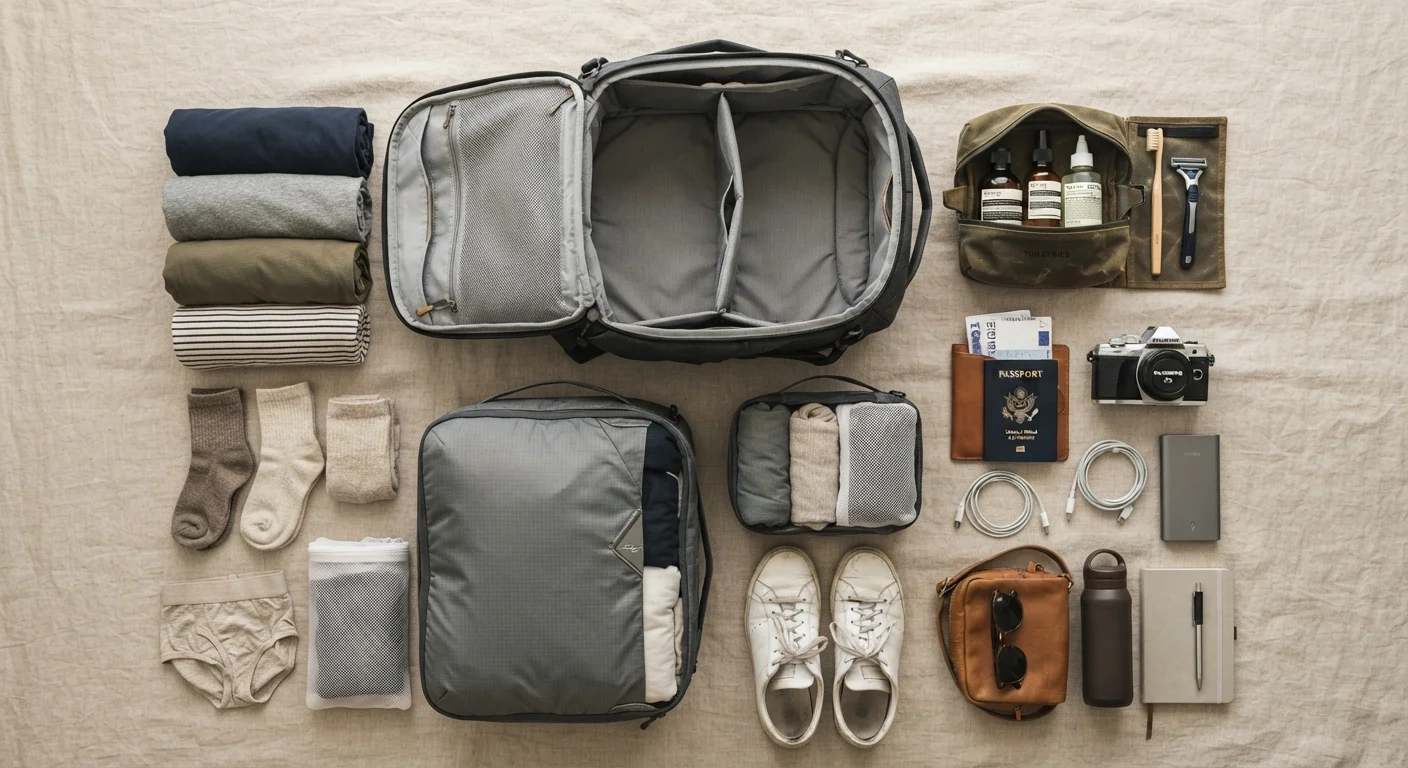
- Clothing: Build around a color palette so pieces mix and match. Pack for re-wear, not for daily outfit changes. Seven days of travel rarely requires seven pairs of pants.
- Toiletries: Solids (shampoo bars, solid moisturizer) save liquid allowance and weight. Decant what you need into travel-size containers rather than packing full bottles.
- Documents and valuables: Passport, insurance details, any required visas or health documentation. Keep digital backups in cloud storage.
- Tech and cables: One multi-port charger replaces individual adapters. A universal travel adapter covers most destinations.
- Medications and health items: Pack a basic first-aid kit and any prescription medications in their original labeled containers. Quantities should reflect your trip length plus a small buffer.
Packing cubes bring real structure to this system — assign one cube per category and you always know where things are without unpacking everything.
~50%
Clothing volume saved by planning one laundry day per week
A commonly cited figure among frequent carry-on travelers based on practical packing methodology.
7 kg
Typical carry-on weight limit on low-cost European carriers
Weight limits vary significantly by airline and fare class — always verify with your specific carrier before travel.
40–45L
Bag capacity sufficient for most 1–2 week trips
Widely recommended by experienced carry-on travelers as the practical ceiling before overloading becomes a risk.
Gear Essentials by Trip Category
Generic packing lists ignore the fact that different trips have non-negotiable gear requirements:
Urban and City Travel
Prioritize a day bag that fits under a café table, comfortable walking shoes that pass for smart-casual, and a portable battery pack. A compact umbrella or packable rain jacket handles unpredictable weather without bulk.
Beach and Warm-Weather Trips
A microfiber towel is significantly lighter than cotton and dries fast. A dry bag protects electronics near water. Reef-safe sunscreen is required or strongly encouraged in many coastal destinations — check local rules before you go.
Cold-Weather and Mountain Trips
Layering is the principle: a moisture-wicking base, an insulating mid-layer, and a windproof or waterproof outer shell. Merino wool base layers compress well and resist odor, reducing how often you need to wash.
Backcountry and Camping
Weight and function dominate every decision. A headlamp, water purification method, and a quality sleep system are non-negotiable. Research local regulations on campfires, wildlife storage, and leave-no-trace requirements before departure.
For gear items that frequently get overlooked across all trip types, see the underrated packing items seasoned travelers rely on.
Packing Light Without Leaving Critical Items Behind
Packing light is a skill, not a sacrifice — but it requires discipline at the editing stage. After assembling everything you think you need, do a removal pass: take out anything that serves only one scenario, anything you haven't used on previous similar trips, and any "just in case" items that can be sourced at your destination if actually needed.
The clothing category offers the most savings. Quick-dry fabrics and merino wool enable re-wear and fast laundry-sink washing. Planning one laundry day per week of travel cuts clothing volume roughly in half.
For what to look for beyond the obvious, experienced travelers' go-to low-profile items covers the practical additions that solve real problems without adding significant weight.
Don't Pack Prohibited or Restricted Items
Regulations on liquids, sharp objects, batteries, and certain medications vary by country, airline, and transport type. What's permitted in checked baggage may be prohibited in carry-on, and some items banned domestically may be restricted internationally. Check current TSA guidance and destination country customs rules before packing — removing items at security is inconvenient, but arriving at a border with restricted items can be far more serious.
Final Check: Before You Zip Up
Run a structured final check 24 hours before departure — not the night before a 5 a.m. flight. Cover these in order:
- Travel documents and IDs verified and accessible
- Airline carry-on size and liquid restrictions confirmed for your specific carrier
- Any required visas, health declarations, or entry documents verified against official government sources
- Medications packed and quantities correct for trip length
- Valuables distributed (don't keep passport, cards, and cash in one place)
- Electronics charged and adapters packed
Entry requirements, health documentation needs, and airline baggage rules can change. Always verify current requirements directly with the relevant government agencies and your airline before you travel — don't rely on third-party summaries or last year's experience.
The pre-trip planning checklist covers the broader planning details most travelers miss until it's too late.