
Soft-Sided vs. Hard-Shell Luggage: What the Difference Actually Means for Travelers

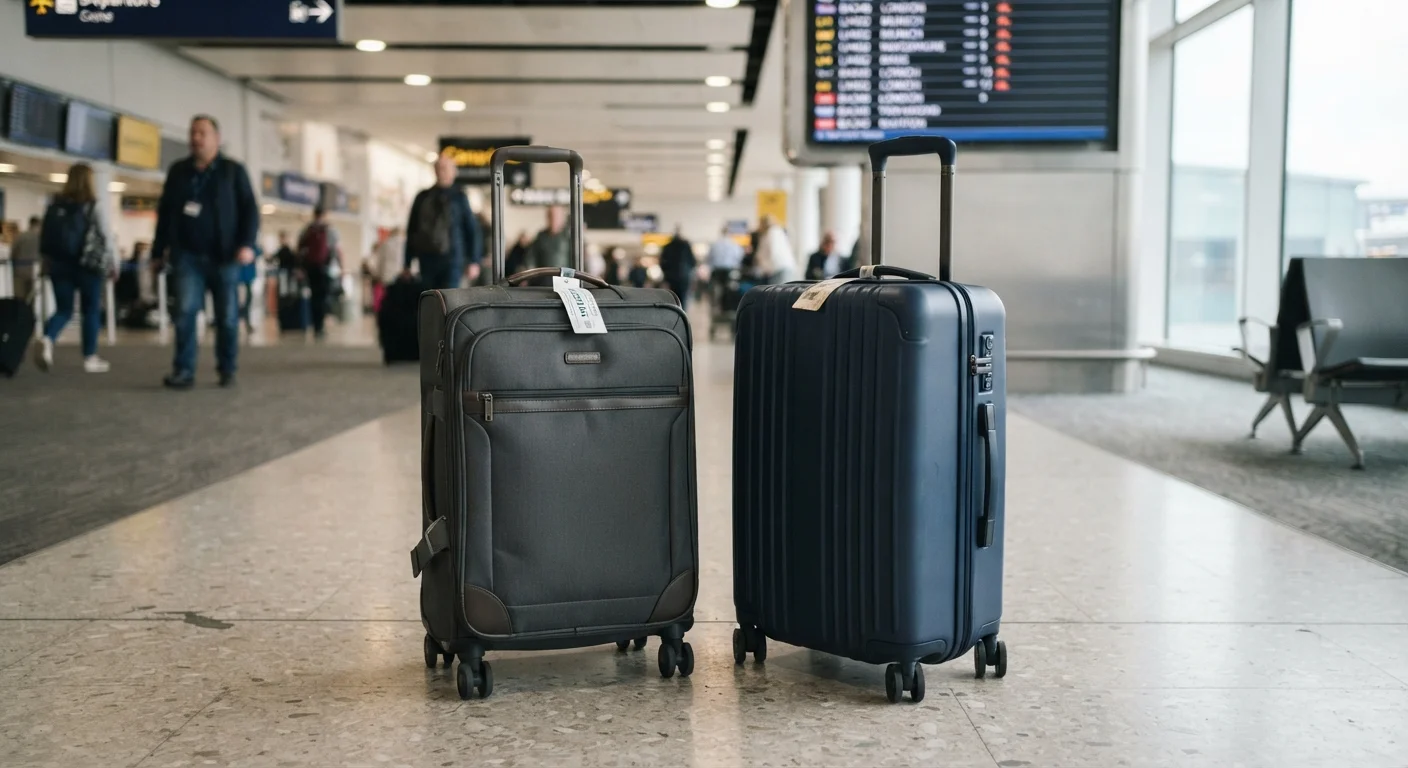
Key Takeaways
- Soft-sided bags flex to fit irregular spaces; hard-shell cases hold their shape under rough handling.
- Hard-shell luggage typically offers better protection for fragile contents but adds more base weight.
- Soft bags often include exterior pockets; hard cases usually have a clean, sealed exterior with no external storage.
- Neither type is universally better — the right choice depends on how and where you travel.
- Weight limits matter regardless of shell type; a heavier empty bag eats into your checked allowance.
Option A
Soft-Sided Luggage
The flexible, lightweight everyday traveler's bag.
Best for: Travelers who need to maximize packing capacity, work with tight overhead bins, or move between multiple transit modes.
Option B
Hard-Shell Luggage
The structured, impact-resistant option for protection-first packers.
Best for: Travelers carrying fragile items, checking bags frequently, or wanting a lockable, weather-resistant case.
If you check bags frequently on rough itineraries
Hard-Shell Luggage
Hard shells resist crushing and impact far better than fabric, keeping fragile or structured contents intact through baggage handling.
If you're committed to carry-on only travel
Soft-Sided Luggage
Soft bags can compress slightly to fit tight overhead compartments and often weigh less, preserving your personal item allowance.
If you're traveling with electronics or breakables
Hard-Shell Luggage
The rigid exterior absorbs shock and prevents external pressure from reaching contents, providing a meaningful layer of protection.
If you move quickly across multiple transport types
Soft-Sided Luggage
Soft bags adapt better to buses, trains, and car trunks where space is unpredictable and rigid corners create friction.
If you're a first-time traveler choosing a versatile everyday bag
Soft-Sided Luggage
External pockets, flexibility, and generally lower price points make soft bags a practical starting point for varied trip types.
The Core Structural Difference
The fundamental distinction between soft-sided and hard-shell luggage is the frame. Soft bags — typically made from nylon, polyester, or similar woven fabrics — have a flexible body that can give under pressure. Hard cases are molded from rigid materials such as ABS plastic, polycarbonate, or aluminum, maintaining a fixed shape regardless of what's packed inside or stacked on top.
That structural difference ripples into nearly every practical consideration: how much you can pack, how your bag survives transit, how much it weighs empty, and how it fits into overhead bins, car trunks, and storage lockers. Understanding the trade-off starts with knowing what each construction is actually engineered to do.
For a broader look at how bag specs translate into real-world use, see our guide to gear weight, fabric, and volume.
Capacity, Flexibility, and Fit
Soft-sided bags have a meaningful advantage when space is tight or irregular. A fabric bag can be compressed slightly to squeeze into a full overhead bin or wedged into an oddly shaped car boot. That same flexibility also means soft bags often expand — many include a zippered expansion panel that adds several liters of capacity for the return trip.
Hard-shell cases offer no flex. The volume you buy is the volume you get. This makes them highly predictable for packing but unforgiving when overhead bins are crowded or when you're overpacking on the way home. Hard cases also tend to have a single large interior divided by a zippered divider, whereas soft bags frequently include exterior pockets useful for quick-access items like documents, chargers, or a jacket.
| Criterion | Soft-Sided | Hard-Shell |
|---|---|---|
| Shape flexibility | Compresses to fit tight spaces | Fixed shape, no give |
| Impact protection | Moderate; fabric absorbs minor abrasion | High; rigid shell deflects force |
| Exterior pockets | Often included | Rarely included |
| Typical empty weight | Lighter (6–8 lbs for checked size) | Heavier (9–12 lbs for checked size) |
| Expansion capability | Often expandable via zipper panel | Fixed volume only |
| Weather resistance | Varies by coating; generally moderate | Generally better sealed exterior |
| Crack or split risk | Lower; fabric flexes rather than cracks | Some shells crack under hard impact |
If you're leaning toward carry-on travel, the soft bag's adaptability is especially relevant — see The Carry-On Only Mindset for how bag choice fits into a minimalist packing approach.
Durability, Protection, and Weather Resistance
Hard-shell luggage absorbs impact better. If your checked bag is dropped, stacked under heavier bags, or crushed in a cargo hold, the rigid exterior distributes force around the shell rather than transferring it to contents. This makes hard cases the practical choice when traveling with cameras, glassware, or anything that dents or breaks under pressure.
Soft bags are not necessarily fragile — high-denier nylon is tough and abrasion-resistant — but fabric does allow external pressure to reach the interior. A heavy bag dropped on top of a soft suitcase will compress it. On the upside, soft bags are less likely to crack under impact the way some hard shells can.
Zipper Quality Matters More Than Shell Type
Regardless of whether you choose soft or hard luggage, the zipper is often the first point of failure. Look for chunky, smooth-running zippers with sturdy pulls on any bag you're considering. A hard-shell case with a cheap zipper offers less security than a soft bag with a well-constructed one. TSA-approved locks add a layer of tamper evidence but do not make a bag theft-proof.
Weather resistance is another factor. Most hard shells seal more completely around the zipper line, offering better protection from rain or wet baggage carousels. Soft bags vary: some have water-resistant coatings, others absorb moisture readily. Check manufacturer specs rather than assuming either type is waterproof.
Weight, Cost, and Long-Term Practicality
Empty bag weight matters more than many travelers realize. Airlines typically enforce checked bag limits around 50 lbs (23 kg). A hard-shell checked bag can weigh 9–12 lbs empty, while a comparable soft bag may come in at 6–8 lbs. That difference directly reduces how much clothing and gear you can bring without paying overage fees.
2–4 lbs
Typical weight difference between shell types
Industry luggage specs consistently show soft-sided checked bags averaging 2–4 lbs lighter than hard-shell equivalents in the same size category.
50 lbs
Standard checked bag weight limit (most US carriers)
Most major US airlines enforce a 50 lb (23 kg) limit for standard checked bags, making empty bag weight a practical packing factor.
Cost varies widely within both categories, but soft-sided bags generally occupy a broader range of price points, making entry-level options more accessible. Hard-shell cases, particularly those using polycarbonate or aluminum, tend to cost more for comparable sizes.
For travelers just starting out, Travel Packing for First-Timers walks through the full luggage selection process alongside packing fundamentals. And if you're weighing whether to use a rolling bag at all, Backpack vs. Rolling Bag covers that comparison directly.
Once you've chosen your bag, how you fill it matters just as much — Rolling vs. Folding vs. Bundle Wrapping compares the packing methods that work best inside each luggage type.