

Key Takeaways
- Microclimates are small climate zones within your garden shaped by structures, vegetation, and topography.
- Common microclimate types include warm sunny pockets, cool shaded corners, wind-exposed areas, and frost hollows.
- Identifying your microclimates through observation lets you place the right plants in the right spots.
- Walls, fences, and hedges all create or modify microclimates you can deliberately design around.
- Working with microclimates reduces plant loss and cuts down on watering, feeding, and correction work.
Garden Microclimate
A microclimate is a small, localized area within your garden where temperature, moisture, wind, and sunlight differ noticeably from the surrounding space. These variations can occur within just a few feet of each other and are shaped by features like walls, trees, slopes, and paving. Understanding your garden's microclimates helps you match plants to the conditions where they'll genuinely thrive.
Microclimates can shift a site's effective hardiness zone by half a zone or more - meaning a sheltered south-facing wall can allow plants to survive winters that would otherwise kill them in the open garden.
Why the Same Garden Has Multiple Climates
Most gardeners assume their yard has one climate - the same one their neighborhood experiences. In practice, a standard suburban garden can contain half a dozen distinct microclimates, each behaving differently from the others throughout the day and across seasons.
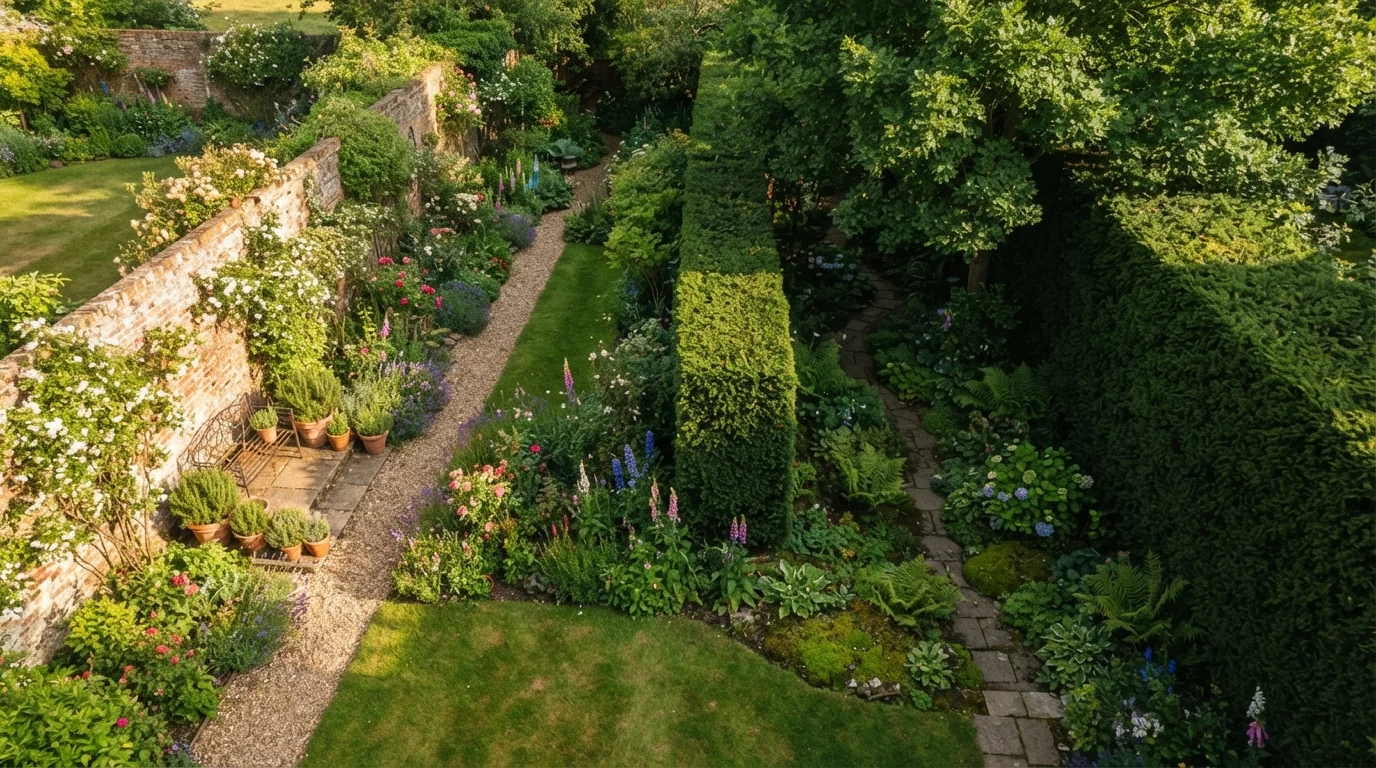
A south-facing brick wall stores the sun's heat and releases it slowly after dark, keeping the air nearby several degrees warmer than the open lawn just ten feet away. A low-lying corner at the edge of the property may collect cold air that drains downslope on still nights, turning it into a frost pocket that kills tender plants a full two weeks after the rest of the garden has warmed. A dense evergreen hedge blocks prevailing winds on its sheltered side but creates turbulence around its corners.
None of these variations show up on a regional weather map. They only become visible through careful observation - which is exactly where effective microclimate use begins.
5-10°F
Temperature difference within a single garden
Research in urban horticulture has documented temperature differentials of this range between sheltered and exposed spots within small domestic gardens.
2-3 weeks
Earlier last frost in sheltered garden spots
Gardeners working with south-facing walls and sheltered pockets often observe the effective frost-free period starting significantly earlier than in open areas of the same property.
50%+
Wind speed reduction behind a permeable hedge
Studies in landscape horticulture show that a semi-permeable windbreak can reduce wind velocity by more than half on its sheltered side, creating a meaningfully calmer microclimate.
The Main Types of Garden Microclimates
Most garden microclimates fall into a handful of recognizable categories:
- Warm, sheltered pockets - typically found against south- or west-facing masonry. These spots suit heat-loving plants like figs, rosemary, and wall-trained fruit trees that would struggle in the open.
- Cool, shaded zones - formed under tree canopies or on north-facing slopes. Ideal for ferns, hostas, astilbes, and other shade-tolerant species that scorch in direct sun.
- Wind-exposed positions - open corners, hilltops, and gaps between buildings that funnel and accelerate air. Plants here need to be naturally tough or benefit from a windbreak.
- Frost hollows - low areas where cold air pools overnight. Even in a mild climate, these spots can damage blossom on fruit trees or kill early-season vegetables.
- Dry, fast-draining spots - gravelly soil near walls or under wide eaves where rain rarely reaches. Mediterranean plants and drought-tolerant natives often thrive here. See why native plants often suit these conditions naturally.
How to Map Your Garden's Microclimates
You don't need instruments to identify microclimates - observation is the core tool. Walk your garden at different times of day and note:
- Sun movement: Which areas receive direct sun for most of the day, and which are in shade by early afternoon?
- Frost and dew patterns: On cold mornings, where does frost linger longest? These are your coldest spots.
- Wind behavior: Where do plants consistently lean or show wind-burned edges? Where is the air noticeably still?
- Soil moisture: After rain, which areas stay wet for days and which dry out within hours?
Repeating this over several weeks across different seasons gives a much more reliable map than a single inspection. If you're planning a vegetable plot, this legwork is especially valuable - see starting a vegetable garden from scratch for how site selection fits into the broader planning process.
Keep a Simple Microclimate Journal
A notebook or phone photo log works well. Record conditions in different parts of your garden after frost, heavy rain, hot afternoons, and windy days. After a few weeks, patterns become clear and you'll have a reliable reference before making any planting decisions.
Using Microclimates to Your Advantage
Once you understand where your warm, cool, sheltered, and exposed zones fall, you can start placing plants strategically rather than guessing and replacing failures.
Reserving your warmest microclimate for heat-sensitive crops or tender perennials can meaningfully extend the growing season at both ends. Placing moisture-loving plants in naturally wetter zones reduces how often you need to water them - an insight that works well alongside a thoughtful choice of watering method. Locating frost-sensitive plants away from known frost hollows reduces winter losses without needing to wrap or move them every year.
You can also modify microclimates deliberately. A new hedge or fence creates shelter. Masonry paving stores heat. Raised beds in a cold, wet spot improve drainage and warm up faster in spring. Mulching cool-zone beds helps moderate soil temperature swings - a technique explored in detail in our guide on mulching garden beds.
In smaller spaces, microclimate thinking becomes even more powerful. A balcony or courtyard that seems too exposed or shaded for serious growing may have one sheltered corner capable of supporting far more than you'd expect. See how small outdoor spaces can punch above their weight for practical design approaches.
Microclimates Change as Gardens Mature
As trees grow taller and hedges fill in, the microclimate conditions in your garden shift. A once-sunny bed may become a shade zone as a nearby tree matures. Plan for this by revisiting your observations every few years - especially before making significant planting investments.