

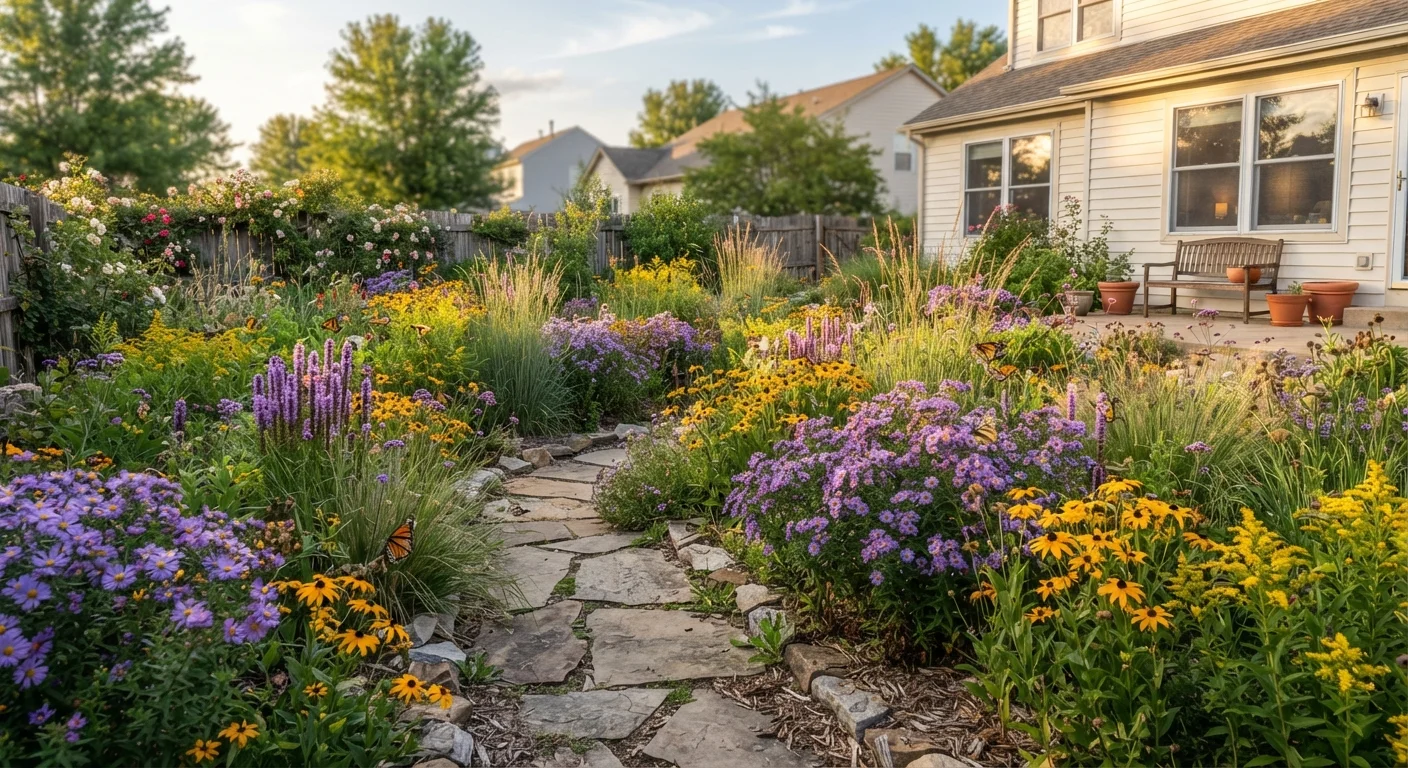
Key Takeaways
- Native plants are adapted to local soils and rainfall, often requiring less supplemental watering once established.
- They support local pollinators and wildlife in ways that many exotic ornamentals cannot.
- Sourcing the right species for your specific region takes research and patience.
- Establishment periods can be slow - native plants may look unremarkable for the first one or two seasons.
- Mixing natives with non-invasive non-natives is a practical middle-ground many gardeners use successfully.
Adapted to local rainfall and soil conditions
Native plants evolved alongside local weather patterns, meaning they generally require less supplemental watering and fertilizing once past the establishment phase.
Supports native pollinators and wildlife
Native plants provide the specific pollen, nectar, seeds, and shelter that local insects, birds, and other wildlife rely on - relationships that many imported ornamentals cannot replicate.
Reduced need for chemical inputs
Because they're suited to local pests and soil biology, native plants often perform well with little or no pesticide or synthetic fertilizer use, lowering ongoing costs and environmental impact.
Builds long-term garden resilience
Established native plantings tend to handle local climate extremes - drought, heavy rain, temperature swings - more reliably than plants that evolved in different conditions.
Can reduce erosion and improve soil health
Many native plants develop deep root systems that stabilize soil and improve its structure and water-holding capacity over time.
Slow and sometimes underwhelming establishment period
Most native plants invest heavily in root development during their first season, meaning top growth can look sparse or unimpressive for one to two years before the plant fills out.
Sourcing reliable, true-to-species plants is difficult
Many retail nurseries carry a limited or mislabeled native selection; finding genetically appropriate local ecotypes often requires specialist nurseries or native plant sales.
Requires precise site and species matching
Native plants adapted to dry prairie soils will struggle in a wet clay garden, and vice versa - accurate site assessment is essential before purchasing any plants.
Design can be harder to execute attractively
Achieving a cohesive, visually appealing native planting requires understanding plant communities and bloom succession, which takes more research than selecting conventional ornamentals.
Some natives spread aggressively
Certain native species - particularly some grasses and groundcovers - can spread more vigorously than expected and require active management to stay in bounds.
Our Verdict
Native plants offer genuine, evidence-backed benefits for water efficiency, biodiversity, and long-term garden resilience. The trade-offs - slower establishment, limited retail availability, and stricter site-matching requirements - are real but manageable with some upfront planning. For most everyday gardeners, a thoughtfully chosen native palette pays dividends over time.
Native plants are particularly well-suited to gardeners who want a lower-maintenance, ecologically productive outdoor space and are willing to invest time in research and a longer establishment phase.
What 'Native' Actually Means - and Why It Matters
A native plant is one that evolved in a specific region over thousands of years without human introduction. The term is more specific than it sounds: a plant native to the Pacific Northwest may be entirely out of place in a Mid-Atlantic garden. Nativeness is regional, sometimes even local, not a broad national label.
This distinction matters because the ecological relationships native plants support - with pollinators, birds, soil microbes, and insects - are finely tuned to local conditions. Research from institutions including the Xerces Society and the Lady Bird Johnson Wildflower Center consistently shows that native plants support a broader range of native insect species than non-native ornamentals, even when those ornamentals are well-established in the landscape.
Understanding your own region's native plant palette is the essential first step. Local native plant societies, cooperative extension offices, and university horticulture programs are reliable starting points for identifying what's genuinely native to your area.
The Real Advantages of Going Native
The case for native plants is strongest when you look at the cumulative, long-term picture rather than the first season.
Adapted to local rainfall and soil conditions
Native plants evolved alongside local weather patterns, meaning they generally require less supplemental watering and fertilizing once past the establishment phase.
Supports native pollinators and wildlife
Native plants provide the specific pollen, nectar, seeds, and shelter that local insects, birds, and other wildlife rely on - relationships that many imported ornamentals cannot replicate.
Reduced need for chemical inputs
Because they're suited to local pests and soil biology, native plants often perform well with little or no pesticide or synthetic fertilizer use, lowering ongoing costs and environmental impact.
Builds long-term garden resilience
Established native plantings tend to handle local climate extremes - drought, heavy rain, temperature swings - more reliably than plants that evolved in different conditions.
Can reduce erosion and improve soil health
Many native plants develop deep root systems that stabilize soil and improve its structure and water-holding capacity over time.
Water efficiency is among the most practical benefits. Once established - typically after one to two full growing seasons - most native plants are adapted to local precipitation patterns and rarely need supplemental irrigation except during extended drought. This makes them a sound choice for gardeners managing water use responsibly. Pairing natives with good mulching practices amplifies this effect significantly; see our guide to mulching garden beds for practical detail on materials and timing.
On the pest front, native plants in healthy soil tend to attract natural predators that keep pest populations in check. This aligns well with reduced-intervention pest management strategies covered in our article on garden pest control without sprays.
The Trade-Offs Worth Taking Seriously
A balanced assessment requires acknowledging where native plants genuinely challenge the everyday gardener.
Slow and sometimes underwhelming establishment period
Most native plants invest heavily in root development during their first season, meaning top growth can look sparse or unimpressive for one to two years before the plant fills out.
Sourcing reliable, true-to-species plants is difficult
Many retail nurseries carry a limited or mislabeled native selection; finding genetically appropriate local ecotypes often requires specialist nurseries or native plant sales.
Requires precise site and species matching
Native plants adapted to dry prairie soils will struggle in a wet clay garden, and vice versa - accurate site assessment is essential before purchasing any plants.
Design can be harder to execute attractively
Achieving a cohesive, visually appealing native planting requires understanding plant communities and bloom succession, which takes more research than selecting conventional ornamentals.
Some natives spread aggressively
Certain native species - particularly some grasses and groundcovers - can spread more vigorously than expected and require active management to stay in bounds.
Sourcing is one of the most commonly underestimated hurdles. Many big-box garden centers stock a limited and inconsistent native plant selection, and some plants sold as "native" may be cultivars bred for showier flowers at the expense of wildlife value. Specialty native plant nurseries and native plant society sales are more reliable, but may require planning ahead.
Gardeners used to the reliable structure of traditional perennial borders may also find that native plant combinations require more ecological literacy to compose well. Plants that thrive together in the wild don't always look cohesive in a suburban setting without intentional design work. For those working with limited space, our piece on making small outdoor spaces work harder addresses how to maximize planting choices in tight areas.
Practical Tips for Getting Started
The most successful native plant gardens tend to start small and expand deliberately. Beginning with a defined bed or border - rather than a wholesale lawn replacement - gives you space to learn which species perform well in your specific microclimate before scaling up.
Check Cultivar Status Before You Buy
Many plants marketed as 'native' are actually cultivated varieties (nativars) selected for showier flowers or unusual foliage. Some nativars retain full wildlife value; others have reduced pollen or nectar production. When in doubt, ask your nursery whether the plant is a straight species or a cultivar, and consult your local native plant society for guidance on which cultivars are recommended.
Site-matching is non-negotiable. A native plant placed in the wrong soil type or light condition will struggle just as much as any other plant. Understanding your soil drainage, sun exposure, and moisture levels before selecting species saves considerable frustration. The same seasonal awareness that guides conventional gardening applies here - our year-round garden maintenance reference is a useful companion for tracking what needs attention each season.
Finally, consider that native plants don't have to occupy an entire garden to deliver value. Even a single pollinator-friendly native shrub or a patch of native groundcover can meaningfully increase the ecological productivity of an otherwise conventional planting scheme. Progress over perfection is a reasonable standard for most home gardeners.