

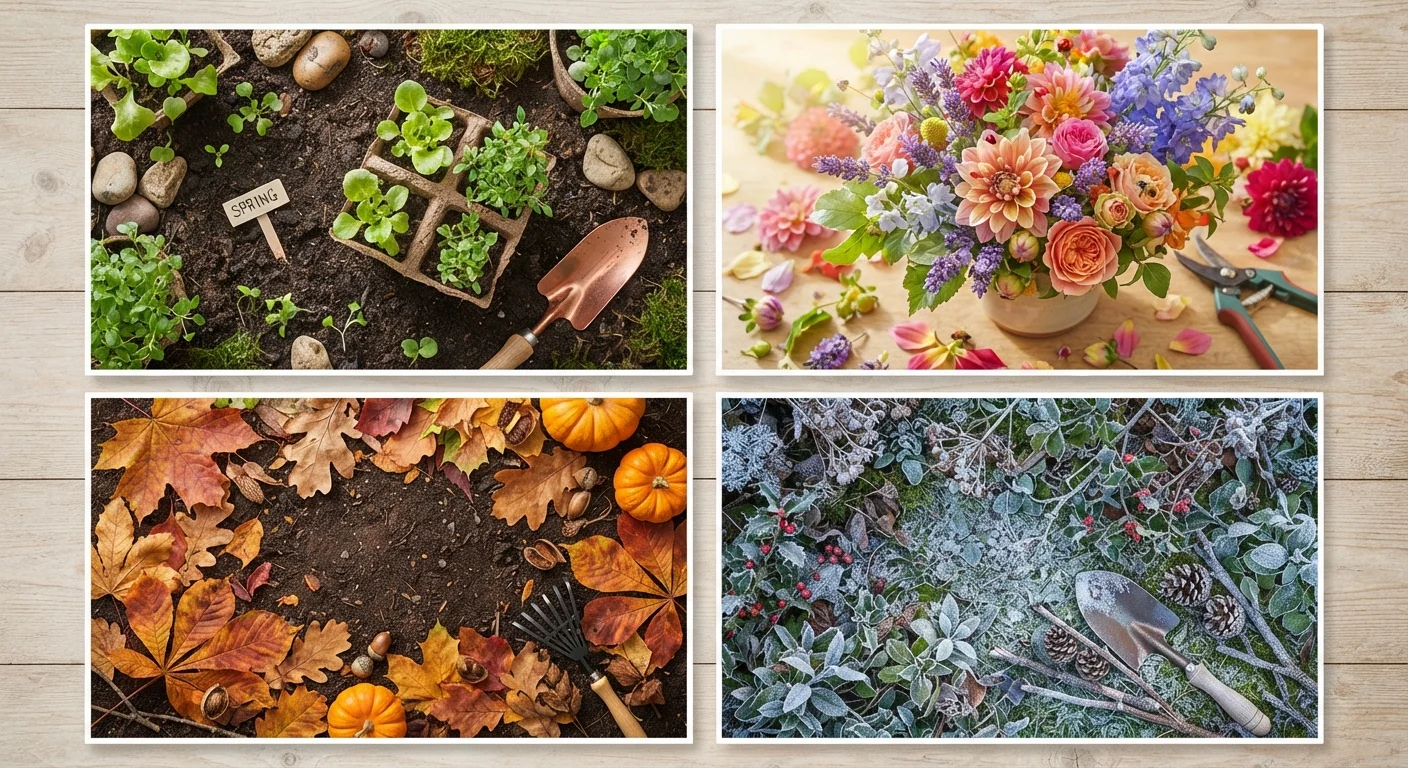
Spring: Soil Prep and Getting Started
Spring is the season that sets the tone for everything else. Before you put a single transplant in the ground, take time to assess your soil. Turn beds to a spade's depth, remove debris left from winter, and work in compost or aged organic matter to restore nutrients. This is also the right moment to test soil pH - most vegetables and flowering plants thrive between 6.0 and 7.0.
Once beds are ready, begin with cool-season crops like lettuce, spinach, peas, and brassicas. These tolerate light frost and can go in several weeks before your average last frost date. Warm-season plants - tomatoes, peppers, cucumbers - should wait until nighttime temperatures reliably stay above 50°F. If you're building your first food garden, our vegetable garden guide for beginners covers planning and plant selection in detail.
Spring is also the time to divide overcrowded perennials, prune dead or winter-damaged wood from shrubs, and dethatch and aerate lawns before active growth resumes. Use a garden readiness checklist to work through tasks systematically before planting gets underway.
Summer: Watering, Feeding, and Pest Watch
Summer maintenance centers on consistency. Water is the most critical variable - most garden plants need about one inch per week, either from rainfall or irrigation. Water deeply and infrequently to encourage roots to grow downward rather than near the surface. Morning watering is preferable because foliage has time to dry before nightfall, reducing the risk of fungal disease.
Feed heavy feeders - tomatoes, squash, corn, roses - with a balanced fertilizer every three to four weeks during peak growth. Watch for signs of nutrient deficiency: yellowing between leaf veins often signals magnesium or iron shortage; pale overall color can indicate nitrogen need.
Pest scouting should happen at least weekly. Check the undersides of leaves for aphids, spider mites, and caterpillar eggs. Hand-pick where populations are small; introduce beneficial insects like lacewings or ladybugs for persistent infestations. Understanding how sun, shade, and airflow vary across your space helps explain why some areas harbor more pests - our article on garden microclimates explores this in practical terms.
Crop rotation
The practice of moving different plant families to different beds each season. It disrupts pest and disease cycles that build up when the same crop is grown in the same spot repeatedly.
Soil pH
A measure of how acidic or alkaline your soil is, on a scale from 0 to 14. Most garden plants perform best in slightly acidic to neutral soil, roughly 6.0-7.0.
Cover crop
A plant grown primarily to protect and improve soil rather than for harvest. Common examples include clover and winter rye, which fix nitrogen and prevent erosion over winter.
Mulch
A layer of organic or inorganic material spread over soil to retain moisture, regulate temperature, and suppress weeds. Common organic options include straw, shredded leaves, and wood chips.
Beneficial insects
Insects that help control garden pests by preying on or parasitizing them. Ladybugs, lacewings, and parasitic wasps are common examples gardeners can encourage or introduce.
Autumn: Harvest, Cleanup, and Mulching
Autumn asks gardeners to shift from tending growth to preserving what's there and preparing for dormancy. Harvest remaining crops before hard frosts arrive, and cure root vegetables, winter squash, and garlic in a dry, ventilated space. Pull spent annuals and compost disease-free material; bag or discard anything showing signs of blight or rot to prevent overwintering pathogens.
Cut back most perennials after the first killing frost, but leave ornamental grasses and seed-heavy stems standing - they provide structure in winter and food for birds. Apply a 2-4 inch layer of mulch (straw, shredded leaves, or wood chips) over garden beds after the ground cools. This helps moderate soil temperature, retain moisture, and suppress early spring weeds. If you're creating your own mulch material by composting autumn leaves, our guide on backyard composting walks through the process step by step.
Autumn is also an excellent time to plant spring-flowering bulbs - tulips, daffodils, alliums - and to sow cover crops like clover or winter rye over empty beds to protect and enrich the soil over winter.
Winter: Protection, Planning, and Tool Care
In most US climates, winter is the quietest season in the garden, but it isn't an idle one. Protect marginally hardy plants with burlap wraps, cold frames, or frost cloth. Potted plants are especially vulnerable; move containers to an unheated garage or shed when hard freezes threaten, since pots provide far less insulation than in-ground soil.
Use the slower months to plan next year's garden. Rotate crop families across beds to reduce pest and disease buildup - a useful rule of thumb is to avoid planting the same plant family in the same spot more than once every three years. Sketch a planting map now, noting what worked well and what underperformed. Consider incorporating native plants where low-maintenance, drought-tolerant options would serve you better.
Tool care is a worthwhile winter task that's easy to skip. Clean soil from blades, sharpen pruners and hoe edges with a flat file, and rub metal surfaces with a light coat of oil to prevent rust. Wooden handles can be treated with linseed oil to prevent cracking. Well-maintained tools last years longer and make every spring task easier.