

Key Takeaways
- Broad-spectrum pesticide use can disrupt beneficial insects that naturally control pest populations.
- Physical barriers like row covers and copper tape provide reliable, chemical-free protection.
- Healthy soil, proper watering, and crop rotation reduce pest vulnerability at the root level.
- Attracting or introducing natural predators is one of the most durable long-term strategies.
- Companion planting offers modest but real benefits when plant pairings are backed by evidence.
- Targeted, low-impact interventions exist for when hands-on approaches are not enough.
Why Spray-First Thinking Often Backfires
When gardeners spot chewed leaves or wilting stems, the instinct to reach for a pesticide is understandable. But broad-spectrum sprays - even those marketed as "natural" - rarely distinguish between the pest you're targeting and the beneficial insects doing quiet work in the background. Ladybugs, lacewings, parasitic wasps, and ground beetles all contribute to keeping pest populations in check. Disrupting them can create a rebound effect, where pest numbers surge once predator pressure is removed.
Integrated Pest Management (IPM) is the framework that professional horticulturalists and extension services widely recommend. It treats pest control as a hierarchy: start with the least disruptive approach and escalate only when necessary. The goal is not a pest-free garden - which is neither realistic nor ecologically sound - but a garden where pest damage stays below a threshold that meaningfully affects your harvest or enjoyment.
Before identifying a treatment, spend time simply observing - check plants at dusk and dawn when many pests are most active. Knowing exactly which pest you're dealing with prevents wasted effort and misdirected interventions.
Correct identification is the foundation of effective IPM. Treatments suited to one pest are often useless or counterproductive against another.
Set a tolerance threshold before acting: minor cosmetic leaf damage rarely affects plant health or yield. Reserve intervention for signs of sustained, spreading pressure that is visibly weakening the plant.
Acting at every first sign of a pest removes the opportunity for natural predator populations to respond and stabilize the situation on their own.
Physical Barriers: Your First Line of Defense
Physical exclusion is one of the most reliable, chemical-free strategies available, and it works by simply preventing pests from reaching plants in the first place.
- Floating row covers (lightweight fabric draped over hoops) block caterpillar-laying moths, aphid-carrying flies, and beetles from landing on brassicas, squash, and beans. They let in light and water while acting as a physical shield. Remove them during flowering if your plants need pollinator access.
- Copper tape around container rims or raised bed edges deters slugs and snails. The mechanism is debated in the scientific literature, but many gardeners report consistent results with tight, unbroken application.
- Collars made from cardboard or plastic pushed 2-3 inches into the soil around transplant stems protect seedlings from cutworms, which sever stems at or just below the soil line.
- Fine mesh netting over fruit trees and berry bushes protects ripening crops from birds without harm to wildlife.
The key is installing barriers before pest pressure arrives - retrofitting them mid-infestation is far less effective.
Beneficial Insects and Natural Predators
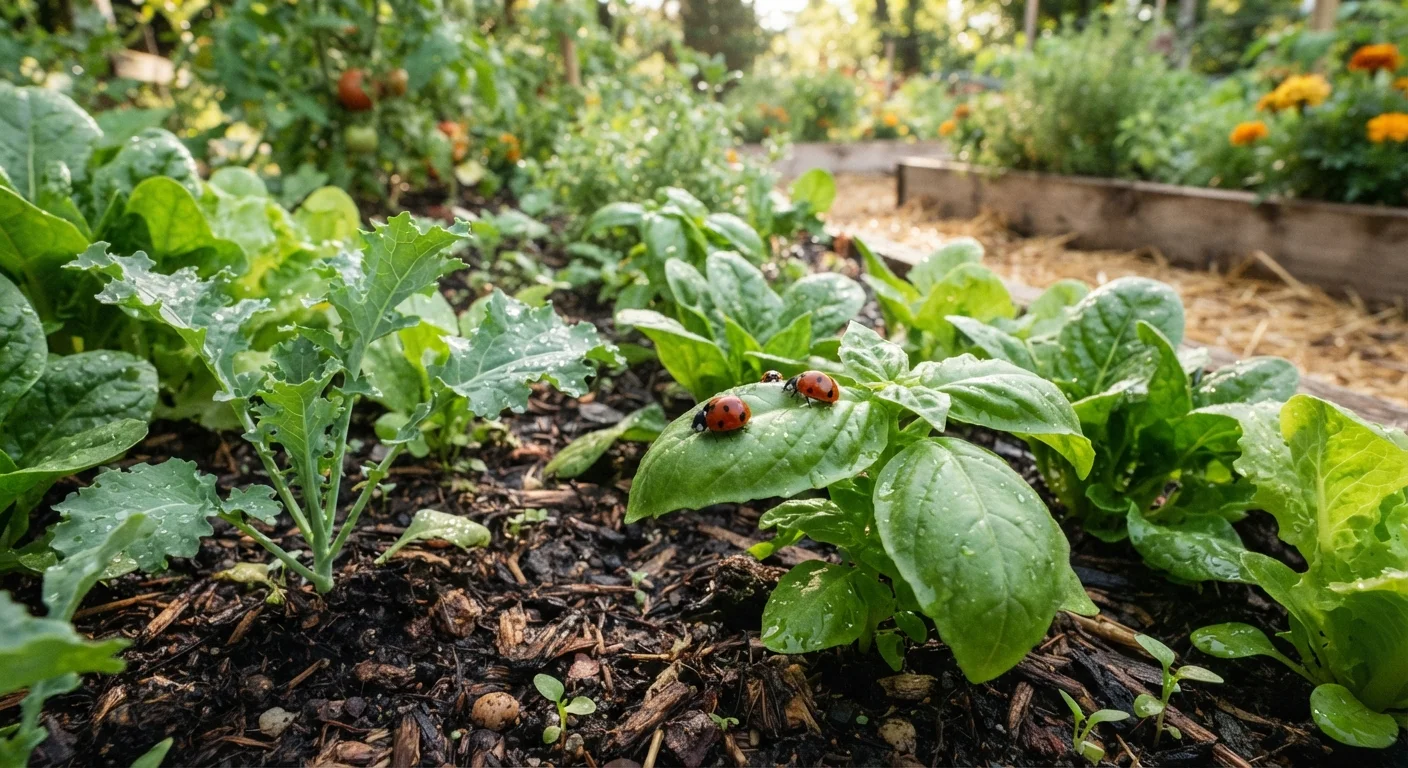
A garden rich in beneficial insect life can regulate many common pests without any direct intervention. The practical challenge is creating and maintaining conditions that attract and support those allies.
Attracting beneficials through planting: Many parasitic wasps and predatory flies feed on nectar and pollen as adults. Small-flowered plants - dill, fennel, yarrow, sweet alyssum, and native wildflowers - provide ideal food sources. Incorporating these into or around vegetable beds encourages beneficials to linger where pest populations are highest. See our guide to native plants for species that support local insect communities particularly well.
Purchased beneficial insects: Ladybugs and lacewing larvae are commercially available, but releasing them in open gardens often produces disappointing results - they tend to disperse quickly. Predatory mite species applied directly to affected soil or foliage have a better track record for targeted problems like spider mites.
Habitat: Reduce bare soil, leave some leaf litter at bed edges, and avoid over-tilling. Ground beetles, which eat slugs, cutworm eggs, and weed seeds, need undisturbed soil to establish themselves.
Cultural Controls: Garden Habits That Reduce Pest Pressure
Many pest problems trace back to conditions gardeners can directly influence. Adjusting how and when you do routine tasks can meaningfully lower the baseline pest population in your garden.
- Crop rotation: Moving plant families to different beds each season interrupts the life cycles of soil-dwelling pests - like onion fly larvae or club root spores - that build up when a host plant returns to the same ground year after year.
- Plant spacing: Crowded plants create humid microclimates that fungal diseases and soft-bodied pests like aphids prefer. Following recommended spacing reduces this risk.
- Watering practices: Overhead watering in the evening leaves foliage wet overnight, encouraging slugs and fungal issues. Switching to drip or soaker hose irrigation keeps leaves dry and reduces slug activity. Our watering methods comparison covers the practical trade-offs.
- Sanitation: Remove spent plants promptly, clear debris where pests overwinter, and inspect new transplants for hitchhikers before introducing them to your garden.
These habits compound over seasons. A garden managed with consistent cultural controls typically requires less reactive intervention each successive year.
Companion Planting as a Pest Management Tool
Companion planting - growing different species in close proximity for mutual benefit - is often cited as a pest deterrent, though the evidence varies considerably by pairing. Some combinations are well-supported; others are garden folklore.
Combinations with reasonable evidence behind them include:
- Basil near tomatoes - anecdotally repels thrips and aphids, and some small trials support reduced whitefly presence.
- Nasturtiums as trap crops - aphids strongly prefer nasturtiums and will colonize them in preference to neighboring vegetables, making them easier to monitor and manage in one location.
- Alliums (onions, garlic, chives) near carrots - thought to confuse carrot fly through masking scent, though results are inconsistent and spacing matters.
For a deeper look at which pairings genuinely hold up, see our companion planting guide. Companion planting works best as one layer in a broader strategy, not a standalone solution.
Not All 'Natural' Products Are Low-Risk
Organic and botanical pesticides - including neem oil, pyrethrin, and copper-based fungicides - can still harm beneficial insects, aquatic life, or soil organisms if misapplied. Always follow label rates and timing, and treat 'natural' as a description of origin, not a guarantee of safety at any dose.
When Intervention Is Necessary: Lower-Impact Options
Even well-managed gardens face pest pressure that hands-on methods can't fully contain. When targeted intervention becomes necessary, the principle is to use the most specific, lowest-impact option that addresses the problem.
- Handpicking: For larger pests - caterpillars, squash bugs, Colorado potato beetles - manual removal directly into soapy water is effective and leaves no residue. Check undersides of leaves for egg masses.
- Insecticidal soap: A dilute solution of potassium salts of fatty acids disrupts soft-bodied insects like aphids and mites on contact. It breaks down quickly and has minimal residual effect on beneficials, but it must coat the pest directly to work.
- Neem oil: Derived from the neem tree, this acts as an insect growth disruptor and deterrent. It's most effective applied preventively or at early infestation stages. Avoid applying during peak pollinator activity - it can harm bees on direct contact.
- Bacillus thuringiensis (Bt): A naturally occurring soil bacterium available as a spray that is toxic specifically to caterpillar species when ingested. Different Bt strains target different insects, so confirm the product matches your pest.
Whatever you apply, always read label directions, apply in the early morning or evening to reduce exposure to pollinators, and spot-treat rather than blanket-spray where possible. For a full seasonal overview of when pest pressure typically peaks, see our year-round garden maintenance reference.