
Garden Watering Methods Compared: Drip, Soaker Hose, Sprinkler, and Hand Watering

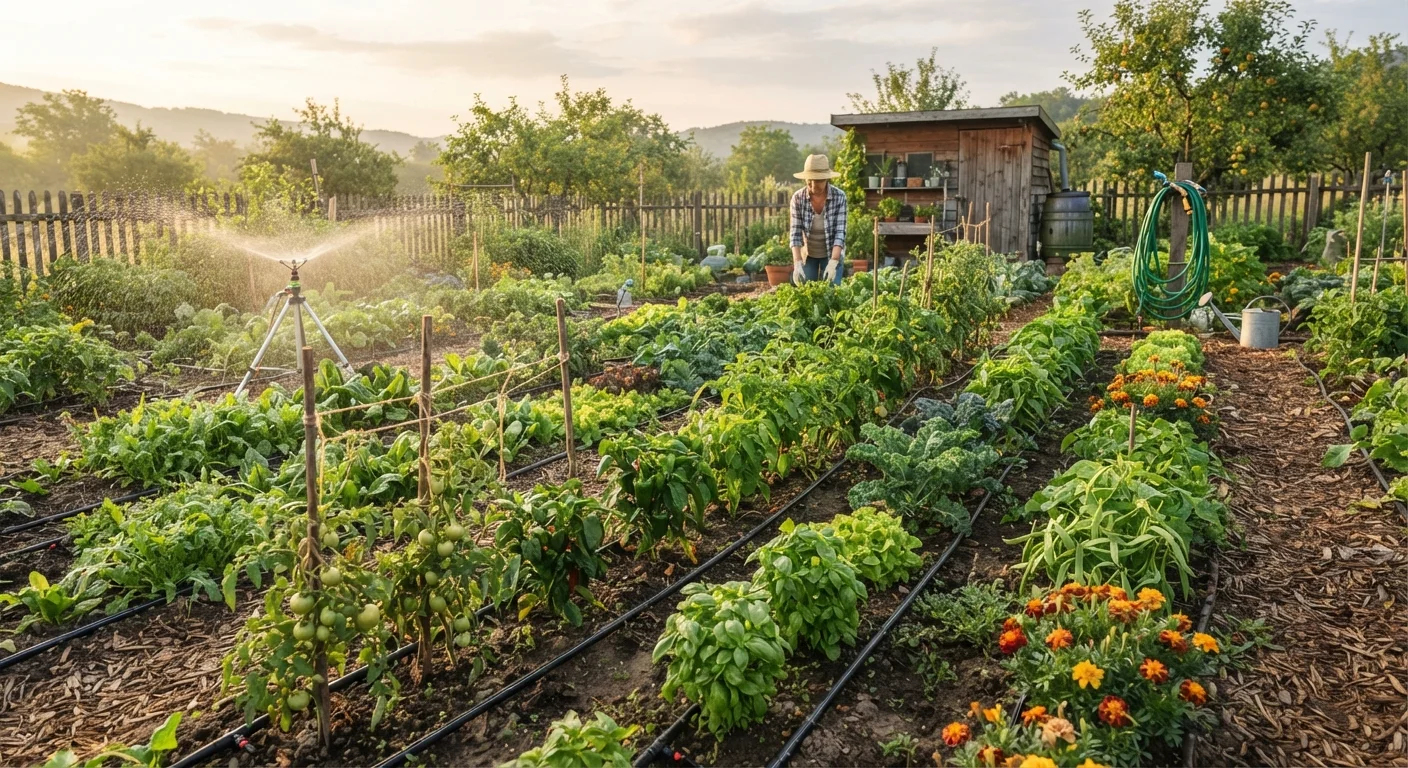
Key Takeaways
- Drip irrigation delivers water directly to roots, reducing evaporation and fungal disease risk.
- Soaker hoses are a lower-cost alternative to drip systems, well-suited to row-style plantings.
- Sprinklers cover large areas quickly but lose more water to evaporation and can promote leaf disease.
- Hand watering gives the most control but demands consistent time and attention from the gardener.
- Your garden's size, plant types, soil, and climate all influence which method works best.
Our Verdict
No single watering method suits every garden. Drip irrigation and soaker hoses shine in water-conscious or vegetable-focused gardens, while sprinklers remain practical for lawns and large beds. Hand watering remains a reliable choice for small or container-heavy spaces where precision matters most.
| Best for | Recommended |
|---|---|
| Water-conscious vegetable and raised-bed gardeners | Drip Irrigation |
| Row gardens on a modest budget | Soaker Hose |
| Lawns or large open planting areas | Sprinkler |
| Small gardens, containers, and seedling care | Hand Watering |
Why the Watering Method Matters
How you deliver water to your garden affects far more than convenience. It shapes root depth, fungal disease pressure, weed germination, and how efficiently your water supply is used. A method that works beautifully in a raised vegetable bed may be poorly suited to a sprawling lawn or a shaded mixed border.
The four most common approaches - drip irrigation, soaker hoses, sprinklers, and hand watering - each operate differently and carry distinct trade-offs. Understanding those trade-offs helps you match the method to your actual garden conditions, rather than defaulting to whatever came with the house. See how your garden layout factors in with our guide to raised beds vs. in-ground planting.
| Drip Irrigation | Soaker Hose | Sprinkler | Hand Watering | |
|---|---|---|---|---|
| Water efficiency | Very high - targets root zone | High - low evaporation | Moderate - evaporation losses | Variable - depends on technique |
| Setup complexity | Moderate to high | Low to moderate | Low (portable) to high (built-in) | None |
| Upfront cost | Moderate to high | Low | Low (portable) to high (in-ground) | Very low |
| Best garden type | Veggie beds, trees, perennials | Row crops, hedgerows | Lawns, large open beds | Containers, seedlings, small plots |
| Foliage wetting risk | None | None | High | Moderate - depends on technique |
| Time required | Low once installed | Low once installed | Low once installed | High - hands-on every session |
| Automation potential | High - timer-compatible | Moderate - timer-compatible | High - timer-compatible | None |
Drip Irrigation: Precision at the Root Zone
Drip systems deliver water slowly through a network of tubing and emitters placed at or near each plant's base. Because water goes directly to the root zone, very little is lost to evaporation, and foliage stays dry - which reduces the risk of fungal problems like powdery mildew and blight.
These systems work especially well in vegetable gardens, fruit trees, and perennial beds where plant spacing is consistent. They can be connected to a timer, making watering hands-free and reliable during hot spells. Setup does require some planning and upfront effort: tubing must be sized correctly, emitters can clog if sediment is present, and the layout needs adjusting as plantings change.
Drip is generally considered the most water-efficient option for established gardens. Paired with mulch to further limit evaporation, it can significantly reduce overall water use - an important consideration in regions with summer water restrictions. For more on how mulch and watering work together, see our article on mulching your garden beds.
Soaker Hoses: Simple and Affordable Root Watering
Soaker hoses are porous rubber or recycled-material hoses that seep water slowly along their entire length. Laid on the soil surface or buried just beneath mulch, they wet a strip of ground evenly - making them well-suited to rows of vegetables, hedgerows, or foundation plantings.
They cost considerably less than full drip systems and require no emitters or specialized fittings, just a standard hose connection. The trade-off is less precision: you water a line, not individual plant root zones, and coverage can be uneven over long runs or on slopes. Hoses can also degrade and crack over time when exposed to UV light, so burying them under mulch extends their life.
Extend Soaker Hose Life with Mulch
Laying a 2-3 inch layer of organic mulch over a soaker hose protects it from UV degradation and helps the surrounding soil absorb moisture more evenly. This simple step can meaningfully extend the hose's useful life and improve watering results at the same time.
Soaker hoses pair naturally with row-style vegetable gardens and are an approachable entry point for gardeners who want more efficiency than hand watering without the complexity of a drip system.
Sprinklers: Wide Coverage with Trade-Offs
Overhead sprinklers - whether oscillating, rotating, or built-in pop-up systems - cast water over a wide area. This makes them practical for lawns and large, open planting areas where other methods would be impractical to install.
The downsides are meaningful, though. Sprinklers wet foliage, which can encourage fungal diseases in susceptible plants. They also lose more water to evaporation than ground-level methods, particularly in hot or windy conditions. Watering in the early morning - when temperatures are lower and wind is calmer - helps reduce these losses, but doesn't eliminate them entirely.
For mixed garden beds with diverse plant types at different spacings, sprinklers can also over-water some areas while under-watering others. They remain most justified where drip or soaker systems would be difficult to implement, or where lawn grass is the primary planting.
Hand Watering: Attentive and Flexible
A watering can or handheld hose wand puts the gardener in direct control over where and how much water each plant receives. This makes hand watering genuinely useful for containers, seedlings, and newly transplanted starts that need close observation and careful delivery.
The limitation is time. Larger gardens become impractical to hand-water consistently, especially during drought or summer heat when daily watering may be needed. It's also easy - despite the best intentions - to apply water unevenly, missing root zones or watering too shallowly to encourage deep root growth.
For small patios, balcony gardens, or supplementing other systems where a plant needs extra attention, hand watering remains the most flexible tool available. It also gives you a reason to observe your garden closely, which helps catch pest or disease problems early. Learn more about identifying those issues in our guide to garden pest control without spraying.
Choosing Based on Your Garden's Needs
A few key questions help narrow the decision: How large is the area? What types of plants are you growing? How much time can you realistically commit? And does your region experience water restrictions or summer drought?
For kitchen gardens and raised beds, drip irrigation or soaker hoses will generally deliver the most consistent results with the least water waste. For lawns or very large ornamental borders, sprinklers may be the only practical choice. Containers and small-space gardens are well-served by hand watering, especially when paired with mulch to slow moisture loss between sessions.
It's also worth noting that different parts of a single garden may benefit from different methods - a drip system in the vegetable beds alongside a sprinkler for the lawn is a common and sensible combination. Whatever method you choose, good seasonal garden maintenance habits will help you adjust watering patterns as conditions change through the year. And be aware that overwatering - regardless of method - is one of the more common ways gardeners inadvertently harm their soil over time; see our piece on things that quietly damage garden soil for more context.