

Key Takeaways
- Raised beds give you full control over soil quality but require a meaningful upfront investment in materials and fill.
- In-ground planting is more affordable to start and scales easily, but success depends heavily on your existing soil condition.
- Raised beds typically drain better and warm up faster in spring, extending the usable growing season.
- In-ground gardens support larger root systems and deep-rooted crops like corn, pumpkins, and asparagus more naturally.
- Accessibility and physical comfort strongly favor raised beds for gardeners with mobility limitations.
- Both methods benefit from consistent mulching, soil amendment, and seasonal preparation.
Option A
Raised Beds
The controlled, high-performance growing environment.
Best for: Gardeners dealing with poor native soil, drainage issues, or limited mobility who want a defined, manageable growing space.
Option B
In-Ground Planting
The traditional, scalable approach rooted in natural soil.
Best for: Gardeners with good existing soil who want to grow larger quantities of crops or ornamentals with lower upfront investment.
If your native soil is compacted, rocky, or poorly draining
Raised Beds
Raised beds let you bypass problematic native soil entirely by filling with a custom mix suited to your crops. You avoid the labor and expense of extensive soil remediation.
If you want to grow a large vegetable plot on a limited budget
In-Ground Planting
In-ground gardens require no lumber, hardware, or bulk soil purchase to get started. If your existing soil is workable, the cost to begin is minimal.
If you have physical limitations or prefer low-strain gardening
Raised Beds
Working at an elevated height reduces bending and kneeling. Beds built 18-24 inches tall can be tended from a seated position, making gardening accessible to more people.
If you plan to grow deep-rooted or sprawling crops like pumpkins or corn
In-Ground Planting
Large, deep-rooted plants benefit from unrestricted root space and the natural moisture retention of in-ground soil. Raised beds can constrain root development for these varieties.
If you're gardening in a small urban or suburban space
Raised Beds
Raised beds define clear growing zones, maximize productivity per square foot, and integrate neatly into patios, decks, or compact yards where traditional rows aren't practical.
Understanding the Core Difference
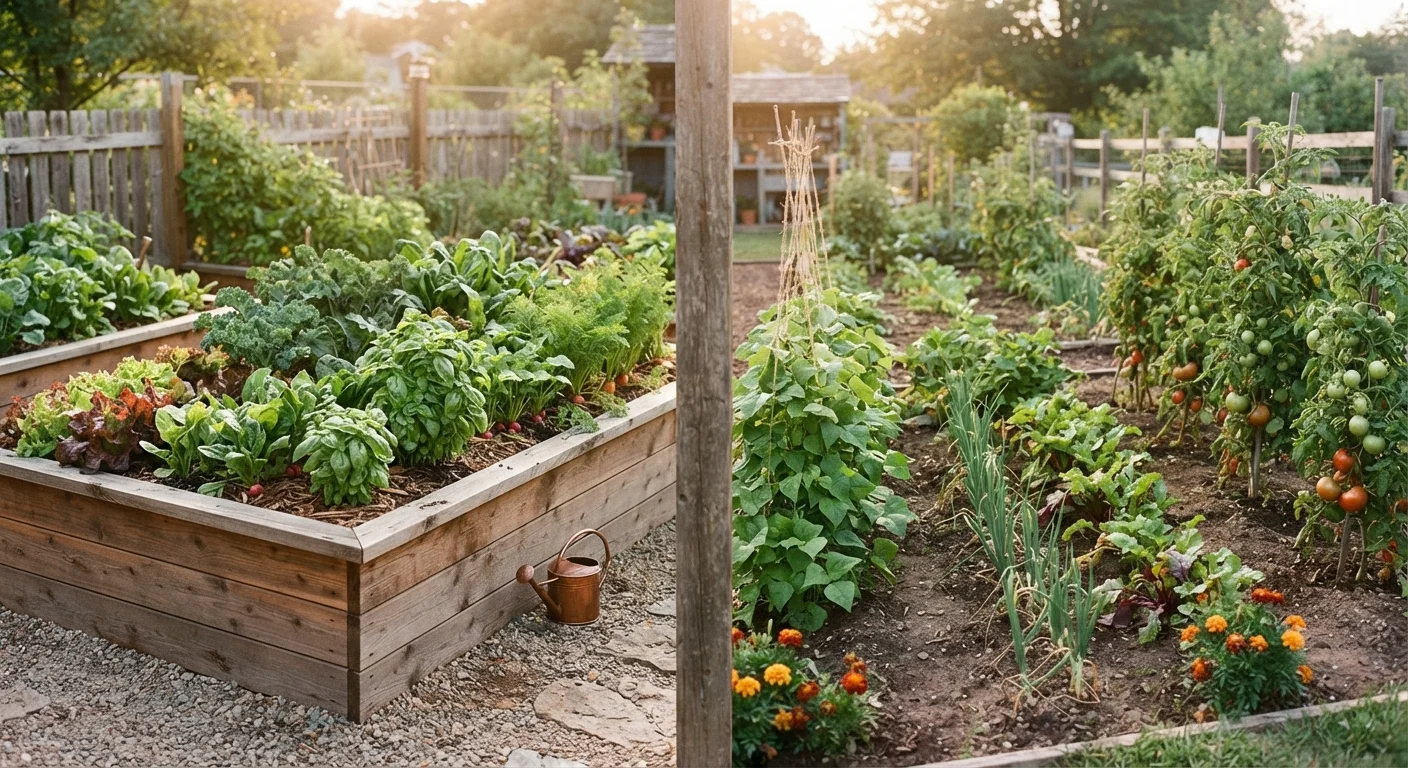
At its simplest, the choice between raised beds and in-ground planting comes down to one question: how much control do you need over your growing environment? Raised beds are constructed frames - typically wood, stone, or galvanized steel - filled with a custom soil mix sitting above your existing ground. In-ground planting means working directly with your native soil, amending it as needed and planting into the earth itself.
Neither approach is universally superior. Each performs better under specific conditions, and many experienced gardeners use both in the same yard. If you're new to growing your own food, understanding these trade-offs before you invest time or money will save significant frustration.
| Criterion | Raised Beds | In-Ground Planting |
|---|---|---|
| Upfront cost | Higher (materials + fill soil) | Lower (tools + amendments) |
| Soil control | Complete - custom mix | Limited by native soil |
| Drainage | Excellent by default | Varies by native soil type |
| Seasonal warm-up | Faster - earlier planting | Slower in cold climates |
| Weed pressure | Generally lower | Higher from native weed seeds |
| Scalability | Limited by build cost | Easy to expand affordably |
| Root depth | Constrained by bed depth | Unrestricted access to subsoil |
| Accessibility | High - reduced bending | Low - ground-level work |
| Long-term soil health | Requires annual topping up | Builds naturally over time |
Soil, Drainage, and Growing Conditions
Soil quality is where raised beds have the clearest advantage. You fill them with a mix you choose - typically a blend of topsoil, compost, and an aerating material like perlite or aged wood chips. This means consistent drainage, strong fertility from the start, and no compaction from foot traffic. In-ground gardeners, by contrast, must work with whatever native soil exists on their property.
That said, in-ground soil has real advantages for certain plants. Deep-rooted perennials, large vine crops, and trees rely on access to subsoil moisture that a raised bed simply cannot provide. Native soil also contains a broader ecosystem of beneficial microorganisms that develop slowly over years. With consistent amendments, compost additions, and thoughtful mulching, in-ground plots can become remarkably productive over time.
6-8°F
Warmer soil temperature in raised beds
University extension research has found raised bed soil commonly warms several degrees faster than in-ground plots in early spring, enabling earlier planting dates.
~50%
Reduction in weed pressure reported
Gardeners using raised beds with clean fill soil often report significantly fewer weeds compared to in-ground plots, particularly in the first few seasons.
10-15 years
Typical lifespan of cedar raised bed frames
Cedar and rot-resistant lumber are commonly cited in gardening literature as lasting a decade or more under typical outdoor conditions without treatment.
Drainage differences are especially pronounced in heavy clay soils. Raised beds drain freely through their base, reducing root rot risk considerably. In-ground clay soils can hold water long after rain, creating anaerobic conditions that damage roots. Sandy soils present the opposite challenge - they drain too fast and dry out quickly, a problem shared by both methods but more easily corrected in a raised bed where you control the mix.
Cost, Effort, and Long-Term Maintenance
The upfront cost gap between these two methods is significant. An in-ground garden requires little more than hand tools and soil amendments. A raised bed requires frame materials, hardware, and a substantial volume of fill soil - costs that add up quickly as bed size increases. However, raised beds generally require less ongoing weeding effort, since weed seeds aren't embedded in the native soil and foot traffic stays outside the frame, preventing compaction.
In-ground gardens demand more seasonal soil preparation. Before each growing season, plan to loosen compacted areas, add compost, and address any drainage issues. A garden readiness checklist can help you stay organized. Raised beds need topping up with compost annually as organic matter breaks down, but the core structure - once built soundly - can last many years with minimal intervention.
A Note on Raised Bed Materials
The material you choose for raised bed frames affects both longevity and safety. Untreated cedar and redwood are widely used for their natural rot resistance. Avoid lumber treated with older preservatives, as some historical formulations raised contamination concerns for edible gardens. Modern pressure-treated lumber uses different chemistry, but if you're uncertain, check current guidance from your local cooperative extension service before using treated wood near food crops.
Which Method Suits Your Garden Goals
For intensive vegetable growing in a compact yard, raised beds are hard to beat. They warm up faster in spring, letting you plant earlier, and their defined footprint suits small urban and suburban spaces where every square foot counts. You can also tailor each bed's soil mix to specific crops - heavier compost for heavy feeders, sharper drainage for root vegetables.
For larger-scale planting, ornamental beds, or native plantings, in-ground gardens offer genuine advantages. They integrate naturally into the landscape, support a broader range of plant sizes, and require no frame construction. Native plants, in particular, often thrive in in-ground conditions once established, since they're adapted to regional soil and climate patterns. Companion planting strategies can also be applied effectively in either setting, though the defined layout of raised beds makes plant spacing and pairing easier to manage.
Ultimately, the right choice reflects your specific soil, your physical needs, your budget, and what you want to grow. Many gardeners find that starting with one method - and expanding into the other as their garden evolves - gives them the best understanding of both.