

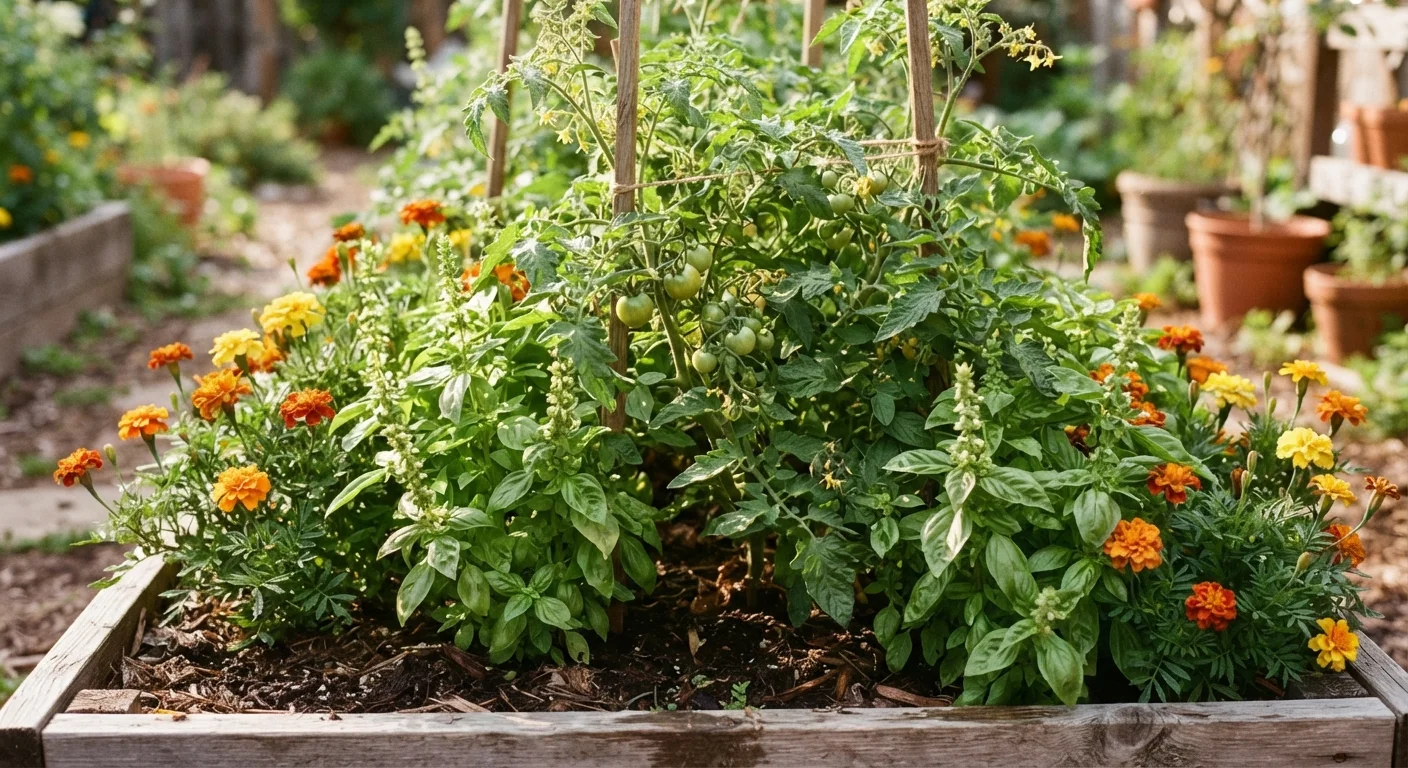
Key Takeaways
- Some companion planting combinations have solid scientific backing; many others rely mainly on gardening folklore.
- The 'Three Sisters' combination of corn, beans, and squash is among the most research-supported pairings.
- Marigolds can deter specific soil-dwelling pests, but their benefits depend heavily on species and placement.
- Companion planting works best as one part of a broader, integrated garden management approach.
- Proximity alone doesn't guarantee results - spacing, soil, and timing all influence companion plant effectiveness.
What Companion Planting Actually Means
Companion planting is the practice of growing two or more plant species in close proximity with the goal of having them benefit one another. The supposed benefits range from pest deterrence and improved pollination to better nutrient use and enhanced flavor. It's a concept with deep roots in traditional agriculture - and a reputation that has sometimes run ahead of the evidence.
Not all companion planting claims are equal. Some pairings have been studied in controlled agricultural settings and show measurable effects. Others are passed down through gardening lore without much scientific foundation. Understanding the difference helps you make smarter decisions in your own plot, whether that's a sprawling backyard or a compact container setup. For gardeners working with limited space, our guide on maximizing small outdoor spaces covers how to layer plantings efficiently.
The myth-and-fact pairs below separate established practice from popular assumption.
Myth
Planting basil next to tomatoes improves tomato flavor.
Fact
There is no peer-reviewed evidence that basil chemically alters tomato flavor when grown nearby.
This is one of the most repeated claims in companion planting, but it lacks scientific support. Flavor in tomatoes is primarily determined by genetics, soil nutrients, watering practices, and ripening conditions - not by neighboring plants releasing aromatic compounds into the soil or air at meaningful concentrations. Basil is still a practical companion because it attracts pollinators and is easy to harvest alongside tomatoes, but flavor improvement should not be the reason you plant it there.
Myth
Any two plants growing close together will automatically help each other.
Fact
Proximity can just as easily create competition for water, light, and nutrients as it can produce benefits.
Companion planting requires deliberate pairing, not just close spacing. Plants with similar root depths and water needs can actively compete rather than cooperate. Some combinations - like planting fennel near most vegetables - are widely noted to be inhibitory, potentially suppressing the growth of neighbors through allelopathic compounds. Researching specific pairings before planting is always worth the extra step.
Myth
Marigolds repel all garden pests when planted anywhere in the bed.
Fact
Certain marigold species deter specific pests - particularly nematodes in the soil - but only under the right conditions and placement.
Research does support that Tagetes species (French and African marigolds) can reduce populations of harmful root-knot nematodes when densely planted and left in the soil for a full season. However, this effect is nematode-specific and soil-dependent. Marigolds don't universally repel aphids, whiteflies, or most above-ground insects in the way gardening folklore often suggests. Planting a single border row and expecting broad pest protection is likely to disappoint.
Myth
The 'Three Sisters' combination works the same way in any garden.
Fact
The Three Sisters system is genuinely well-supported, but its success depends on scale, climate, and technique.
Growing corn, beans, and squash together - a practice developed by Indigenous peoples of North America - is one of the most research-validated companion planting systems. Corn provides a structure for beans to climb; beans fix atmospheric nitrogen that feeds the other plants; squash spreads along the ground, suppressing weeds and retaining moisture. The system works best with adequate space for corn to reach full height and proper sequencing of planting dates. In small raised beds or cool climates where corn struggles, results may be limited. Understanding your growing conditions matters as much as the pairing itself - our overview of raised beds vs. in-ground planting can help you assess which setup suits this kind of polyculture.
Myth
Companion planting can replace pest control measures entirely.
Fact
Companion planting can reduce pest pressure in some situations, but it rarely eliminates the need for other management strategies.
Studies on companion planting for pest control generally show modest reductions in pest density rather than elimination. The mechanism often involves attracting beneficial predatory insects or masking host-plant odors - effects that are real but variable depending on local insect populations, weather, and garden layout. Treating companion planting as a single-solution pest strategy tends to lead to disappointment and under-prepared responses when infestations occur.
Building Companion Planting Into Your Garden Plan
Putting companion planting to work requires more than scattering a few marigolds between your vegetables. Effective combinations depend on proper spacing so plants don't compete for light and water, appropriate timing so companion plants are established when their neighbors need support, and realistic expectations about what any pairing can and can't do.
Companion planting is most effective when combined with other sound practices. Healthy soil is the foundation - well-draining, nutrient-balanced beds give every plant the best start. Our article on mulching garden beds explains how mulch regulates soil conditions that benefit both companions. Likewise, incorporating native flowering plants nearby supports the beneficial insect populations that underpin many companion planting benefits - see the case for native plants for context.
For pest management specifically, companion planting is one useful tool among several. Pairing it with physical barriers, crop rotation, and habitat for beneficial insects produces better results than relying on plant proximity alone. Explore that broader toolkit in our guide to garden pest control without sprays.
~30%
Pest reduction in some intercropping studies
Research reviews on intercropping systems have noted pest density reductions of roughly 30% in some trials, though results vary widely by crop, pest species, and region.
1 full season
Time needed for marigolds to suppress soil nematodes
Agricultural research indicates that marigolds must be grown densely and incorporated into the soil for an entire growing season to show measurable nematode suppression.