

Key Takeaways
- Vehicle registration must be renewed annually in most U.S. states, with deadlines and fees varying by location.
- Many states require a safety or emissions inspection before registration renewal can be processed.
- Auto insurance policies typically renew annually - review coverage terms each cycle, not just the premium.
- Scheduled maintenance intervals (oil, brakes, tires) should align with manufacturer guidelines, not guesswork.
- Keeping a single organized folder or digital file for all vehicle documents saves time and reduces risk.
- Missing any one annual obligation can result in fines, failed inspections, or gaps in coverage.
Summary
22 items · 30-60 minutes to review and action
Why an Annual Car Ownership Review Matters
Car ownership involves more than fueling up and washing the exterior. Each year brings a set of legal obligations, safety checkpoints, and service milestones that, if missed, can lead to fines, voided coverage, or preventable mechanical failures. The good news is that all of these tasks are predictable - which means they are plannable.
This checklist consolidates every major annual obligation into one structured reference. Whether you are a first-time owner or have been driving for decades, running through this list once a year gives you confidence that nothing important has slipped through the cracks. For a broader picture of vehicle ownership across time, see Managing a Car Through Every Stage of Its Life.
Use the sections below to work through each category systematically. Note due dates, set calendar reminders, and keep supporting documents accessible.
Legal & Registration
Safety & Emissions Inspections
Insurance Review
Scheduled Mechanical Service
Documentation & Records
What You Will Need Before You Start
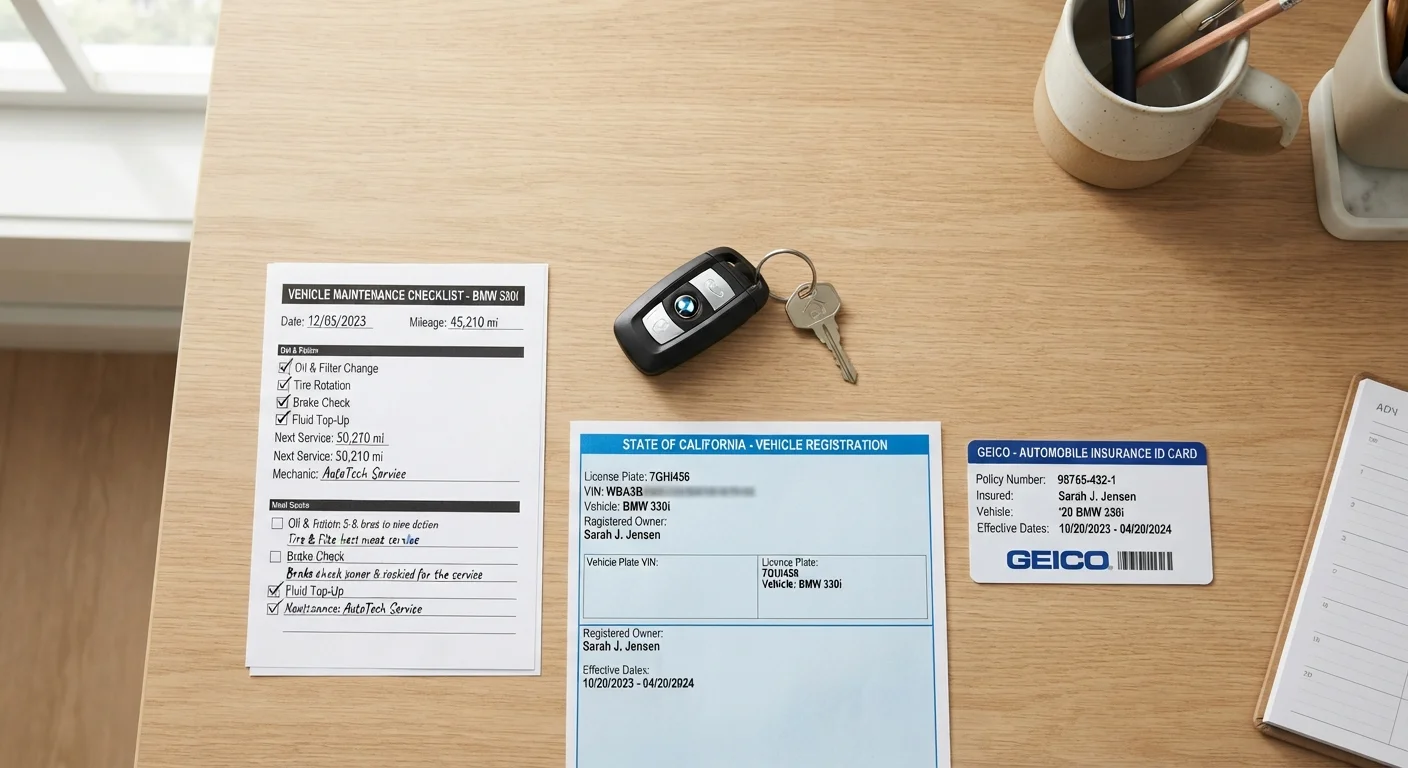
Before working through the checklist, gather the documents and information listed below. Having everything in one place prevents repeated trips to the glove compartment and removes the friction that causes tasks to be postponed.
Vehicle Owner's Manual
Confirms manufacturer-recommended service intervals and fluid specifications for your specific vehicle.
Current Vehicle Registration Card
Shows your registration expiration date and the information your DMV has on file.
Auto Insurance Policy Documents
Needed to verify coverage details, renewal date, and current proof-of-insurance validity.
Service History Records
Allows you to identify which maintenance tasks have already been completed and which are due.
State DMV Website
Provides accurate, current requirements for registration renewal, inspections, and emissions testing in your state.
Tire Tread Depth Gauge
Gives an accurate reading of remaining tread depth - more reliable than the penny test alone.
If you are unsure which maintenance tasks are due based on mileage, consult your owner's manual or review Your Car's Maintenance Schedule, Explained for a plain-language breakdown of common service intervals. For costs that may be approaching - especially for older vehicles - Vehicle Running Costs That Catch New Owners Off Guard is a useful companion resource.
Registration Deadlines Vary Significantly by State
Registration renewal deadlines, fees, and required supporting documents differ between states and sometimes between counties. Do not rely on this checklist alone for deadlines - always verify current requirements directly with your state's Department of Motor Vehicles before submitting paperwork or payment. Driving with an expired registration can result in fines or your vehicle being impounded.
Keeping Everything on Track Year-Round
Working through this checklist once a year is valuable, but the habits you build between reviews matter just as much. Seasonal changes place different demands on tires, batteries, fluids, and visibility systems - Seasonal Car Care: Preparing Your Vehicle for Changing Conditions offers a practical guide to those mid-year checks.
For day-to-day upkeep that prevents larger repair bills, Routine Maintenance Tasks That Prevent Expensive Repairs Later covers the small habits - fluid checks, tire pressure monitoring, filter replacements - that protect your investment between annual service appointments. The full reference framework for all maintenance categories lives in The Complete Guide to Car Maintenance.
Driving safety is always relevant context when reviewing vehicle condition. Visit the Driving Safety hub for guidance on safe habits and road-condition awareness that complements the mechanical side of ownership.
Lapses in Insurance Are a Legal and Financial Risk
Allowing your auto insurance to lapse - even briefly - can leave you personally liable for damages in an accident and may result in license suspension in states with continuous coverage requirements. Do not wait for a renewal notice to arrive by mail; set your own calendar reminder at least 30 days before your policy's expiration date. If you receive a non-renewal notice, begin reviewing alternatives immediately rather than waiting until the last week of coverage.