

Key Takeaways
- Checking engine oil monthly is one of the simplest, highest-impact habits a driver can develop.
- Tire pressure and tread depth directly affect both fuel efficiency and braking safety.
- Brake pad wear can often be detected by sound or feel before a professional inspection is needed.
- Most fluid checks require only your vehicle's owner manual and a few minutes.
- A written maintenance schedule prevents gaps that lead to costly, avoidable repairs.
Why Regular Maintenance Matters
A vehicle is one of the most complex machines most people use daily - and also one of the most neglected. Skipping routine upkeep doesn't just shorten a car's lifespan; it creates compounding problems where a small overlooked issue (a worn belt, low coolant) becomes an expensive failure. Consistent maintenance keeps safety systems functioning as designed and helps drivers avoid the kind of surprise breakdowns that derail schedules and budgets.
This guide is for everyday drivers - not professional mechanics. Every section explains what to check, how often, what warning signs look like, and when to hand the task to a qualified technician. If you're new to ownership, our practical starter guide covers the foundational habits that complement everything here.
~$1,200
Average annual vehicle maintenance cost per driver
According to AAA's annual Your Driving Costs study, routine upkeep including oil changes and tire maintenance averages over $1,000 annually for US drivers.
35%
Of cars on the road have low or significantly underinflated tires
The National Highway Traffic Safety Administration (NHTSA) has reported that a substantial share of vehicles operate with at least one significantly underinflated tire.
3-5 years
Typical car battery lifespan
Most automotive industry sources cite a 3-to-5-year service life for standard lead-acid car batteries under normal driving conditions.
Engine Oil and Filter
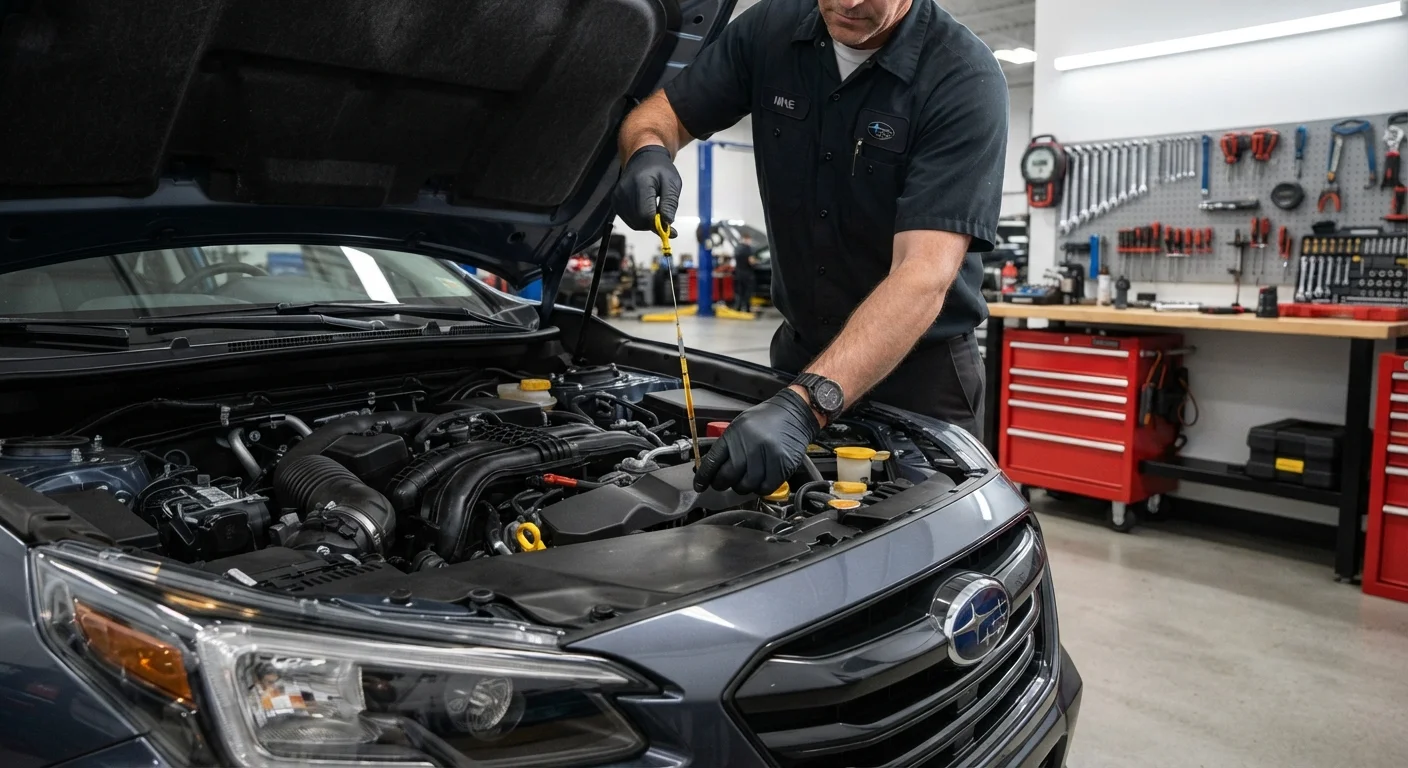
Engine oil lubricates moving metal parts and prevents heat damage. Without sufficient clean oil, an engine can seize - a catastrophic failure that is almost always preventable. Check your oil level monthly using the dipstick: park on level ground, let the engine cool, pull the dipstick, wipe it clean, reinsert it fully, then pull again and read the level against the MIN/MAX markers.
Oil that looks very dark or gritty is overdue for a change. Most vehicles use conventional oil (typically changed every 3,000-5,000 miles) or synthetic oil (commonly 7,500-10,000 miles), but always defer to your owner's manual - it lists the correct oil grade and change interval for your specific engine. The oil filter should be replaced at every oil change, as a clogged filter restricts flow and defeats the purpose of fresh oil.
Always check your oil when the engine is cold or has sat for at least 10 minutes - a hot engine sends oil up into the system, giving you a falsely low reading on the dipstick.
An accurate oil level reading requires oil to have fully drained back into the pan; checking too soon after driving can cause drivers to overfill, which is also harmful to the engine.
Keep a copy of every service record - even a simple handwritten log. A documented maintenance history meaningfully supports a vehicle's resale value and helps a new mechanic diagnose problems faster.
Service history gives both buyers and technicians confidence in a vehicle's condition and reduces diagnostic guesswork, saving time and money.
Tires: Pressure, Rotation, and Tread
Tires are the only contact point between your vehicle and the road, making their condition directly tied to handling, fuel economy, and stopping distance. Check tire pressure at least once a month and before any long trip - use a pressure gauge and match the figure printed on the sticker inside your driver's door jamb (not the number on the tire sidewall, which is the maximum, not the recommended pressure).
Tire rotation - moving tires from front to rear or side to side according to your owner's manual pattern - evens out wear and extends tire life. Most manufacturers recommend rotation every 5,000-7,500 miles. To check tread depth, insert a quarter into a tread groove with Washington's head facing down: if you can see the top of his head, tread is worn and replacement should be considered. Tires with worn tread significantly increase stopping distances, particularly on wet roads.
For a deeper look at how these tasks connect to long-term cost savings, see our guide on routine maintenance tasks that prevent expensive repairs.
Brakes: Inspection and Warning Signs
Brake systems use friction to slow the vehicle - brake pads press against metal rotors (discs) to create that friction. Pads wear down over time and must be replaced before they wear through to the metal backing plate, which damages rotors and sharply reduces stopping power.
Common warning signs include: a high-pitched squealing sound when braking (often a built-in wear indicator), a grinding metal-on-metal noise (pads are worn through), a pulsing or vibrating brake pedal (warped rotors), or a car that pulls to one side when braking (uneven pad wear or a stuck caliper). Brake fluid should also be checked periodically - it absorbs moisture over time, which lowers its boiling point and reduces braking effectiveness.
Never Ignore Brake Warning Signs
Squealing, grinding, or a soft brake pedal are not sounds or sensations to defer investigating. Brake systems degrade progressively - what starts as worn pads can quickly become damaged rotors or reduced stopping power. If you notice any change in braking feel or sound, have the system inspected by a qualified mechanic before your next long drive.
Because brake failure has direct safety consequences, any brake concern that goes beyond a visual check should be assessed by a qualified mechanic. Brakes are not a system to defer. Learn more about safe driving habits at our Driving Safety hub.
Fluids, Filters, and Battery
Beyond oil, several other fluids keep your vehicle running safely:
- Coolant (antifreeze): Regulates engine temperature. Check the level in the translucent reservoir under the hood - never open a hot radiator cap. Flush intervals vary but are commonly every 2-5 years; consult your manual.
- Transmission fluid: Lubricates the transmission. Some vehicles have a dipstick for this; others are sealed and require professional service.
- Power steering fluid: If your car has hydraulic steering, low fluid causes stiff, heavy steering.
- Windshield washer fluid: Not safety-critical mechanically, but visibility is - keep it topped off.
Air filters (engine and cabin) should be inspected annually. A clogged engine air filter reduces fuel efficiency; a clogged cabin filter affects interior air quality. Both are typically straightforward replacements described in your owner's manual.
For the battery, look for white or blue corrosion around terminals - this can be carefully cleaned with a mixture of baking soda and water (engine off, battery disconnected). Most car batteries last 3-5 years. If your engine is slow to crank or lights dim noticeably, have the battery tested at an auto parts store or by a mechanic.
Building Your Maintenance Schedule
The most reliable maintenance system is a written one. Use your owner's manual to map out every service interval by mileage and time, then log each completed task with the date and odometer reading. A simple notebook in the glove box or a notes app works well.
A practical framework for most drivers:
- Monthly: Oil level, tire pressure, all fluid levels, lights.
- Every 5,000-7,500 miles: Oil and filter change, tire rotation.
- Every 12,000 miles or annually: Air filters, brake inspection, battery terminals.
- Every 2-5 years: Coolant flush, transmission service, spark plugs (interval varies widely by vehicle).
Staying organized across a vehicle's entire ownership period - from first purchase to eventual sale - is covered in depth in our guide on managing a car through every stage of its life. For broader ownership decisions and cost management strategies, explore our Car Ownership Tips hub.
No maintenance guide replaces the judgment of a qualified mechanic for complex or safety-critical repairs. When in doubt, have a professional inspect the vehicle - the cost of a diagnostic check is nearly always less than the cost of a breakdown.
This article is for general informational and educational purposes only. Always consult a qualified mechanic before performing tasks you are unfamiliar with, and refer to your vehicle's owner's manual for model-specific guidance.