

Key Takeaways
- Informed acquisition decisions reduce costly surprises throughout a vehicle's entire ownership life.
- Consistent early-stage maintenance habits pay compounding dividends in reliability and resale value.
- Proactive inspection at high mileage helps owners weigh repair costs against replacement value objectively.
- Organized documentation - service records, titles, registrations - matters at every transition point.
- Responsible end-of-life disposal protects the environment and may offer financial credit options.
Starting Right: The Acquisition Stage
Every vehicle's life - from a consumer ownership perspective - begins at the point of acquisition, whether that's a dealership lot, a private sale, or a certified pre-owned program. The decisions made here ripple forward through years of ownership.
Before committing, a pre-purchase inspection by an independent, qualified mechanic is one of the most protective steps a buyer can take. Even on newer used vehicles, a professional inspection can surface deferred maintenance, undisclosed collision history, or emerging mechanical concerns that aren't visible during a test drive.
Equally important is understanding the paperwork. Verify the vehicle identification number (VIN) matches across the title, dashboard plate, and any history reports. Confirm the title is clean - meaning free of liens or salvage designations - before signing anything. See our practical starter guide for new owners for a thorough walkthrough of registration and documentation steps.
Request a vehicle history report using the VIN before any used vehicle purchase, and cross-reference it with an in-person inspection - reports don't catch everything.
History reports rely on reported incidents; unreported accidents or maintenance gaps won't appear, making an independent inspection a necessary complement.
Set calendar reminders tied to your odometer reading or date - whichever triggers first - for every scheduled service item in your owner's manual.
Manufacturer intervals are designed around real wear thresholds; staying close to them prevents the incremental neglect that shortens a vehicle's reliable lifespan.
The Early Years: Building Good Ownership Habits
The first two to three years of owning a vehicle - roughly the first 30,000 to 45,000 miles for most drivers - are a critical window for establishing patterns that will define how well the car holds up long-term.
Following the manufacturer's maintenance schedule (found in the owner's manual, not just the service advisor's recommendations) is the foundation. This covers oil and filter changes, tire rotations, brake inspections, and fluid checks at prescribed intervals. Skipping or delaying these services can void warranty protections and quietly accelerate component wear.
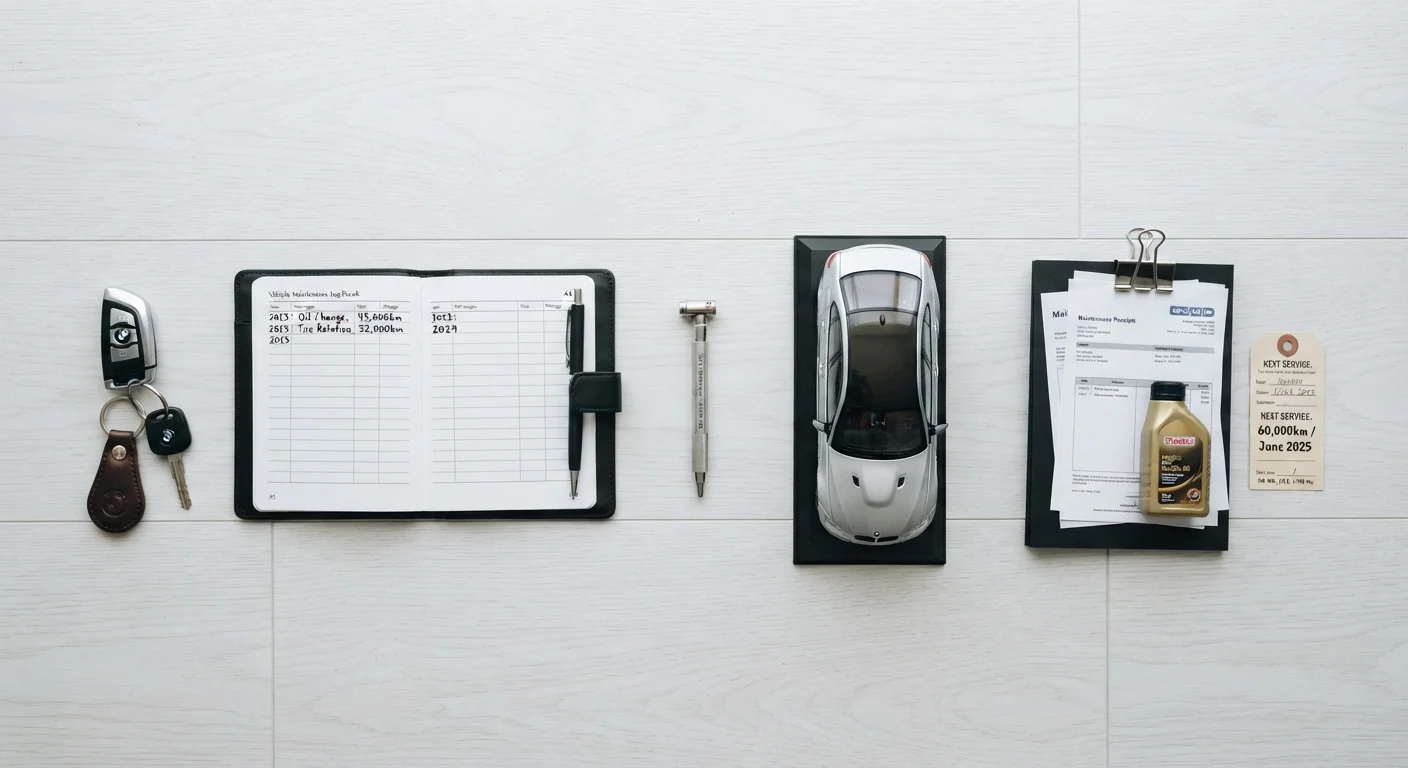
Building a documentation habit early also matters. Keep a dedicated folder - physical or digital - for every service receipt, recall notice, and registration renewal. This record becomes a tangible asset when it comes time to sell. For a structured approach to annual upkeep, our annual car ownership checklist covers registrations, inspections, and renewals in one place.
The Middle Miles: Staying Ahead of Wear
From roughly 50,000 to 100,000 miles, most vehicles enter what can be called the maintenance-intensive middle stage. Components that were factory-fresh at purchase are now aging, and a different level of attentiveness is warranted.
Key items to monitor in this range include timing belts (on vehicles that use them - typically replaced between 60,000 and 100,000 miles), spark plugs, coolant system health, transmission fluid, and suspension components. A worn shock absorber or strut doesn't just affect ride comfort - it affects braking distance and tire wear.
~70,000 mi
Typical timing belt replacement interval
Most manufacturers specify timing belt replacement between 60,000 and 100,000 miles; consult your owner's manual for the exact interval.
1 in 3
Vehicles on the road with underinflated tires
The National Highway Traffic Safety Administration (NHTSA) has reported that a significant proportion of vehicles operate with at least one underinflated tire, affecting safety and fuel efficiency.
Tires deserve particular attention during this stage. Uneven wear patterns often signal alignment or suspension issues that compound costs if ignored. The driving safety hub offers guidance on recognizing when vehicle handling changes may indicate a mechanical concern.
Consistent habits developed in the early years - fluid checks, scheduled services, attentive driving - reduce the likelihood of expensive surprises here. For a deeper look at those habits, see our guide on keeping a vehicle in good shape over time.
High Mileage and Late-Life Decisions
Beyond 100,000 miles, many owners face a recurring question: is it worth continuing to invest in repairs, or is it time to consider replacement? There's no universal answer - it depends on the specific vehicle's condition, the repair cost relative to the car's current market value, and the owner's financial situation.
A useful general framework is to compare the estimated cost of a repair against roughly 50% of the vehicle's current market value. If a single repair exceeds that threshold, and other systems are also showing age, a broader conversation about replacement may be warranted. This is general guidance, not a financial prescription - a trusted mechanic's honest assessment of the vehicle's overall health is invaluable here.
Some vehicles - particularly those that have been well-maintained - continue to provide reliable transportation well past 150,000 or even 200,000 miles. Age alone doesn't define a vehicle's remaining usefulness; documented maintenance history and current mechanical condition are far better indicators.
Exiting Ownership: Selling, Trading, or Disposing Responsibly
When the time comes to exit ownership, the groundwork laid throughout the vehicle's life directly affects the outcome. A complete service record, clean title, and well-maintained condition all support stronger private-sale and trade-in positions.
Before listing a vehicle for private sale, address minor cosmetic issues, have the car professionally cleaned, and gather all documentation. Be transparent with prospective buyers about the vehicle's history - disclosing known issues protects both parties and reduces legal exposure.
If the vehicle is no longer roadworthy or economically viable to repair, responsible disposal options include licensed salvage yards, manufacturer or dealer trade-in programs, and charitable donation programs (which may carry tax implications - consult a qualified tax professional for guidance specific to your situation). Many jurisdictions also have regulations around how fluids, batteries, and tires must be disposed of; check with your local environmental or waste management authority before proceeding.
This article is for general informational and educational purposes only. It does not constitute mechanical, financial, legal, or tax advice. Consult qualified professionals for decisions specific to your vehicle and circumstances.