

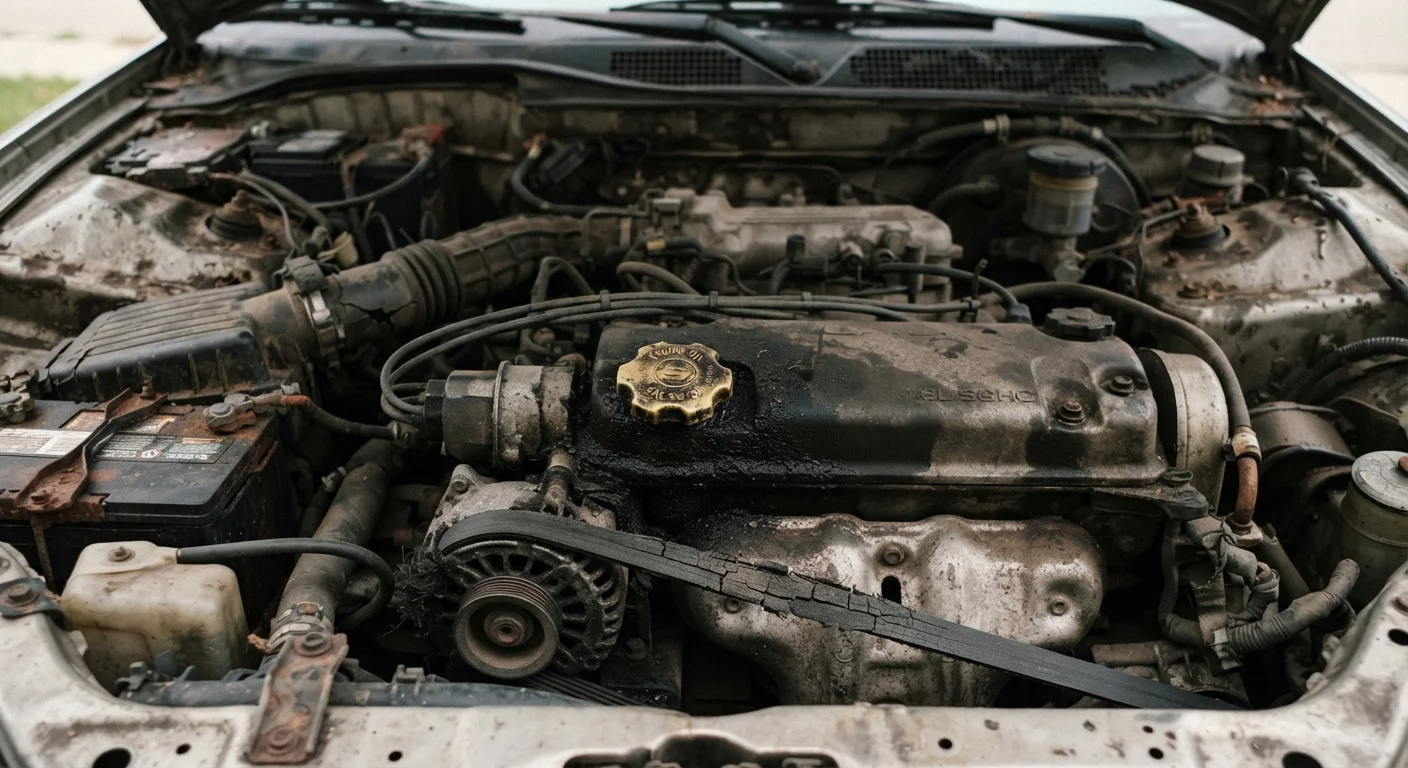
Key Takeaways
- Skipping routine maintenance rarely saves money - it typically shifts smaller costs into much larger repair bills.
- Most catastrophic engine and transmission failures trace back to neglected fluid changes and ignored warning signs.
- Deferred maintenance can reduce a vehicle's resale value and shorten its usable lifespan.
- Many routine tasks are inexpensive and DIY-friendly when performed on schedule.
- Consistent upkeep protects both the vehicle and the driver's overall transportation budget.
Deferred Maintenance
Deferred maintenance refers to the practice of postponing scheduled vehicle upkeep - such as oil changes, fluid top-offs, tire rotations, or filter replacements - beyond the manufacturer's recommended intervals. While it may feel like a short-term saving, skipping these tasks allows minor wear to compound into major mechanical failures. The longer routine service is delayed, the more expensive and disruptive the eventual repair tends to be.
In engineering terms, most vehicle components operate within tolerances that assume regular lubrication, cooling, and inspection; exceeding service intervals degrades those tolerances incrementally, accelerating wear rates beyond linear prediction.
Why Deferred Maintenance Costs More Over Time
Routine vehicle maintenance works like preventive medicine for your car: small, regular interventions head off larger problems before they develop. When those interventions are skipped - even once or twice - the consequences are rarely immediate. That delay can create a false sense that skipping service is harmless. In reality, mechanical systems degrade continuously, and the absence of maintenance accelerates that process.
Consider engine oil. Its job is to lubricate moving metal parts, carry away heat, and suspend contaminants. As oil ages, it breaks down and becomes less effective at each of those tasks. Metal-on-metal friction increases, heat builds, and sludge accumulates inside the engine. None of this is visible from the outside - until a warning light appears or, in more serious cases, the engine seizes. At that point, what might have cost under $80 for an oil change becomes a repair measured in thousands of dollars.
The same logic applies across the vehicle. Worn brake pads that aren't replaced on time damage rotors. Low coolant levels that aren't topped off risk overheating. A cracked serpentine belt that's ignored can leave a driver stranded - and if it snaps while the engine is running, it may damage ancillary components simultaneously. See our guide to maintenance tasks that prevent costly repairs for a breakdown of which services carry the highest stakes.
$1,200+
Average cost of a single engine repair
Industry repair data consistently shows that engine-related failures are among the most expensive repairs drivers face, far exceeding the cumulative cost of routine oil changes.
35%
Of roadside breakdowns linked to maintenance neglect
Studies by AAA and similar motoring organizations have found that a significant proportion of unexpected breakdowns involve components that regular maintenance would have identified or addressed.
150,000-200,000 mi
Typical lifespan with consistent maintenance
Modern vehicles are engineered to reach these mileage thresholds when serviced according to manufacturer schedules; deferred maintenance can shorten that window substantially.
How Neglect Compounds: The Cascade Effect
Vehicle systems don't operate in isolation. The engine, transmission, cooling system, brakes, and electrical components all interact - and when one falls into disrepair, it often stresses the others. This interdependence is what turns a single skipped service into a cascade of failures.
A low transmission fluid level, for example, causes the transmission to run hotter than designed. Heat degrades the fluid faster, accelerating wear on clutch packs and seals. Left unaddressed, a fluid top-off and filter change that might cost $100-$200 evolves into a full transmission rebuild that can exceed $3,000. Similarly, ignoring a small coolant leak puts strain on the water pump and thermostat, potentially triggering a head gasket failure - one of the most expensive repairs a vehicle can require.
This cascade effect is one reason that certain ownership decisions quietly drive up long-term costs well beyond what drivers anticipate when they defer a service appointment. The compounding nature of mechanical wear means that the gap between the cost of prevention and the cost of repair widens with every skipped interval.
The Hidden Cost: Resale Value and Vehicle Lifespan
Beyond repair bills, deferred maintenance carries two less obvious financial penalties: reduced resale value and a shorter usable vehicle lifespan. A well-maintained vehicle with a documented service history is worth more at trade-in or private sale than an identical model with maintenance gaps. Buyers and dealers factor in the likely cost of deferred work - and they discount the price accordingly.
Vehicle lifespan is equally affected. Most modern vehicles are engineered to reach 150,000 to 200,000 miles with consistent care. Deferred maintenance compresses that window significantly. A driver who skips oil changes, neglects fluid flushes, and ignores minor warning signs may find their vehicle requiring major repairs - or becoming uneconomical to fix - at 80,000 or 100,000 miles instead. That shorter lifespan ultimately raises the effective cost per mile of owning the vehicle.
If you're weighing whether to invest in upkeep or consider a replacement, understanding the financial trade-offs of keeping a car longer vs. upgrading can help clarify the decision. And for a comprehensive roadmap of what consistent care actually looks like, these habits that help vehicles hold up over time offer practical, sustainable guidance any driver can follow.
Building a Maintenance Habit That Protects Your Budget
The most effective way to avoid the compounding costs of deferred maintenance is to treat vehicle service as a fixed, predictable expense rather than an optional one. Your owner's manual is the authoritative source for service intervals - it specifies oil change frequency, fluid flush schedules, belt replacement windows, and filter service based on your specific engine and drivetrain.
Keeping a simple log of completed services - whether in a glove compartment notebook or a phone app - removes the guesswork and demonstrates care history when it's time to sell. Many routine tasks, such as checking tire pressure, inspecting wiper blades, and monitoring fluid levels, can be done in a driveway with minimal tools. For drivers interested in expanding their DIY capability, a balanced look at DIY versus professional servicing can help identify which tasks are appropriate to take on independently.
For tasks that require a lift, specialty tools, or technical expertise - including brake system work, suspension components, and anything involving the fuel or emissions systems - a qualified mechanic should be consulted. The goal isn't to do everything yourself; it's to stay engaged enough with your vehicle's condition that nothing is silently neglected. The complete guide to car maintenance covers the full scope of what regular upkeep involves, from fluid checks to brake inspection.
Set a Service Reminder Today
Check your owner's manual for the next due service interval and add a calendar reminder now - before you close this tab. Even a simple recurring phone alert for every 5,000 miles or six months is enough to prevent the most common forms of maintenance neglect. Staying ahead of the schedule is always cheaper than catching up after a breakdown.