

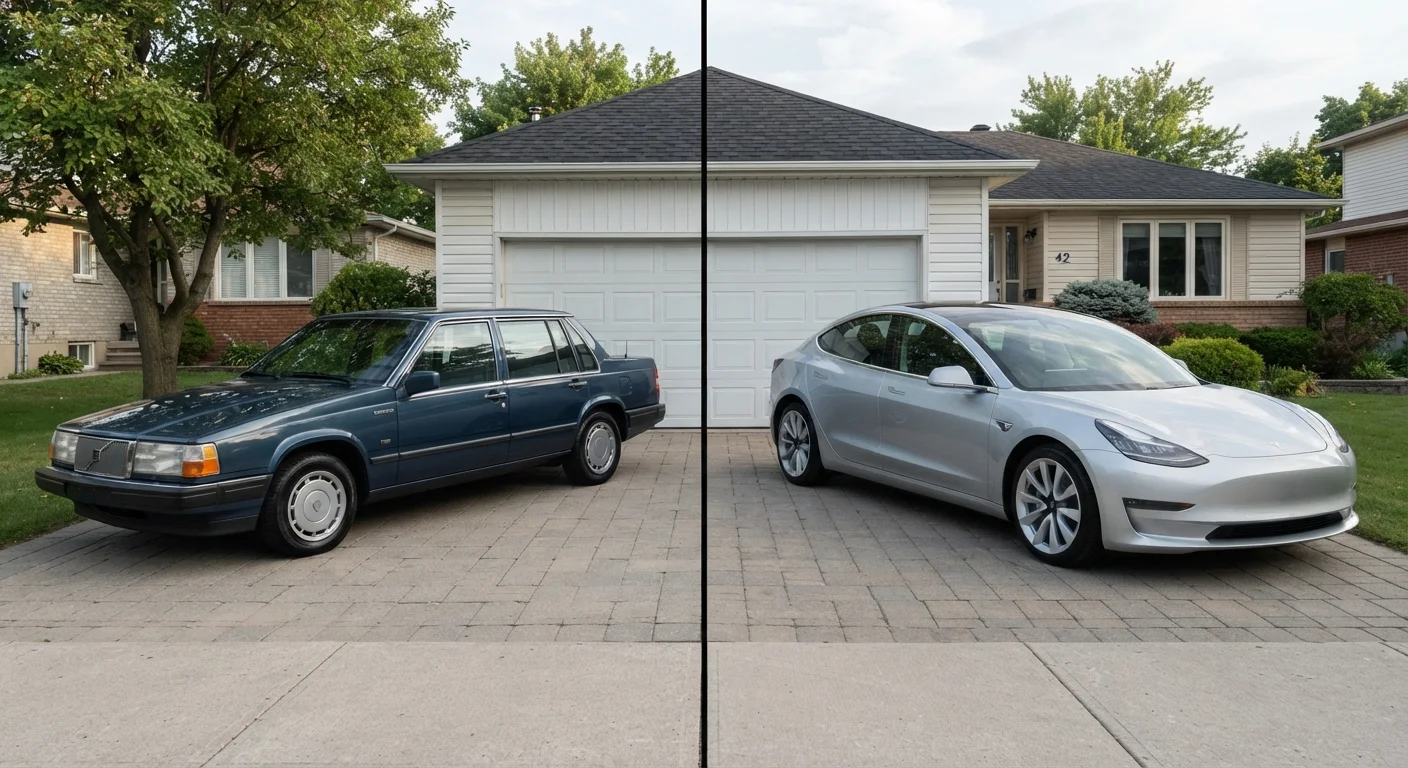
Key Takeaways
- Keeping an older vehicle avoids depreciation and loan costs, but rising repair bills can erode those savings over time.
- Newer vehicles typically offer better fuel economy, lower maintenance costs early on, and updated safety technology.
- The financial tipping point depends on your specific repair history, mileage, insurance costs, and local market conditions.
- There is no universal answer - the right choice depends on your vehicle's condition and your personal financial situation.
- Tracking your total annual ownership cost is the most reliable way to decide when it's time to make a change.
Our Verdict
Holding onto a paid-off car in good mechanical condition generally saves money over the short term by eliminating loan payments and depreciation losses. However, when repair costs begin to exceed the vehicle's value or reliability becomes unpredictable, upgrading often makes more financial sense. The decision is highly individual and depends on your car's condition, your budget, and how you use the vehicle.
| Best for | Recommended |
|---|---|
| Drivers with a reliable, paid-off vehicle and manageable maintenance costs | Keeping the car longer |
| Those whose repair bills are climbing close to or beyond the vehicle's market value | Upgrading more often |
| High-mileage commuters who prioritise fuel economy and reliability | Upgrading more often |
| Budget-conscious owners with access to affordable maintenance | Keeping the car longer |
The Core Financial Argument for Keeping Your Car
The single strongest financial argument for holding onto an older vehicle is depreciation. New cars lose a significant portion of their value in the first few years of ownership - often cited in industry sources as somewhere between 15% and 25% per year early on, though exact figures vary by make, model, and market conditions. When you keep a car that's already depreciated through those steep early years, you sidestep that loss entirely.
Beyond depreciation, a paid-off vehicle eliminates monthly loan payments, which can free up hundreds of dollars each month. Combined, these two factors mean that a well-maintained older car is frequently cheaper to own on a monthly basis than a newer replacement would be - even accounting for higher repair frequency.
The key qualifier is well-maintained. Staying on top of core upkeep tasks - oil changes, tire rotations, fluid checks - meaningfully extends a vehicle's serviceable life and keeps unexpected repair costs lower. Skipping those services tends to accelerate deterioration. As detailed in our look at ownership decisions that quietly drive up long-term costs, deferred maintenance is one of the fastest ways to shrink the financial advantage of keeping an older car.
When Upgrading More Often Can Make Financial Sense
Upgrading sooner is not simply a luxury decision - there are scenarios where it genuinely makes financial sense. Newer vehicles typically benefit from improved fuel efficiency, which can reduce fuel spending meaningfully over thousands of miles. Modern safety features such as automatic emergency braking and blind-spot monitoring can also lower collision risk, which may influence insurance premiums over time, though outcomes vary by insurer and driver profile.
The clearest financial signal that an upgrade is warranted comes when repair costs begin to stack up. A useful general guideline - though not a hard rule - is to reconsider keeping a vehicle when a single repair costs more than the car is worth, or when ongoing annual repair bills approach or exceed what loan payments on a replacement would cost. At that point, the reliability argument for the older car also weakens, since unpredictable breakdowns carry hidden costs: missed work, rental vehicles, and emergency towing.
| Keeping the Car Longer | Upgrading More Often | |
|---|---|---|
| Depreciation exposure | Minimal - steep drop already occurred | Higher - absorbs early-year value loss |
| Monthly loan payments | None if paid off | Likely present with financing |
| Repair and maintenance costs | Can increase with age and mileage | Generally lower in early ownership years |
| Fuel efficiency | May be lower on older models | Often improved on newer vehicles |
| Safety technology | May lack modern driver-assist features | More likely to include current safety systems |
| Reliability predictability | Decreases as mileage accumulates | Higher with newer or lower-mileage vehicles |
| Insurance costs | Variable - older safety ratings may affect rates | Variable - newer models may cost more to insure |
It's also worth factoring in total ownership cost, not just sticker price or monthly payments. Our overview of short-term cost versus long-term value explains how running costs, repairability, and lifespan all affect what you actually pay over time. Separately, if financing a replacement vehicle is part of the picture, understanding the trade-offs between financing versus paying cash is an important part of the full calculation.
How to Calculate Your Own Tipping Point
Rather than relying on a general rule, the most reliable approach is to track your actual annual ownership cost - the sum of loan payments (if any), insurance, fuel, registration, and maintenance and repairs - for your current vehicle. Then estimate what those same costs would look like for a plausible replacement.
A few specific factors worth reviewing:
- Repair history trend: Are repairs becoming more frequent or more expensive? One-off costs differ from a pattern of escalating bills.
- Remaining value: Check your vehicle's current market value through sources such as published automotive valuation tools. If repair costs are approaching that figure, the math tilts toward replacing.
- Fuel and insurance costs: Older vehicles may carry higher insurance costs if safety ratings are low, or higher fuel costs if efficiency is poor - both of which narrow the savings gap with a newer car.
- Your driving needs: A vehicle used for long highway commutes has different durability demands than one driven infrequently for short local trips.
Keep a Simple Running Cost Log
Recording every maintenance and repair expense in a simple spreadsheet or notes app makes it much easier to spot when annual costs are trending upward. Over 12 months, even rough totals can reveal whether your current vehicle is still the more economical choice. Include fuel costs if your vehicle's efficiency has changed noticeably - it adds important context to the overall picture.
For a broader framework on managing a vehicle across its full life - from purchase through eventual sale or disposal - see our guide to managing a car through every stage of its life.
Practical Considerations Beyond the Numbers
Financial calculations are important, but a few practical realities are worth keeping in mind. First, the used vehicle market fluctuates, so the cost of a replacement isn't fixed - timing can affect what you pay. Second, financing costs vary significantly depending on credit profile and prevailing interest rates, which affects the true monthly cost of upgrading.
Safety is a legitimate factor too, though it should be weighed honestly rather than used to justify spending beyond your means. Older vehicles may lack features that have since become standard, but many remain mechanically safe with proper maintenance. If safety technology is a priority, researching which features matter most for your driving environment is more useful than assuming newer is always safer.
Finally, there are personal factors that no spreadsheet fully captures - peace of mind about reliability, comfort preferences, and whether the stress of an uncertain vehicle is affecting daily life. These are real costs, even if they don't appear on a balance sheet. The goal is an informed decision that accounts for both the numbers and your actual situation. For broader strategies on managing your vehicle-related spending within a wider financial picture, the Saving Money hub offers useful general context.