

| What 'W' Stands For | Winter - not weight (Society of Automotive Engineers (SAE)) |
| Typical Synthetic Change Interval | 7,500-10,000+ miles (varies by vehicle) (Owner's manual guidance; varies by manufacturer) |
| Typical Conventional Change Interval | 5,000-7,500 miles (General industry guidance; always defer to owner's manual) |
| API Current Gasoline Engine Standard | SP (as of 2020) (American Petroleum Institute) |
| Most Common Viscosity Grade (light vehicles) | 0W-20, 5W-20, or 5W-30 (General automotive industry data) |
| Best Source for Your Grade | Vehicle owner's manual or oil filler cap label |
How to Read a Viscosity Grade
Every bottle of motor oil displays a grade like 5W-30 or 0W-20. These numbers come from the SAE viscosity classification system and tell you two things at once.
| What 'W' Stands For | Winter - not weight (Society of Automotive Engineers (SAE)) |
| Typical Synthetic Change Interval | 7,500-10,000+ miles (varies by vehicle) (Owner's manual guidance; varies by manufacturer) |
| Typical Conventional Change Interval | 5,000-7,500 miles (General industry guidance; always defer to owner's manual) |
| API Current Gasoline Engine Standard | SP (as of 2020) (American Petroleum Institute) |
| Most Common Viscosity Grade (light vehicles) | 0W-20, 5W-20, or 5W-30 (General automotive industry data) |
| Best Source for Your Grade | Vehicle owner's manual or oil filler cap label |
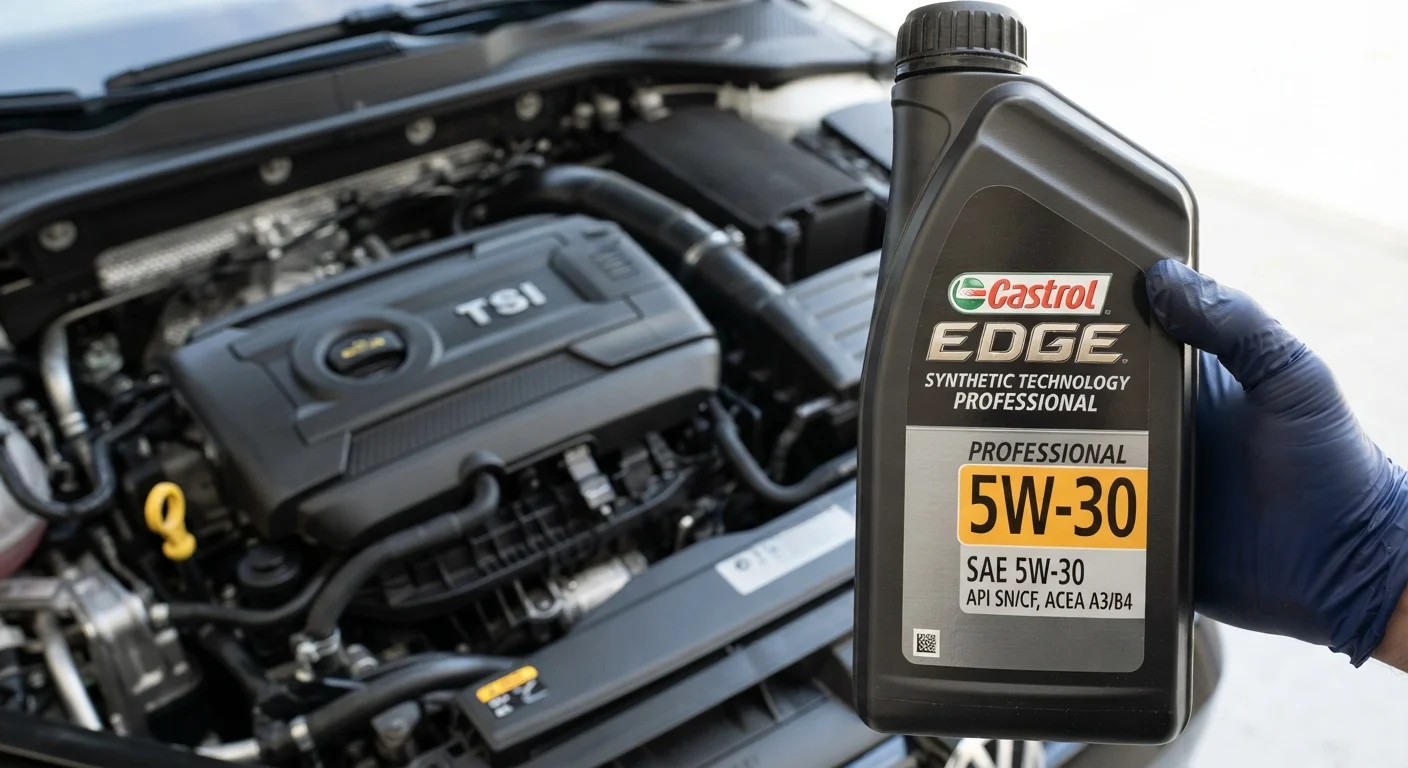
The number before the 'W' (which stands for Winter, not weight) indicates how the oil flows in cold conditions. A lower number - like 0W or 5W - means the oil stays thinner at low temperatures, allowing it to circulate quickly during cold starts when engines are most vulnerable to wear.
The number after the 'W' describes the oil's thickness at normal operating temperature (roughly 212°F / 100°C). A higher number, such as 40 or 50, means the oil maintains more viscosity under heat - useful in hot climates or high-performance engines.
Modern engines almost universally use multi-grade oils that satisfy both ratings in a single product. The right grade for your vehicle is printed in your owner's manual or on the oil filler cap - matching that specification exactly is more important than any other factor. See your car's full maintenance schedule for how oil changes fit into broader service milestones.
Viscosity
A fluid's resistance to flow. In engine oil, higher viscosity means thicker oil; lower viscosity means it flows more freely. Engines need oil that flows quickly at cold starts but stays thick enough at operating temperature to protect metal surfaces.
SAE Grade
A standardized viscosity rating assigned by the Society of Automotive Engineers (SAE). Grades like 5W-30 describe how oil behaves at cold temperatures (the number before the 'W') and at high operating temperatures (the number after the 'W').
Multi-grade Oil
Engine oil engineered to meet two viscosity ratings in one formula - thin enough for cold-weather starting, thick enough for high-temperature protection. Almost all modern motor oils are multi-grade.
API Donut
A circular certification mark from the American Petroleum Institute (API) printed on oil containers. It confirms the oil meets minimum performance standards and identifies the service category (e.g., SP for gasoline engines) and viscosity grade.
Full Synthetic Oil
Engine oil made from chemically engineered base stocks, offering more consistent molecular structure than conventional oil. It typically provides better protection at temperature extremes and longer service intervals.
Conventional Oil
Engine oil refined from crude petroleum. It remains suitable for many older or lower-mileage engines operating under normal conditions, though it generally requires more frequent changes than synthetic.
Oil Change Interval
The recommended mileage or time period after which engine oil should be replaced. This varies by vehicle, oil type, and driving conditions, and is specified in your owner's manual.
Decoding the Label: API, ILSAC, and What Certifications Mean
Beyond the viscosity grade, oil containers carry certification marks that confirm the product has met industry performance standards.
The API Donut - a circular logo from the American Petroleum Institute - is the most common mark on oils sold in the U.S. The top of the donut displays the service category. For gasoline passenger-car engines, look for SP, which is the current standard as of 2020, superseding older SN, SM, and earlier ratings. Diesel engines use a separate 'C' category (e.g., CK-4).
The ILSAC starburst is a separate mark from the International Lubricant Standardization and Approval Committee. If present, it confirms the oil also meets fuel-economy performance criteria in addition to the API standard - relevant for many modern light-duty engines.
Always Follow Your Owner's Manual
Oil recommendations in this article are general educational guidance. Your vehicle's owner's manual contains the manufacturer-specified viscosity grade and change interval for your exact engine. Using the wrong grade or skipping manufacturer guidance can affect engine warranty coverage and longevity.
If your owner's manual specifies an OEM-specific approval (common in European vehicles, such as BMW LL-04 or VW 502.00), look for that designation on the label rather than relying on API/ILSAC alone.
Change Intervals: When Does Oil Actually Need Replacing?
The old '3,000-mile rule' is largely outdated for most modern vehicles. Advances in oil chemistry and engine design mean many cars can safely go considerably further. Common maintenance myths like this one can cost drivers unnecessary money.
5W-30
Most widely recommended viscosity grade for passenger cars
Cited across major automotive manufacturer guidance as a common factory fill for light-duty gasoline engines.
10,000 mi
Extended synthetic oil change interval (typical upper range)
Many manufacturers specify this range for full synthetic oil under normal driving conditions; always verify with your owner's manual.
Actual intervals depend on three factors:
- Oil type: Full synthetic oil generally supports longer intervals than conventional. For a detailed comparison, see synthetic vs. conventional engine oil.
- Driving conditions: Frequent short trips, stop-and-go traffic, extreme temperatures, towing, or dusty environments are classified as severe conditions. Manufacturers often recommend shorter intervals under these circumstances.
- Manufacturer specification: Always the final word. Many modern vehicles also have an oil life monitoring system that tracks driving patterns and alerts you when a change is actually needed - rather than on a fixed schedule.
Dark oil color alone is not a reliable indicator that a change is needed - oil darkens normally during use. What matters is whether the oil has degraded past its useful life, which your monitoring system or interval schedule helps you track. For a broader look at fluid health indicators, see fluid checks every driver should know.
If you plan to perform changes yourself, review why DIY oil changes go wrong before starting - small errors like overfilling or using an incompatible filter can cause real engine damage.