

Key Takeaways
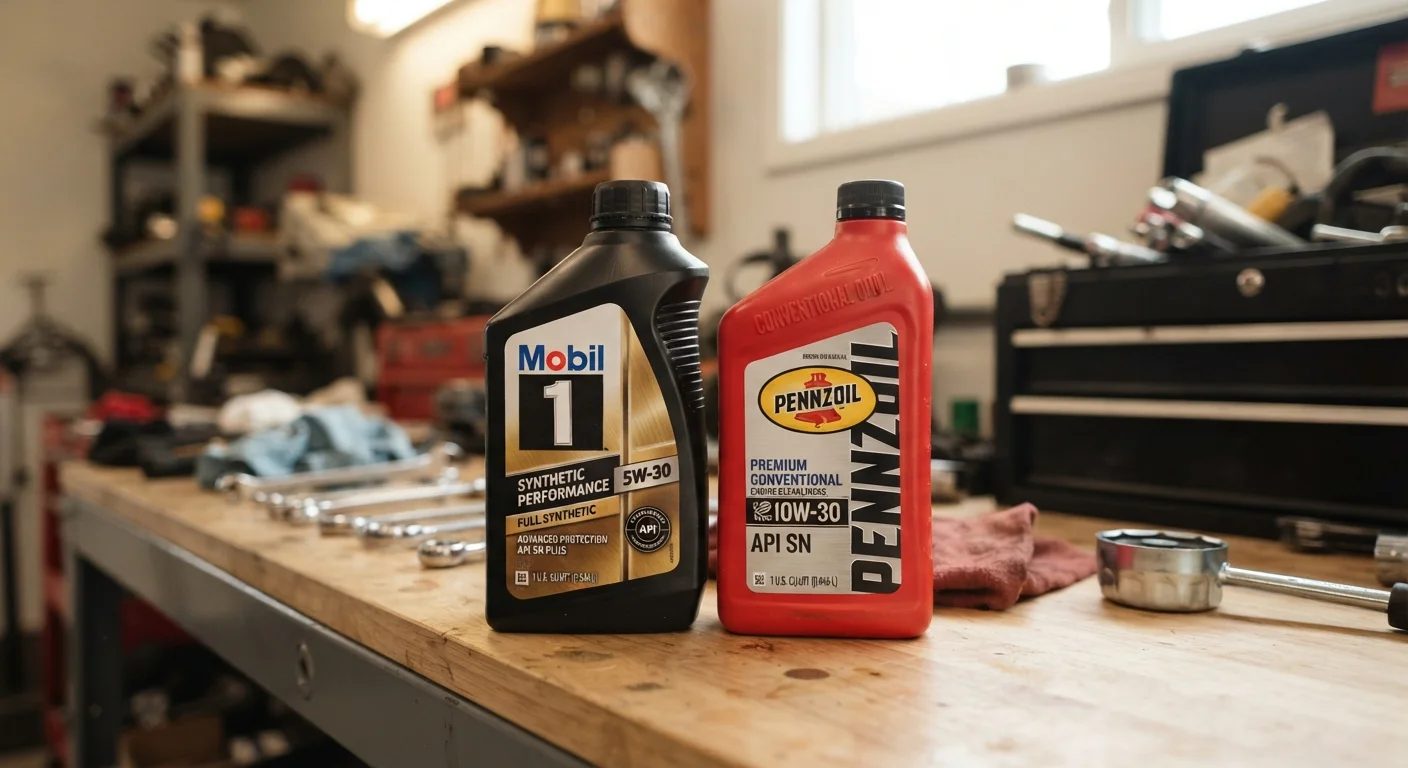
- Synthetic oil is chemically engineered for consistent molecular structure, while conventional oil is refined directly from crude petroleum.
- Synthetic oil generally lasts longer between changes - often 7,500 to 15,000 miles - compared to conventional oil's typical 3,000 to 5,000 miles.
- Many modern vehicles specify synthetic oil; always check your owner's manual before making a switch.
- Conventional oil may suit older, high-mileage engines that have developed slight seal wear over time.
- Cost per quart is higher for synthetic, but longer change intervals can offset that difference over time.
Option A
Synthetic Engine Oil
The engineered, high-performance lubricant.
Best for: Drivers with newer vehicles, turbocharged engines, or those seeking longer intervals between oil changes.
Option B
Conventional Engine Oil
The time-tested, widely available standard.
Best for: Owners of older vehicles with simple engine designs and lower mileage demands who change oil on a regular, frequent schedule.
If you drive a late-model or turbocharged vehicle
Synthetic Engine Oil
Most manufacturers now require or recommend full synthetic for turbocharged and direct-injection engines, which run hotter and demand more precise lubrication.
If you own a well-maintained older vehicle with simple engine design
Conventional Engine Oil
Older engines designed before synthetic oil was widespread often perform reliably on conventional oil, especially when oil is changed at recommended intervals.
If you drive in extreme temperature conditions - very hot or very cold climates
Synthetic Engine Oil
Synthetic oil maintains stable viscosity across a wider temperature range, offering better cold-start protection in winter and heat resistance in summer.
If you want to minimize maintenance trips and extend change intervals
Synthetic Engine Oil
Synthetic oil resists breakdown longer, supporting extended drain intervals that reduce how often you need to visit a shop or perform a DIY change.
If you're managing a tight maintenance budget with a high-mileage older car
Conventional Engine Oil
Conventional oil costs less per quart and may be appropriate if your older engine's seals benefit from its slightly thicker consistency, but verify with your mechanic.
How Each Oil Type Is Made
The most fundamental difference between synthetic and conventional oil is how each is produced. Conventional oil - also called mineral oil - is refined from crude petroleum pumped from the ground. That refining process removes many impurities, but the resulting molecules still vary in size and shape, which can affect how the oil behaves under stress.
Synthetic oil, by contrast, is either built from scratch using chemical processes (fully synthetic) or begins with conventional base stock that is heavily modified (synthetic blend). The goal is a uniform, precisely structured molecule that lubricates more consistently across a range of temperatures and conditions. Think of it as the difference between raw lumber and precision-milled timber - both come from trees, but one is engineered to tighter tolerances.
For a deeper look at viscosity grades and what the numbers on the label actually mean, see our guide to engine oil viscosity grades.
| Criterion | Synthetic Oil | Conventional Oil |
|---|---|---|
| Source | Chemically engineered base stock | Refined crude petroleum |
| Typical change interval | 7,500-15,000 miles | 3,000-5,000 miles |
| Cold-weather performance | Flows quickly at low temps | Can thicken in extreme cold |
| Heat resistance | High resistance to breakdown | Degrades faster under heat |
| Cost per quart | Higher | Lower |
| Best engine type | Modern, turbocharged, high-tolerance | Older, simpler engine designs |
| Manufacturer requirement | Required by many modern OEMs | Suitable where specified |
Performance, Longevity, and Real-World Differences
In everyday driving, synthetic oil offers a measurable performance edge in several areas. Its uniform molecular structure means it flows more readily during cold starts - the moments when engines are most vulnerable to wear - and it holds up better under the sustained heat of highway driving or turbocharged operation.
Conventional oil degrades more quickly because its mixed-molecule structure breaks down under heat and pressure faster. This is why conventional oil change intervals have traditionally been shorter. That said, a well-maintained engine using quality conventional oil and changed on schedule will still be properly lubricated - the issue is consistency over time, not immediate failure.
7,500-15,000 mi
Typical synthetic oil change interval
Many automakers and oil manufacturers support extended drain intervals for full synthetic oil under normal driving conditions.
3,000-5,000 mi
Typical conventional oil change interval
Traditional guidance for conventional motor oil, though actual intervals vary by vehicle and driving conditions per manufacturer specs.
~70%
U.S. new vehicles requiring or recommending synthetic
Industry estimates suggest the majority of new passenger vehicles sold in the U.S. now call for synthetic or synthetic-blend oil per OEM specifications.
One practical consideration is change intervals. Most synthetic oil manufacturers and vehicle OEMs (original equipment manufacturers) suggest intervals of 7,500 to 15,000 miles depending on driving conditions. Conventional oil typically calls for 3,000 to 5,000 miles. Many persistent beliefs around the strict 3,000-mile rule are now considered outdated - our car maintenance myths article addresses this directly.
If you plan to do your own oil changes, understanding these intervals is critical. Mistakes like overfilling or using the wrong weight are more consequential when you're extending drain intervals. Our guide on why DIY oil changes go wrong walks through the most common errors to avoid.
Which Oil Is Right for Your Engine?
The single most reliable source for this decision is your vehicle's owner's manual. Automakers specify oil type and viscosity grade based on engine design, tolerances, and warranty requirements. Using a lower-grade oil than specified - such as conventional when the manufacturer requires full synthetic - can void warranty coverage on powertrain components.
For newer vehicles, especially those with turbocharged engines, direct injection, or variable valve timing systems, synthetic is typically required or strongly recommended. These systems operate with tighter tolerances and higher internal temperatures than older designs.
For older or high-mileage vehicles, the answer is less clear-cut. Some mechanics note that engines with worn seals may benefit from conventional oil's slightly different viscosity behavior, though this is engine-specific. A qualified mechanic can advise based on your vehicle's condition.
It's also worth considering the long-term financial picture. Synthetic oil costs more upfront per quart, but if your vehicle supports extended drain intervals, the number of changes per year drops - which can reduce overall annual spend. If you're weighing whether it makes sense to invest in maintenance for an aging vehicle at all, our article on keeping a car longer vs. upgrading offers a broader financial framework.
This article is for general informational purposes only. Always consult your vehicle's owner's manual and a qualified mechanic before changing oil type or extending drain intervals.