

Key Takeaways
- Regular fluid checks take less than ten minutes and can prevent costly engine damage.
- Correct tyre pressure improves safety, fuel efficiency, and tyre lifespan.
- Your owner's manual is the most reliable source for your car's specific service intervals.
- Dashboard warning lights signal issues that should never be ignored or indefinitely delayed.
- Many basic checks are genuinely DIY-friendly; others require a qualified mechanic.
Start here
Why Maintenance Matters from Day One
Core skills
Essential Fluids to Check Regularly
Build on it
Tyres: Pressure, Tread, and Visual Inspection
Stay safe
Lights, Wipers, and Other Quick Checks
Plan ahead
Understanding Your Service Schedule
Know your limits
When to Call a Mechanic
Why Maintenance Matters from Day One
Owning a car comes with a straightforward responsibility: keep it in safe, working condition. That doesn't require mechanical expertise - it requires awareness and a few consistent habits. Vehicles that receive regular attention are less likely to break down unexpectedly, tend to hold their value better, and are safer to drive. Neglected maintenance, on the other hand, often turns small, inexpensive issues into large, costly ones.
If you've just picked up your first set of keys, the good news is that the most impactful checks are also the simplest. You don't need a workshop full of tools. A basic understanding of what to look for, combined with a routine, goes a long way. For a broader overview of ownership responsibilities beyond maintenance, see Car Ownership from Day One.
Dipstick
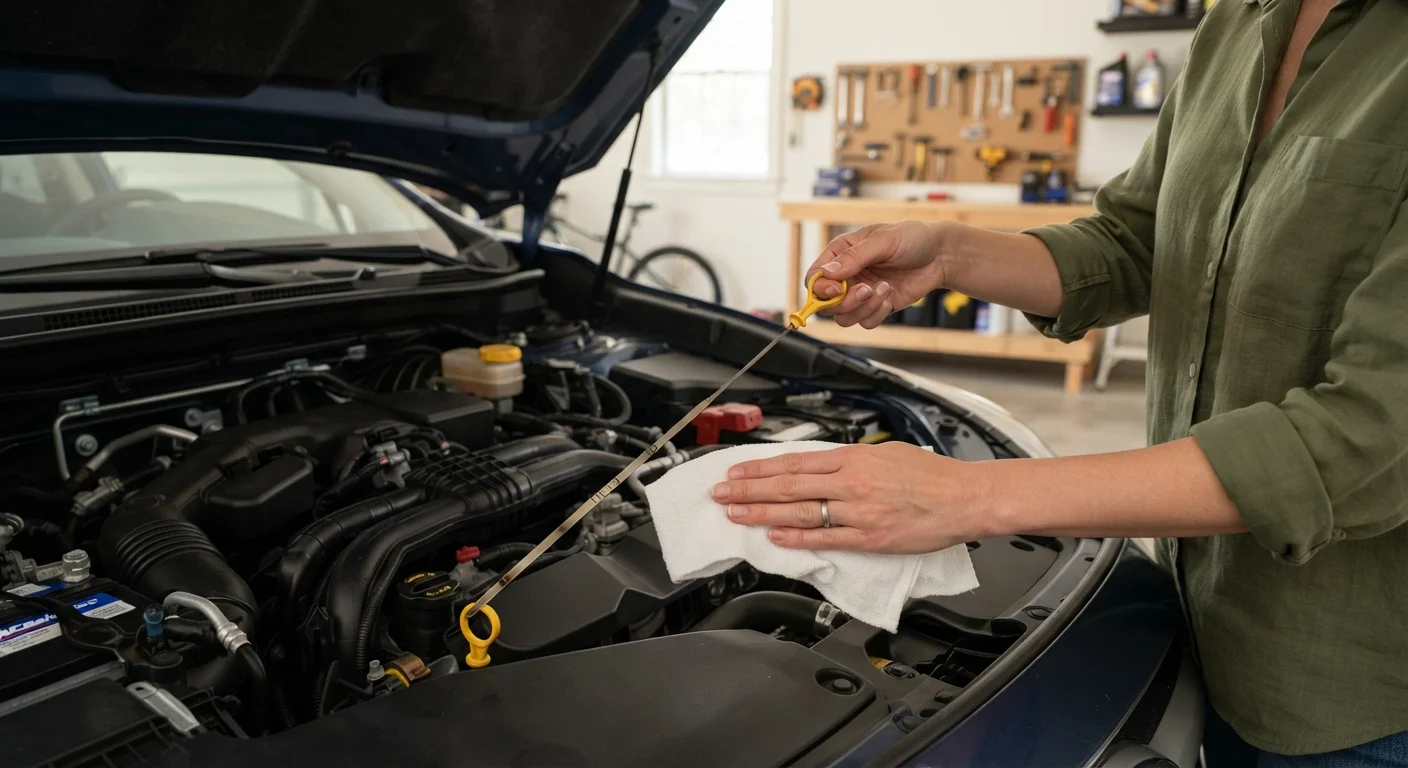
A long metal rod inserted into the engine to measure the current oil level. Pull it out, wipe it clean, reinsert fully, then pull it out again to get an accurate reading.
Tyre PSI
PSI stands for pounds per square inch - the unit used to measure tyre inflation pressure in the US. The correct PSI for your car is specified by the manufacturer, not the tyre maker.
Service interval
A set mileage or time period after which a specific maintenance task - such as an oil change - should be performed. Intervals are defined in the vehicle's owner's manual.
Coolant
A liquid (also called antifreeze) that circulates through the engine to regulate temperature, preventing it from overheating in summer and freezing in winter.
Tread depth
The measurement of the grooves in a tyre's surface. Adequate tread depth is essential for channelling water away from the contact patch and maintaining grip on wet roads.
Brake fluid
A hydraulic fluid that transfers the force of your foot on the brake pedal to the brake components at each wheel. It absorbs moisture over time and needs periodic replacement.
Essential Fluids to Check Regularly
Fluids are the lifeblood of your vehicle. Letting them run low - or neglecting to replace them when degraded - can damage expensive components. The following are the fluids every beginner should know about:
- Engine oil: Lubricates moving parts and prevents overheating. Check using the dipstick under the hood with the engine off and cool. Oil should appear amber to dark brown; very black or gritty oil likely needs changing.
- Coolant (antifreeze): Regulates engine temperature. Check the transparent reservoir - it should sit between the MIN and MAX markings. Never open the radiator cap when the engine is hot.
- Brake fluid: Enables your brakes to function. Located in a small reservoir under the hood, usually near the firewall. If it is consistently low, have a mechanic inspect for leaks.
- Power steering fluid: If your car has hydraulic power steering, low fluid makes steering noticeably harder. Electric power steering systems don't use this fluid.
- Windshield washer fluid: The one fluid that won't damage your engine if it runs low - but it will affect visibility. Keep it topped up.
Check your owner's manual for the correct fluid specifications for your vehicle. Using the wrong type - particularly the wrong engine oil grade - can cause problems.
Build a Monthly Under-Hood Routine
Pick one day each month - the first of the month works well as a reminder - to do a five-minute under-hood check. With the engine cold and the car on flat ground, check oil level, coolant level, and brake fluid. Doing it consistently means you're unlikely to be caught off guard by low fluid levels between services.
Tyres: Pressure, Tread, and Visual Inspection
Your tyres are the only part of the car that contacts the road, making their condition directly linked to your safety. Three checks cover the basics:
Tyre Pressure
Under-inflated tyres wear unevenly, reduce fuel efficiency, and can overheat at highway speeds. Over-inflated tyres reduce the contact patch with the road, shortening braking distances in good conditions but becoming dangerous on wet or uneven surfaces. Find your vehicle's recommended pressure on the sticker inside the driver's door or in the owner's manual, and check monthly with an inexpensive pressure gauge. Many gas stations have air pumps available.
Tread Depth
As tread wears down, wet-weather grip decreases significantly. The US legal minimum is 2/32 inch, but replacing tyres at 4/32 inch provides a safer buffer. Use the quarter test: insert a quarter into a groove with the head pointing in - if the top of the head is visible, consider replacement soon.
Visual Inspection
Walk around your car before longer trips. Look for obvious bulges, cuts, or embedded objects like nails. A slow puncture may not be immediately obvious - a tyre that looks slightly lower than the others warrants a closer inspection. Safe tyres are fundamental to driving safely in any condition.
Lights, Wipers, and Other Quick Checks
Several safety items take less than two minutes to verify but are easy to overlook until they fail at an inconvenient moment.
- Exterior lights: Walk around the car once a week to check that headlights, taillights, brake lights, and turn signals are working. A burned-out brake light is a rear-collision risk and a traffic violation in most states.
- Windshield wipers: Streaking, squeaking, or chattering blades should be replaced. Wiper inserts are generally inexpensive and straightforward to swap. Check them before the rainy season.
- Horn: Rarely tested until needed. Give it a quick check occasionally - it's a legally required safety device.
- Battery terminals: A visual look for white or blue corrosion on battery terminals takes seconds. Excessive buildup can affect starting reliability, particularly in cold weather.
Dashboard warning lights are your car's built-in alert system. Learning to read them is a genuinely valuable skill - our dashboard warning light reference explains what each symbol means and how urgently you should respond.
Never Ignore a Persistent Warning Light
Some drivers tape over or ignore dashboard warning lights to avoid dealing with them. This is a genuine safety risk - certain warnings, such as low oil pressure or high engine temperature, indicate conditions that can cause serious engine damage or create unsafe driving conditions within minutes. If a light you don't recognise appears, stop driving when it's safe and identify the cause before continuing.
Understanding Your Service Schedule
Every vehicle has a manufacturer-recommended maintenance schedule - a series of milestones at which specific components should be inspected, replaced, or serviced. Common tasks on this schedule include oil and filter changes, tyre rotation, air filter replacement, spark plug replacement, and brake inspection. The intervals vary by vehicle make, model, and engine type.
Your owner's manual is the authoritative source for your car's schedule. Many drivers also keep a simple maintenance log - a notebook in the glove box works fine - recording dates and mileage for each service. This helps you track what's due and provides useful history when selling the vehicle. For a deeper breakdown of what each service milestone involves, see Your Car's Maintenance Schedule, Explained. To understand the long-term value of keeping up with routine tasks, routine maintenance and the repairs it prevents is worth reading next.
When to Call a Mechanic
Not everything is a DIY job, and recognising the boundary between beginner-friendly tasks and work that requires professional skills is important for both your safety and your car's integrity. Tasks like checking fluid levels, replacing wiper blades, and monitoring tyre pressure are well within reach for most people. Tasks involving brakes, suspension, the fuel system, or anything requiring the vehicle to be raised safely off the ground carry real risk if done incorrectly.
If you notice any of the following, have a qualified mechanic assess the vehicle before driving it further where possible:
- Grinding, squealing, or pulsing when braking
- Steering that pulls strongly to one side
- Unusual smells (burning, fuel, or sweet coolant odour)
- Warning lights that persist after the engine restarts
- Fluid puddles under the parked car
Understanding where DIY ends and professional help begins is a mark of a responsible car owner - not a gap in knowledge. Our article on why DIY car maintenance has clear limits explores this boundary in detail. For a comprehensive reference covering every major maintenance area, The Complete Guide to Car Maintenance is a natural next step.