

| Number of standard OBD-II fault codes | Thousands (generic + manufacturer-specific) (SAE International OBD-II standard) |
| Color meaning: Red light | Stop and act immediately |
| Color meaning: Amber/Yellow light | Caution - service needed soon |
| TPMS required on | All new US passenger vehicles since 2008 (NHTSA TPMS mandate) |
| ESC required on | All new US light vehicles since model year 2012 (NHTSA Federal Motor Vehicle Safety Standard No. 126) |
| Owner's manual check | Always the definitive source for your specific vehicle |
What Dashboard Warning Lights Actually Mean
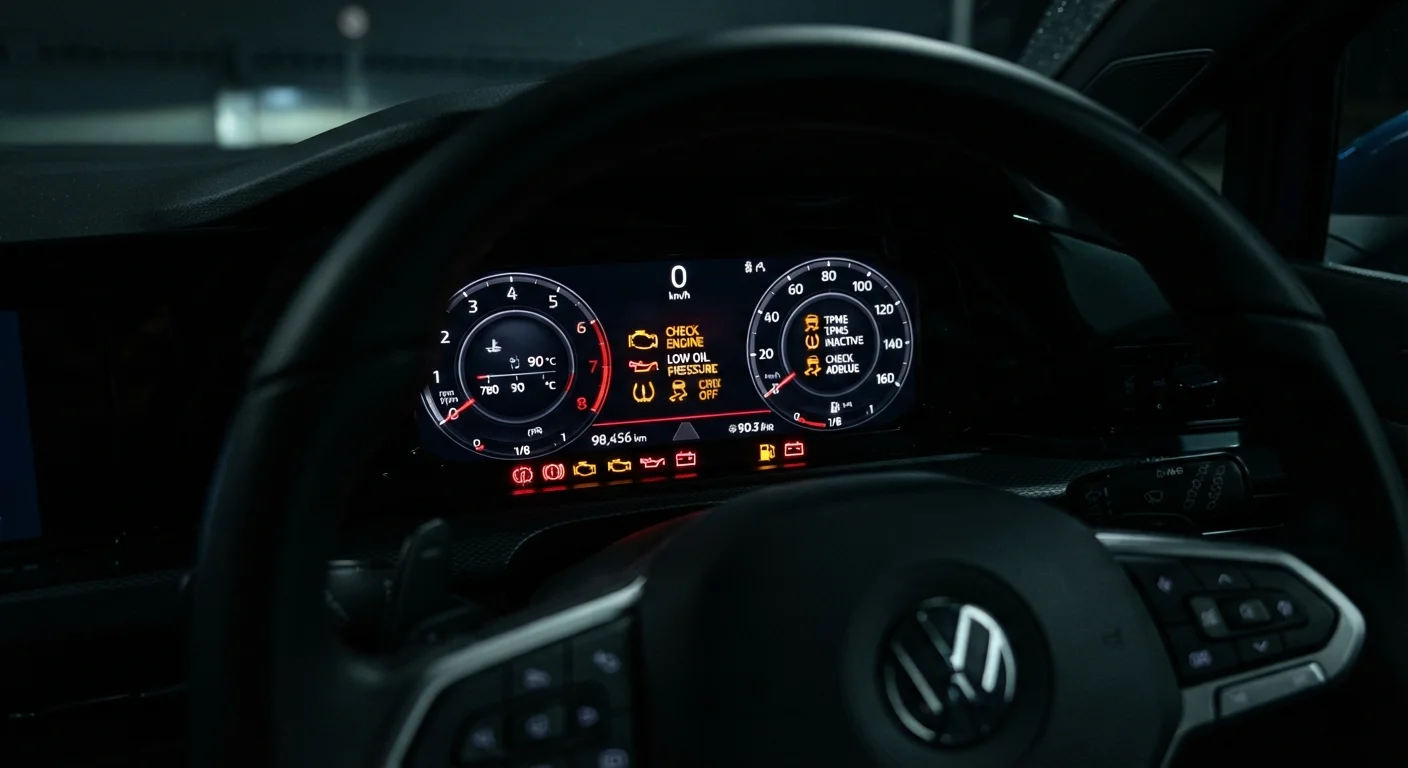
Your vehicle's dashboard warning lights are part of an onboard diagnostic system designed to alert you when something needs attention. Understanding what each light signals - and how urgently - can mean the difference between a simple fix and an expensive repair.
Lights generally fall into three color categories:
- Red: Requires immediate attention. Stop driving safely as soon as possible.
- Amber/Yellow: A caution signal. Service is needed soon, but you're not necessarily in immediate danger.
- Green/Blue: Informational only - a system is active, such as high beams or cruise control.
This guide covers the most common warning lights across US passenger vehicles. Because symbols and meanings can vary slightly by manufacturer, always cross-reference with your owner's manual. For a broader understanding of routine upkeep, see the Complete Guide to Car Maintenance.
| Number of standard OBD-II fault codes | Thousands (generic + manufacturer-specific) (SAE International OBD-II standard) |
| Color meaning: Red light | Stop and act immediately |
| Color meaning: Amber/Yellow light | Caution - service needed soon |
| TPMS required on | All new US passenger vehicles since 2008 (NHTSA TPMS mandate) |
| ESC required on | All new US light vehicles since model year 2012 (NHTSA Federal Motor Vehicle Safety Standard No. 126) |
| Owner's manual check | Always the definitive source for your specific vehicle |
Common Warning Lights: A Quick-Reference Guide
The lights below appear on most US passenger vehicles. Urgency ratings are general guidelines - your specific vehicle may differ.
Diagnostic Trouble Code (DTC)
A standardized code stored by your vehicle's onboard computer when it detects a fault. Mechanics and auto parts stores use a scan tool to read these codes and pinpoint the source of a warning light.
ABS (Anti-lock Braking System)
A safety system that prevents wheels from locking up during hard braking, helping the driver maintain steering control. When ABS is active, you may feel a pulsing sensation through the brake pedal.
TPMS (Tire Pressure Monitoring System)
A sensor-based system that monitors air pressure inside each tire and alerts the driver when pressure drops significantly below the recommended level.
SRS (Supplemental Restraint System)
The technical term for your vehicle's airbag system, which works alongside seatbelts to protect occupants in a collision. An SRS warning light indicates a potential fault in this system.
Charging System
The combination of the alternator and battery that keeps your vehicle's electrical systems powered while the engine runs. A fault here means the battery may not be receiving a charge.
Stability Control
An electronic system that detects and reduces loss of traction or skidding by selectively applying brakes to individual wheels. Also called ESC (Electronic Stability Control) in many vehicles.
Engine & Powertrain
- Check Engine (Amber)
- Urgency: Moderate. This light can indicate anything from a loose gas cap to a misfiring cylinder. If it's flashing - not steady - treat it as urgent and reduce speed. A steady light warrants a scan for diagnostic trouble codes (DTCs) at a shop or auto parts store. Do not ignore a flashing check engine light, as it can indicate catalytic converter damage.
- Oil Pressure Warning (Red)
- Urgency: Immediate. Low oil pressure can cause rapid engine damage. Pull over safely, turn off the engine, and check the oil level. Do not continue driving until the cause is identified. This is not the same as a low oil level reminder, which appears on some newer vehicles separately.
- Temperature Warning (Red)
- Urgency: Immediate. Your engine is overheating. Turn off the AC, turn on the heater to draw heat away from the engine, and stop safely. Never open the coolant reservoir cap while the engine is hot.
Safety Systems
- Brake Warning (Red)
- Urgency: Immediate. If your parking brake is released and this light stays on, it may indicate low brake fluid or a system fault. Have it inspected before continuing to drive.
- ABS Warning (Amber)
- Urgency: Moderate. Your anti-lock braking system may be disabled. Standard braking still functions, but ABS - which helps prevent wheel lockup during hard stops - may not engage. Schedule service promptly.
- Airbag / SRS Warning (Amber)
- Urgency: Moderate. The supplemental restraint system may not deploy correctly in a crash. This requires professional diagnosis - do not attempt to inspect airbag components yourself, as they can deploy unexpectedly and cause injury.
Battery & Electrical
- Battery / Charging Warning (Red or Amber)
- Urgency: High. The charging system isn't maintaining battery voltage. Your vehicle may run for a short time on battery power alone, but electrical systems will begin to fail. Minimize electrical load and head to a service location promptly.
Tires & Traction
- TPMS (Tire Pressure Monitoring System) (Amber)
- Urgency: Moderate. One or more tires are significantly under- or over-inflated. Check all four tires with a gauge and inflate to the pressure listed on the driver's door jamb sticker, not the maximum listed on the tire sidewall.
- Traction Control / Stability Warning (Amber)
- Urgency: Situational. If it flashes briefly, the system is actively working. If it stays on, traction or stability control may be disabled. Check your owner's manual, as some vehicles allow you to toggle this.
Before long trips, a quick walk-around combined with a dashboard check can catch issues early. See our pre-drive safety walkthrough for a full checklist.
What to Do When a Light Comes On
Seeing a new warning light can be unsettling. Here's a practical approach:
- Note the color and whether it's steady or flashing. Red or flashing lights call for immediate action; steady amber lights generally allow time to investigate safely.
- Check your owner's manual. Every vehicle ships with a section dedicated to warning indicators. It's your most accurate source for your specific model.
- Don't ignore it. Many lights that seem minor - like TPMS or a maintenance reminder - can escalate if left unaddressed. Staying on top of service intervals is a core part of responsible ownership; our maintenance schedule guide explains standard service milestones.
- Know when to call a professional. Airbag faults, persistent brake warnings, and oil pressure issues are not DIY territory. Have these diagnosed by a qualified mechanic.
When in Doubt, Stop and Call for Help
If a red warning light appears and you're unsure of the cause, it's safer to pull over in a secure location and contact roadside assistance than to continue driving. Continuing to operate a vehicle with an active critical fault can cause further mechanical damage or create a safety hazard. Never attempt to diagnose airbag or brake system faults yourself.
New to car ownership? Our car maintenance guide for beginners covers the essential checks every driver should know.