
Key Takeaways
- Price tracking tools automate the job of watching a product's price over time so you don't have to.
- Alerts are only useful if you set a realistic target price based on the product's actual price history.
- Tools work best on products with predictable price cycles, such as electronics and home appliances.
- An alert is an invitation to evaluate a deal, not a signal to buy automatically.
- Combining price alerts with knowledge of seasonal pricing patterns increases the chance of catching a genuine low.
Price Tracking Tool
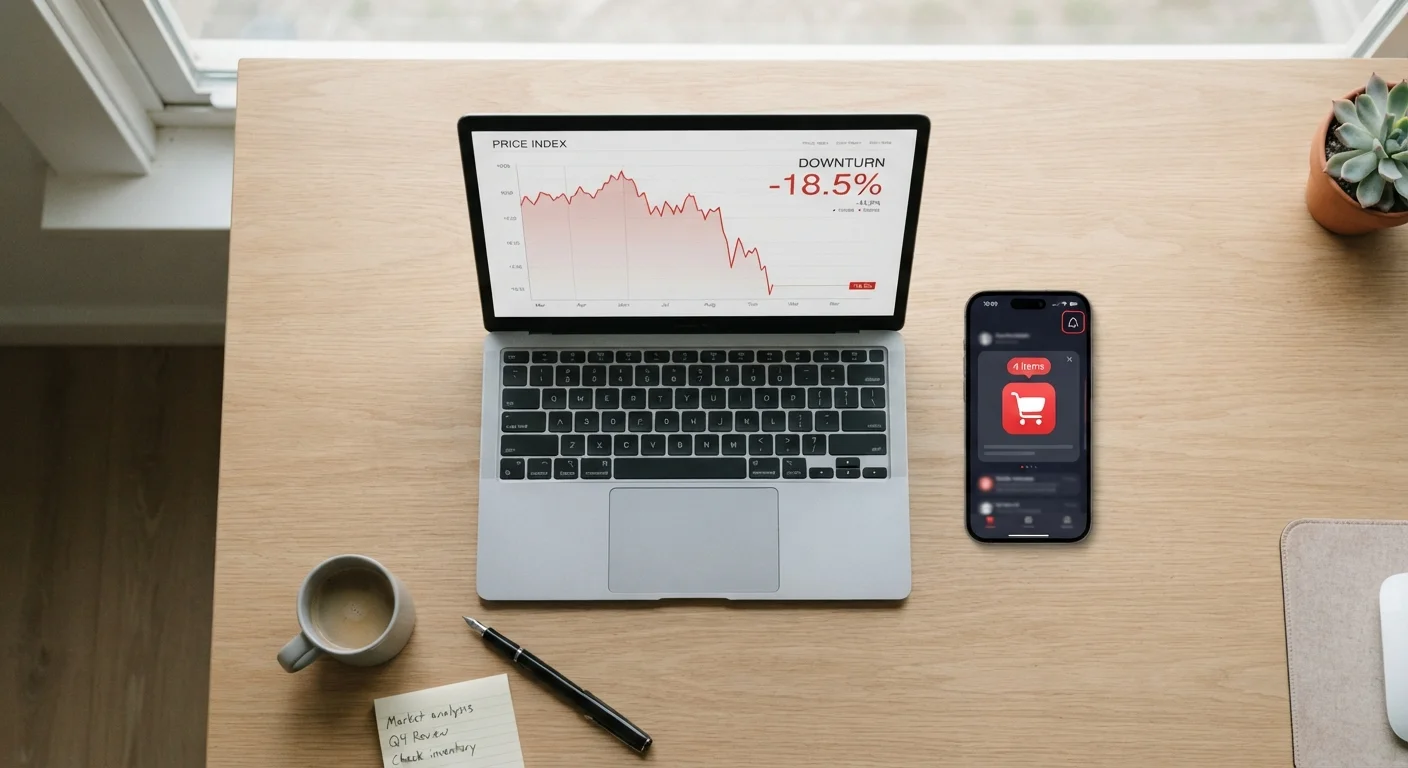
A price tracking tool is software — typically a browser extension, website, or app — that continuously monitors the listed price of a product across one or more retailers. When the price drops to a threshold you set, it sends you an alert by email, push notification, or both. The goal is to let you buy at a genuine low without watching product pages yourself.
Most tools collect price data by periodically querying retailer pages or APIs, then storing readings in a time-series database to build a historical price chart alongside the live monitoring function.
What Price Tracking Tools Actually Do
At their core, price tracking tools are automated monitors. You tell the tool which product you want to watch and at what price you'd consider buying, and the software checks the retailer's listed price on a regular schedule. When the price reaches or drops below your target, the tool delivers an alert to your inbox or device.
Most tools also build a price history chart — a record of every price reading collected over weeks or months. That history is arguably more valuable than the alert itself, because it tells you whether a current discount reflects a genuine low or just a return to a price the product holds routinely. Without that context, an alert is just a notification, not a buying signal. Our guide to interpreting price history charts walks through how to read those graphs accurately.
Tools come in several forms: browser extensions that activate on supported retailer pages, standalone websites where you paste a product URL, and mobile apps with push notification support. Some focus on a single large marketplace; others aggregate prices across multiple retailers simultaneously.
~30%
Price fluctuation range on common electronics
Research into retail pricing patterns suggests popular consumer electronics can swing 20–30% between their typical low and high prices over a six-month window, underlining the value of tracking rather than buying on first impulse.
4–6 hrs
Typical poll frequency on free tracking tiers
Most free-tier price tracking tools query retailer pages every four to six hours, meaning very short flash sales may expire before an alert is delivered to the shopper.
60%+
Shoppers who say they act on deal notifications
Consumer behaviour surveys consistently find the majority of shoppers who set up product alerts act on them when they fire — reinforcing why the alert threshold, not just the alert itself, needs to be set thoughtfully.
Setting a Meaningful Alert Threshold
The single most common mistake shoppers make with price alerts is setting the target based on the current price rather than the product's actual price history. If a laptop is listed today at $950 with a supposed original price of $1,200, setting your alert at $900 may still be above what the product regularly sells for.
A more grounded approach: look at the price history chart first. Identify the range the product has genuinely occupied over the past three to six months. If it has traded between $750 and $850 with occasional spikes to $950, an alert around $780 gives you a realistic signal of a low without chasing a price floor that almost never occurs.
Use Price History Before Setting Your Target
Before entering an alert threshold, spend two minutes reviewing the product's price history chart if the tool provides one. Look for the lowest price the item has genuinely reached in the past three to six months, then set your alert just above that floor. This way you're notified at a realistic low, not a price that almost never occurs.
For products with clear seasonal pricing patterns — electronics around major sale events, outdoor gear in the off-season, for example — factor that cycle into your threshold. Understanding how product categories follow predictable price cycles helps you set alerts that align with when lows actually happen, not just when you happen to be shopping.
When an Alert Arrives: Evaluating Before You Act
An alert notification means one thing: the price has crossed your threshold. It does not mean the deal is exceptional, that stock is limited, or that waiting will cost you. Treat it as an invitation to evaluate, not a directive to purchase.
When you receive an alert, check three things quickly. First, confirm the price is genuinely lower than the product's historical norm — not just lower than a temporarily inflated price. Second, verify the seller: some tools monitor third-party marketplace listings alongside the primary retailer, and a low price from an unfamiliar seller warrants extra scrutiny. If you're buying something shipped by a third party, knowing how to spot a counterfeit listing is a useful parallel skill. Third, consider whether you actually need the item now — urgency manufactured by a notification can mimic the psychological pressure of impulse buying traps that dress themselves up as deals.
Practical Limits to Keep in Mind
Price tracking tools are useful, but they have real constraints. They can only monitor retailers they are built to support — niche stores, local retailers, and many international sites fall outside their reach. Poll frequency matters too: a tool that checks prices every four to six hours will miss flash sales that resolve within an hour. Paid tiers often offer faster polling, which can be worth it for high-value purchases in volatile categories.
Tools also cannot assess product quality, seller reliability, or whether a price drop reflects a genuine promotion or an incoming model replacement that signals stock clearance. For a fuller picture of value, price data works best alongside knowing when online and in-store pricing each works in your favour, and — depending on where you're shopping — pairing alerts with cashback platforms or coupon extensions can layer additional value on top of a price drop.
Used with realistic expectations, price tracking tools shift you from reactive to deliberate — you define in advance what a good price looks like, then let the software tell you when it arrives.