
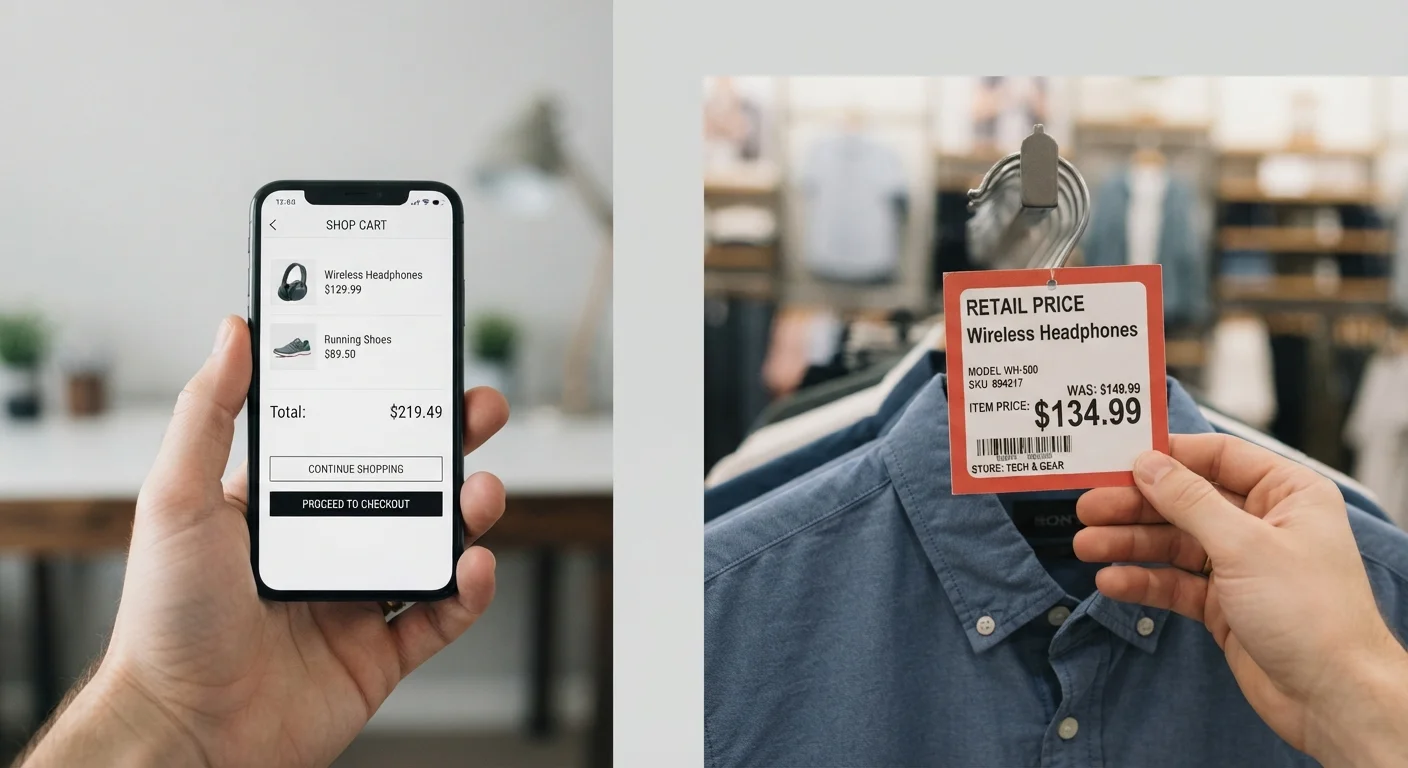
Key Takeaways
- Online prices are not automatically lower once shipping, fees, and return costs are factored in.
- In-store shopping can yield genuine savings on clearance, perishables, and negotiable items.
- The true comparison requires looking at the total cost, not just the listed price.
- Some product categories consistently favor one channel over the other.
- Verifying price history helps distinguish a real deal from an inflated 'sale' price.
Our Verdict
Neither online nor in-store shopping wins universally. The better channel depends on the product category, how urgently you need the item, and whether you account for all costs - including shipping, returns, and travel time. Developing a habit of comparing total cost rather than sticker price is the single most reliable way to make the right call.
| Best for | Recommended |
|---|---|
| Shoppers buying electronics, books, or standardized goods | Online channel |
| Shoppers buying clothing, furniture, or perishable items | In-store channel |
| Shoppers who want to avoid return shipping hassles | In-store channel |
| Shoppers with flexible timing who can wait for price drops | Online channel |
The Myth of the Automatic Online Discount
A common assumption is that shopping online always means paying less. In practice, the gap is narrower - and sometimes reversed. Online retailers carry significant operational advantages: no physical storefronts, lower staffing costs, and the ability to source inventory centrally. Those efficiencies can translate into lower prices on standardized goods where shipping is cheap relative to the item's value.
But online pricing is also dynamic. Algorithms adjust what you see based on demand, your browsing history, and competitor pricing - sometimes multiple times per day. Understanding how retailers set and change online prices can help you recognize when a listed price is genuinely competitive versus when it has been quietly inflated ahead of a promotional window.
In-store prices, by contrast, tend to be more static. That stability can work for or against you - but it also makes comparison more straightforward once you're standing at the shelf.
Where Each Channel Holds a Consistent Edge
Certain product categories reliably favor one channel. Online tends to win on electronics, software, books, and other goods where the item is identical regardless of where you buy it, shipping costs are manageable, and you can verify specifications in advance. Price competition among online sellers of the same SKU is intense, which keeps margins thin.
In-store tends to win in a few specific situations:
- Clothing and footwear - fit matters, and return shipping costs can easily cancel out any online savings.
- Furniture and mattresses - floor models sometimes carry significant clearance markdowns unavailable online, and delivery fees for large items often offset online list-price advantages.
- Groceries and perishables - in-store you can assess quality directly; online grocery delivery fees and minimum order thresholds frequently add up.
- Negotiable purchases - appliances and certain electronics at physical retailers can sometimes be negotiated, particularly on floor models or end-of-season stock.
| Online Channel | In-Store Channel | |
|---|---|---|
| Best product types | Electronics, books, standardized goods | Clothing, furniture, groceries, appliances |
| Price stability | Dynamic - can change frequently | More static, easier to verify |
| Hidden costs | Shipping, return postage, restocking fees | Travel, parking, delivery for large items |
| Return ease | Varies; return shipping adds friction | Generally faster, in-person process |
| Price matching available | Some retailers honor in-store prices | Many chains match verified online prices |
| Negotiation possible | Rarely | Sometimes on floor models or clearance |
For a deeper look at timing your online purchases strategically, see the online deal-finding playbook.
Calculating the True Cost in Each Channel
Listed price is only the starting point. A complete comparison requires factoring in every cost associated with the transaction.
Online total cost includes: item price, shipping fee (or minimum-order threshold to qualify for free shipping), estimated sales tax, and the realistic cost of returns - including who pays return postage and whether a restocking fee applies.
In-store total cost includes: item price, sales tax, fuel or transit costs to reach the store, and your time. For large or heavy items, consider whether the store charges for delivery or assembly.
Do the Full Math Before Deciding
Before committing to either channel, add up every cost: item price, tax, shipping or travel, and potential return expenses. A $5 difference in list price can disappear quickly once you account for a $6.99 return shipping fee or a 20-minute round trip to the store. Keeping a simple running total - even in your phone's notes app - takes less than a minute and prevents buyer's remorse.
One area where many shoppers lose money is underestimating return complexity. If an online item doesn't work out, the return process - printing labels, repackaging, dropping off at a carrier - carries a real time cost even when return shipping is technically free. In-store returns are generally faster and cleaner.
If you're newer to comparing prices across channels, understanding how online pricing works provides useful context on the mechanics behind what you see at checkout.
Using Price History to Validate Either Channel
A price that looks low in isolation may not be. Both online and in-store retailers regularly inflate reference prices before a promotion to make the discount appear larger than it is. The only reliable check is price history - knowing what an item has actually sold for over time.
For online purchases, automated tracking tools can pull this history without requiring manual research. Price tracking tools and automated alerts are particularly useful when you're not in a rush and can afford to wait for a genuine dip. For in-store purchases, a quick search on your phone before you commit can surface whether the shelf price is genuinely competitive or whether the same item is available online - including from the same retailer - at a lower price.
It's also worth checking whether the retailer offers price matching. Many large chains will match a verified lower price from a competitor, effectively giving you in-store convenience at an online price point. Policies vary, so confirm the terms before you rely on them.
Understanding how price signals relate to perceived value is also useful - price tags and perceived value explains why a higher number doesn't reliably indicate a better product.