

Key Takeaways
- Ingredients are listed by pre-processing weight, which can make water-heavy ingredients appear more prominent than they are.
- A named protein source (e.g., 'chicken' vs. 'poultry') gives you more information about what you're actually feeding your pet.
- The guaranteed analysis panel shows minimum or maximum levels of key nutrients, not exact amounts.
- AAFCO nutritional adequacy statements tell you whether a food is formulated to meet established nutrient profiles.
- Ingredient splitting can make individual additives appear lower on the list than their combined presence would suggest.
- A long ingredients list is not inherently better or worse than a short one - nutrient balance matters more.
Pet Food Ingredients List
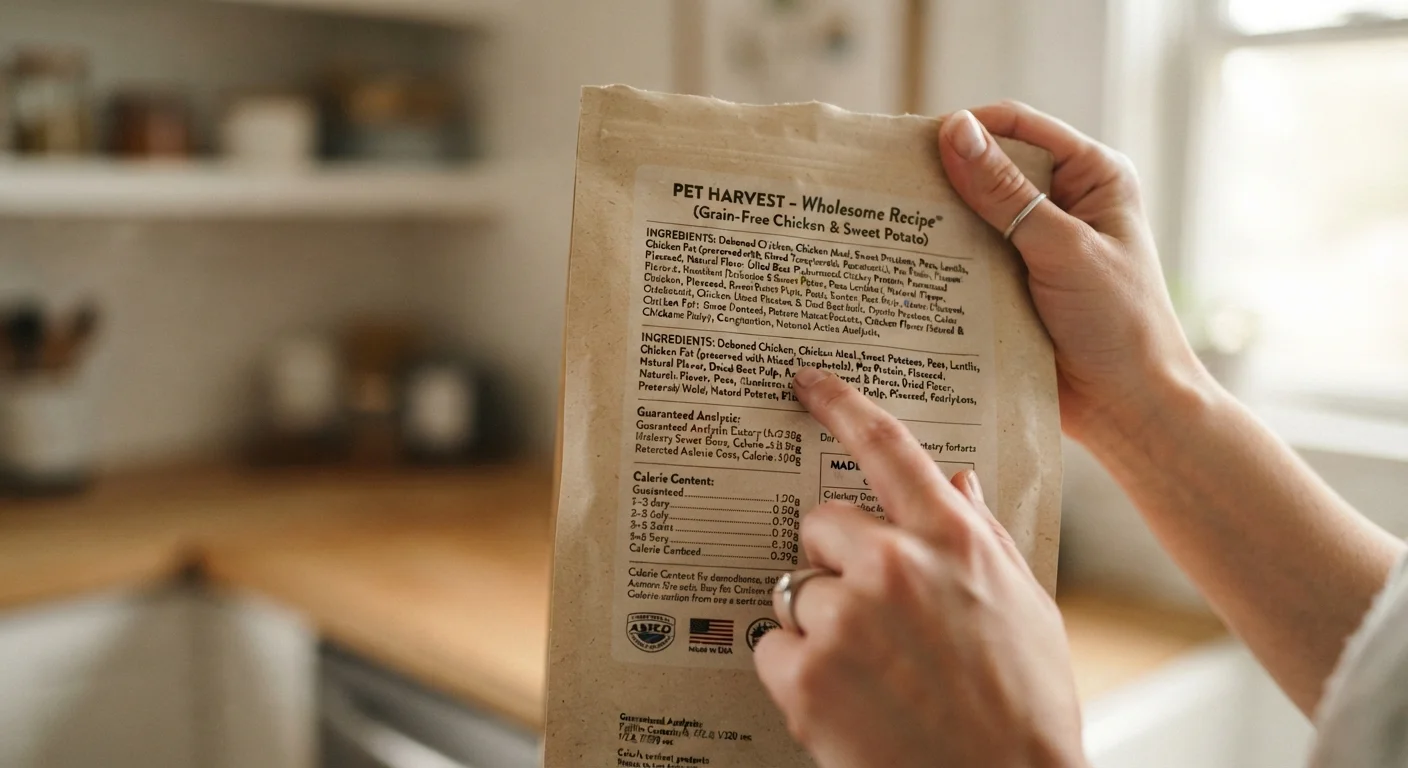
The ingredients list on a pet food label is a legally required disclosure that names every component in the food, ranked by weight before processing. It tells you what is actually in the food, though interpreting it correctly requires understanding a few industry-specific conventions. Not all ingredients that appear high on the list are nutritionally superior, and not all ingredients near the bottom are insignificant.
In the United States, pet food labeling is regulated by the Association of American Feed Control Officials (AAFCO) and, for certain claims, the FDA. AAFCO publishes ingredient definitions and model regulations that most states adopt.
How the Ingredients List Is Organized
Every commercial pet food sold in the U.S. must list its ingredients in descending order by weight - measured before cooking or processing. This sounds straightforward, but it creates a practical complication: ingredients with high water content, such as fresh chicken or beef, weigh more in their raw state than after the moisture is cooked out. A food that lists "chicken" first may contain less actual chicken protein than one listing "chicken meal" third.
Understanding this pre-processing weight rule is the single most important foundation for reading any pet food label. It means you should look at the first five to eight ingredients together as a group, rather than treating the number-one slot as a definitive quality marker.
For a deeper look at how nutrients translate across different food formats, the guide to core pet nutrients provides a plain-language breakdown of what each ingredient category contributes to your pet's diet.
Named Proteins vs. Generic Sources
One of the most useful distinctions you can make on any label is between a named protein source and a generic one. "Chicken," "salmon," or "lamb" tells you the specific animal the ingredient comes from. "Poultry," "meat," or "animal" does not - these can represent a variable blend of different species and may change between production batches.
Named proteins give you more consistency and transparency. This matters especially for pets with confirmed food sensitivities, where knowing the exact protein source is clinically relevant. If your pet has been diagnosed with a protein sensitivity, consult your veterinarian before switching foods, since novel protein diets require careful management.
Look for Named Fats, Not Just Named Proteins
The specificity principle applies throughout the ingredients list. 'Chicken fat' is a named, consistent source; 'animal fat' is not traceable to a single species. For pets with sensitivities or for owners who value ingredient transparency, named fats give you more reliable information about what is actually in each batch of food.
The same logic applies to fats. "Chicken fat" is a named, traceable source; "animal fat" is not. Named fats tend to indicate more consistent formulation across production runs.
Reading the Guaranteed Analysis Panel
Just below or beside the ingredients list, you'll find the guaranteed analysis - a table listing minimum percentages of crude protein and crude fat, and maximum percentages of crude fiber and moisture. These are regulatory minimums and maximums, not exact values. The actual nutrient content in the bag may vary within those bounds.
One common mistake is comparing guaranteed analysis figures across wet and dry foods without accounting for moisture differences. A wet food showing 10% crude protein is not nutritionally equivalent to a dry food at 10% - once you remove the water content and compare on a dry-matter basis, the dry food typically delivers significantly more protein per serving.
Comparing Wet and Dry Foods Fairly
When comparing guaranteed analysis figures between wet and dry foods, moisture content makes direct comparison misleading. To compare on equal terms, calculate the dry-matter basis by dividing each nutrient percentage by the percentage of dry matter in the food (100% minus moisture percentage). This adjustment levels the comparison significantly. Your veterinarian can help walk through this calculation for specific foods you are considering.
For a side-by-side comparison of commercial pet foods and alternative approaches, the article on raw vs. commercially prepared pet food explores how nutrient delivery differs across formats.
The AAFCO Statement and What It Confirms
Near the guaranteed analysis, look for the AAFCO nutritional adequacy statement. This tells you two critical things: which life stage the food is designed for (puppy/kitten growth, adult maintenance, all life stages, or senior), and how that adequacy was established.
Foods that have passed feeding trials have been tested on actual animals over a defined period. Foods labeled "formulated to meet" AAFCO nutrient profiles were calculated to meet standards on paper but may not have been tested in live animals. Both are legal and regulated, but the distinction is meaningful for pet owners making long-term feeding decisions.
If your pet has a health condition that might require a therapeutic diet, this statement won't be sufficient on its own - speak with your veterinarian. A structured feeding audit can also help you assess whether your current food aligns with your pet's needs.
95%
Minimum named-ingredient content rule
Under AAFCO's '95% rule,' if a product is named 'Chicken for Dogs,' chicken must comprise at least 95% of the total product weight, excluding water used in processing.
25%
Threshold for the 'dinner' rule
AAFCO's 'dinner rule' requires that a named ingredient make up at least 25% of the product if the name includes terms like 'dinner,' 'entrée,' or 'formula' - much less than the 95% rule.
3%
Minimum for 'with' ingredient claims
A label stating 'with real chicken' only requires chicken to be present at 3% of the product by weight under AAFCO's 'with' rule - a significantly lower bar than the dinner or primary-name rules.
Common Label Tactics Worth Recognizing
A few labeling conventions are legal but can be misleading without context. Ingredient splitting is one: if a formula contains several forms of a grain - say, ground corn, corn gluten meal, and corn starch - each is listed separately. This pushes each entry lower on the list while the combined grain content could be substantial.
Marketing terms like "natural," "holistic," and "premium" are largely unregulated in pet food and carry no standardized nutritional meaning under AAFCO definitions. "Natural" has a limited AAFCO definition related to processing, but it does not indicate superior nutrition. If you'd like to understand how quality claims work across product categories more broadly, the article on decoding quality labels offers useful context.
When comparing foods, focus on the AAFCO statement, the named ingredients, and the guaranteed analysis rather than front-of-bag marketing language. These three elements give you the most reliable, regulated information available. For a reality check on common nutrition claims, popular pet food myths debunked is a helpful companion read.
This article is for general informational purposes only and is not veterinary or nutritional advice. Consult a licensed veterinarian or board-certified veterinary nutritionist for guidance specific to your pet's health and dietary needs.