

Key Takeaways
- Raw diets carry genuine food safety risks, including bacterial contamination that can affect pets and their human households.
- Commercially prepared pet foods meeting AAFCO standards offer a more reliably complete nutritional profile for most pets.
- Neither approach is universally superior - the right choice depends on your pet's health status, your household, and your capacity to manage feeding safely.
- Any significant diet change should be discussed with a veterinarian, ideally one with nutrition training.
- Nutritional completeness - not ingredient sourcing alone - is the most important factor in a long-term feeding plan.
Our Verdict
Commercially prepared pet foods that meet established nutritional standards remain the lower-risk, more practical choice for most pet owners, particularly those with immunocompromised household members, young animals, or limited time to manage sourcing and food safety. Raw diets can work for some pets under careful veterinary guidance, but the burden of ensuring nutritional completeness and pathogen safety is substantial. Neither approach is one-size-fits-all.
| Best for | Recommended |
|---|---|
| Most households seeking consistent, nutritionally complete feeding | Commercially prepared pet food |
| Pet owners with veterinary and nutritional support willing to manage food safety rigorously | Raw diet (supervised) |
| Households with immunocompromised members, infants, or elderly individuals | Commercially prepared pet food |
| Pets with specific health conditions requiring dietary precision | Veterinary-formulated therapeutic diet |
Where the Debate Comes From
Few topics in pet ownership generate more passionate disagreement than what to put in your animal's food bowl. Raw feeding advocates argue that minimally processed, whole-food diets better reflect what animals evolved to eat. Veterinary nutritionists and major health organizations - including the American Veterinary Medical Association (AVMA) and the American Animal Hospital Association (AAHA) - have published position statements discouraging raw meat-based diets, citing public health and animal health risks.
Understanding this debate means separating the legitimate questions (what does my pet actually need nutritionally?) from the noise. It also means recognizing that both camps contain knowledgeable, well-intentioned people - and that the science is more nuanced than either extreme suggests. For a broader look at how popular ideas about pet nutrition hold up to scrutiny, see The Truth Behind Popular Pet Food Myths.
What Raw Diets Actually Involve
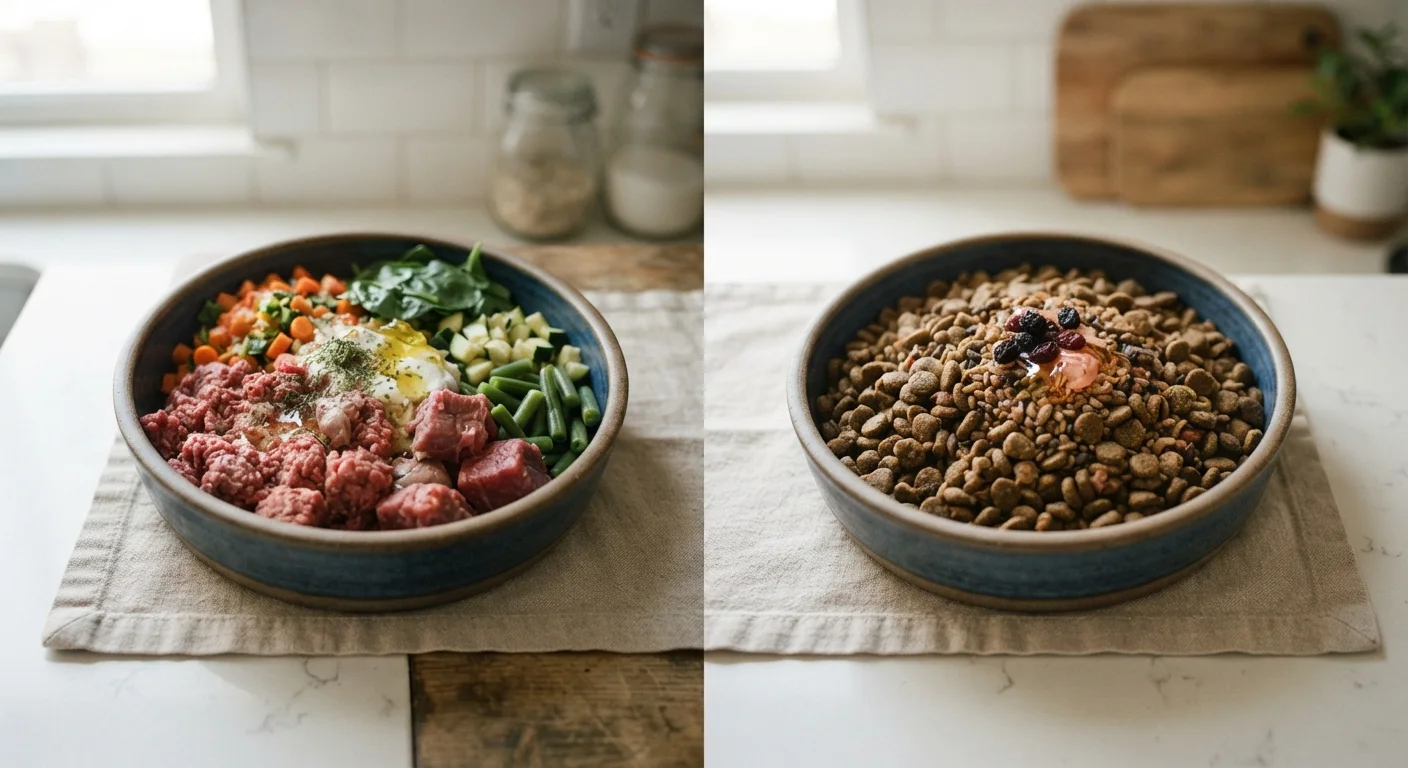
"Raw diet" is an umbrella term covering several approaches: commercially frozen or freeze-dried raw products, prey-model diets (whole carcasses or cuts), and homemade raw meals assembled from grocery-sourced ingredients. These diets typically combine raw muscle meat, organ meat, raw meaty bones, and sometimes vegetables, eggs, or dairy.
Proponents point to anecdotal improvements in coat quality, stool consistency, and energy levels. Some also argue that cooking destroys heat-sensitive nutrients. However, systematic reviews of peer-reviewed research have generally found the anecdotal benefits difficult to confirm under controlled conditions, while the risks are better documented.
Raw Meat Poses Real Household Health Risks
Pets on raw diets can shed dangerous bacteria like Salmonella and Listeria in their feces and saliva without appearing sick. This creates infection risk for people who handle the pet, its food, or its bowls. The AVMA and AAHA have both issued formal statements advising against raw meat-based diets, particularly in households with immunocompromised individuals, children under five, or older adults. Meticulous hygiene practices reduce - but do not eliminate - this risk.
The primary concerns with raw feeding are microbiological. Raw meat - even human-grade - routinely carries Salmonella, Listeria, E. coli, and other pathogens. Pets can shed these bacteria in their feces and saliva without appearing ill themselves, creating exposure risk for household members. Children, elderly individuals, and anyone immunocompromised face elevated risk. Bone feeding also carries injury risks, including tooth fractures and gastrointestinal perforations, particularly from cooked bones - though raw bones carry their own hazards.
Nutritional completeness is a second major concern. Many homemade raw diets studied have been found to have significant imbalances - particularly in calcium-to-phosphorus ratios, vitamin D, and trace minerals - which can cause developmental problems in young animals and long-term deficiencies in adults. See our article on homemade pet food risks and realities for related considerations.
How Commercially Prepared Foods Are Regulated
In the United States, commercial pet foods are regulated by the FDA and subject to labeling standards enforced in part through the Association of American Feed Control Officials (AAFCO). Foods labeled "complete and balanced" must meet defined nutrient profiles for a given life stage - either through formulation against established standards or through feeding trials.
This doesn't make all commercial foods equal. Manufacturing quality, ingredient sourcing, and formulation expertise vary considerably across producers. But the regulatory framework means a food meeting AAFCO standards has been independently evaluated against a defined nutritional baseline - something homemade and many raw diets lack by default.
| Raw Diet | Commercially Prepared Food | |
|---|---|---|
| Nutritional completeness | Variable; high risk of imbalance without expert formulation | Reliable when labeled 'complete and balanced' per AAFCO |
| Food safety risk | Higher; pathogen exposure risk for pets and humans | Lower; heat processing eliminates most pathogens |
| Regulatory oversight | Minimal for homemade; limited for commercial raw | FDA and AAFCO standards apply |
| Practicality | Time-intensive; sourcing and storage demands | Convenient; consistent and shelf-stable (kibble) |
| Cost | Often higher, especially commercial raw formats | Wide range; economy to premium tiers available |
| Suitability for vulnerable households | Not recommended; pathogen shedding risk | Generally suitable with standard hygiene practices |
Understanding what ingredient lists and guaranteed analysis panels actually communicate is a useful skill regardless of which feeding approach you lean toward. Our guide on reading a pet food label walks through this in practical detail.
Practical Considerations for Pet Owners
Choosing a feeding approach isn't purely a nutritional question - it's also a practical and household safety one. Consider these factors honestly:
- Household vulnerability: If anyone in your home has a compromised immune system, is pregnant, is elderly, or is a young child, the pathogen risks of raw feeding carry extra weight.
- Your pet's health status: Animals undergoing chemotherapy, surgery recovery, or with gastrointestinal conditions are generally not appropriate candidates for raw diets. Puppies and kittens are also at higher risk from both pathogens and nutritional imbalances.
- Time and sourcing capacity: A nutritionally complete raw diet assembled at home requires consistent access to varied, quality ingredients and careful recipe management - not a minor commitment.
- Cost: Commercially prepared raw and freeze-dried options tend to be significantly more expensive than kibble. Complete commercial diets range widely in price, allowing more flexibility.
If you're weighing raw feeding seriously, a consultation with a board-certified veterinary nutritionist (DACVN) is the most reliable path to doing it safely. General practitioners vary considerably in their nutritional training. Once you've settled on an approach, auditing your pet's current diet is a useful next step to ensure nutritional needs are actually being met.
This article is for general informational purposes only and does not constitute veterinary or medical advice. Always consult a licensed veterinarian before making significant changes to your pet's diet.