

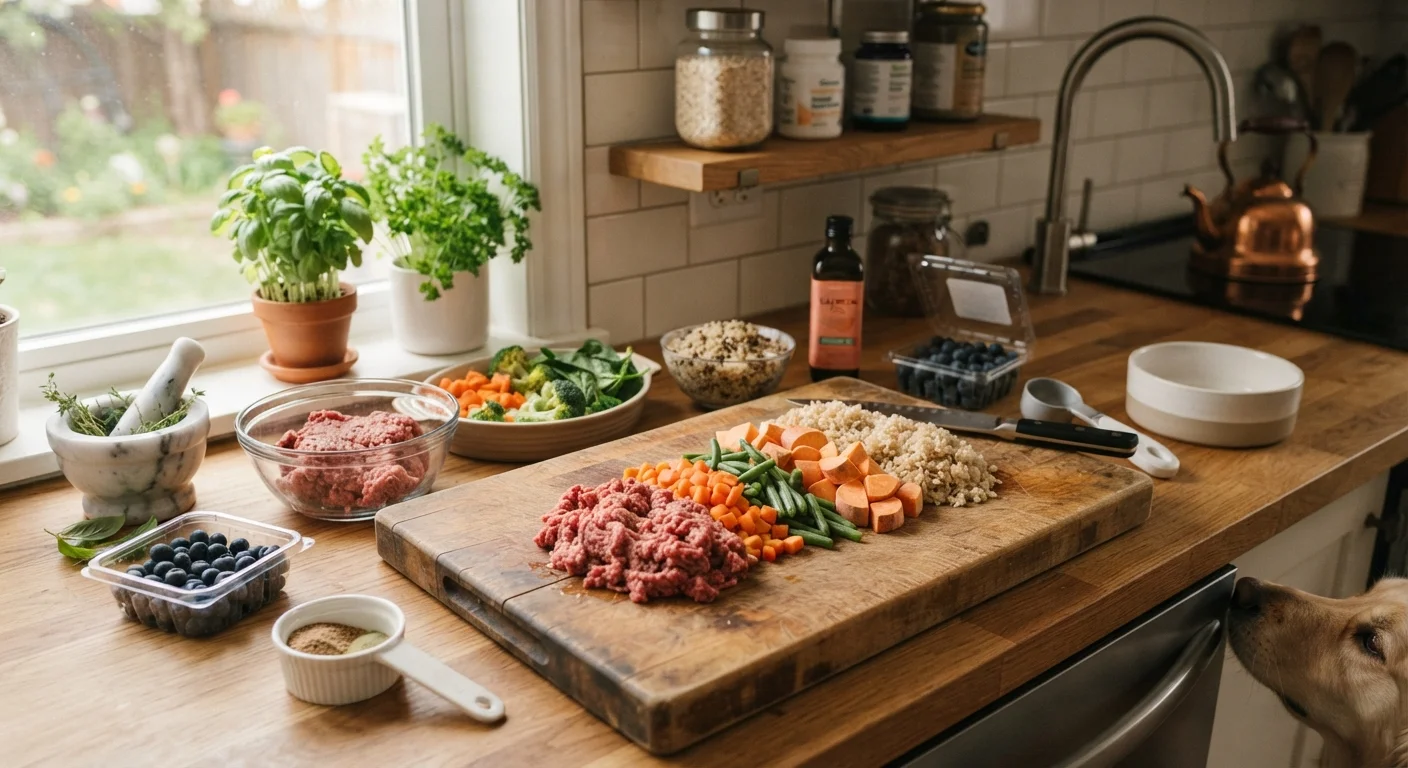
Key Takeaways
- Homemade pet food gives owners full visibility into ingredients but rarely meets all nutritional requirements without expert guidance.
- Most home-prepared recipes lack critical micronutrients such as calcium, zinc, and certain vitamins unless supplements are added.
- A board-certified veterinary nutritionist can formulate a balanced recipe tailored to your specific pet's needs.
- Ingredient control benefits pets with confirmed food allergies or intolerances when medically supervised.
- Time, cost, and food safety risks are real practical challenges for most pet owners.
Full visibility into every ingredient in the bowl
Owners can select and verify the freshness and origin of each component, eliminating uncertainty about unnamed by-products or additives present in some commercial formulas.
Useful for pets with confirmed food allergies
A single-protein, single-carbohydrate home diet can be easier to control than finding a commercial equivalent, making it a practical tool during veterinarian-supervised elimination trials.
Often more palatable for picky or senior pets
The aroma and texture of lightly cooked whole foods can stimulate appetite in animals that have become reluctant to eat, which may support weight maintenance in older pets.
Avoidance of specific additives or preservatives
Owners with particular concerns about certain artificial preservatives or colorants can exclude them entirely, though most such ingredients in commercial food are considered safe at regulated levels.
Most recipes are nutritionally incomplete
Peer-reviewed research has found that a large proportion of home recipes - including those in published books - are deficient in essential nutrients such as calcium, phosphorus, zinc, and key vitamins.
Deficiencies develop slowly and are hard to detect
Unlike food poisoning, a diet low in a micronutrient may take months to manifest as visible illness, meaning harm can accumulate before an owner is aware anything is wrong.
Cats have unique nutritional requirements difficult to meet
Cats are obligate carnivores requiring preformed taurine, arachidonic acid, and vitamin A from animal sources - nutrients that are easy to miscalculate or omit in home preparation.
Food safety risks for pets and people
Handling and storing raw or undercooked meat increases exposure to pathogens such as Salmonella and Listeria, posing risks to both the animal and household members, particularly immunocompromised individuals.
Significant time and cost commitment
Regular sourcing, preparing, and storing of fresh ingredients requires consistent effort and can cost considerably more than commercial diets of comparable quality, depending on protein choices.
Easy to introduce errors through substitutions
Swapping one protein or vegetable for another - even with similar-seeming ingredients - can shift the nutrient profile meaningfully, especially for minerals that vary widely between food sources.
Our Verdict
Homemade pet food can be a legitimate feeding strategy, but only when a recipe is formulated by a qualified veterinary nutritionist and followed precisely. The romantic appeal of "knowing exactly what's in the bowl" is well-founded, but nutritional completeness is far harder to achieve than most owners anticipate. Without professional oversight, homemade diets carry a genuine risk of slow-developing deficiencies that may not be visible until serious harm has occurred.
Best suited to pet owners whose animals have diagnosed dietary conditions requiring tailored nutrition, and who are prepared to work with a veterinary nutritionist and commit to consistent preparation.
Why Pet Owners Turn to Homemade Diets
Interest in home-prepared pet food has grown steadily among owners who want greater transparency about what their animals eat. Concerns about commercial pet food recalls, unfamiliar ingredient names on labels, and a general trend toward whole-food diets for humans have all contributed to the shift. For some pets - particularly those with confirmed food allergies or chronic gastrointestinal conditions - a veterinarian may even recommend a home-cooked elimination diet as a diagnostic or therapeutic tool.
It's worth understanding, though, that motivation alone doesn't make a homemade diet safe or complete. The gap between a thoughtfully assembled meal and a nutritionally adequate one is wider than most owners expect. Before exploring the specific trade-offs, it helps to understand what "complete and balanced" actually means for a dog or cat - concepts explained in depth in our guide to popular pet food myths.
The Real Advantages of Cooking for Your Pet
There are genuine benefits to home preparation when it is done thoughtfully and with professional input.
Full visibility into every ingredient in the bowl
Owners can select and verify the freshness and origin of each component, eliminating uncertainty about unnamed by-products or additives present in some commercial formulas.
Useful for pets with confirmed food allergies
A single-protein, single-carbohydrate home diet can be easier to control than finding a commercial equivalent, making it a practical tool during veterinarian-supervised elimination trials.
Often more palatable for picky or senior pets
The aroma and texture of lightly cooked whole foods can stimulate appetite in animals that have become reluctant to eat, which may support weight maintenance in older pets.
Avoidance of specific additives or preservatives
Owners with particular concerns about certain artificial preservatives or colorants can exclude them entirely, though most such ingredients in commercial food are considered safe at regulated levels.
Ingredient transparency is perhaps the most meaningful advantage. Owners can verify the sourcing, freshness, and quality of every component in the bowl - something no commercial label fully provides. For pets with a confirmed single-protein allergy, a home-prepared diet using a novel protein source (one the pet has never eaten before) can be far easier to control than hunting for a suitable commercial formulation. This approach is sometimes recommended by veterinary dermatologists as part of a formal dietary trial.
Palatability is another real win. Many pets - especially seniors with reduced appetite - eat home-cooked meals more willingly than processed food, which can be clinically useful when maintaining body weight is a priority.
Where Homemade Diets Most Often Go Wrong
The risks of home-prepared diets are well-documented in veterinary literature, and they center almost entirely on nutritional incompleteness.
Most recipes are nutritionally incomplete
Peer-reviewed research has found that a large proportion of home recipes - including those in published books - are deficient in essential nutrients such as calcium, phosphorus, zinc, and key vitamins.
Deficiencies develop slowly and are hard to detect
Unlike food poisoning, a diet low in a micronutrient may take months to manifest as visible illness, meaning harm can accumulate before an owner is aware anything is wrong.
Cats have unique nutritional requirements difficult to meet
Cats are obligate carnivores requiring preformed taurine, arachidonic acid, and vitamin A from animal sources - nutrients that are easy to miscalculate or omit in home preparation.
Food safety risks for pets and people
Handling and storing raw or undercooked meat increases exposure to pathogens such as Salmonella and Listeria, posing risks to both the animal and household members, particularly immunocompromised individuals.
Significant time and cost commitment
Regular sourcing, preparing, and storing of fresh ingredients requires consistent effort and can cost considerably more than commercial diets of comparable quality, depending on protein choices.
Easy to introduce errors through substitutions
Swapping one protein or vegetable for another - even with similar-seeming ingredients - can shift the nutrient profile meaningfully, especially for minerals that vary widely between food sources.
Published studies examining owner-generated homemade pet food recipes - including those found in books and online - have consistently found that the vast majority are deficient in one or more essential nutrients. Calcium is the most commonly missing mineral; without an appropriate supplement, dogs eating meat-heavy diets without bone can develop skeletal problems over time. Cats face additional risks because they have unique requirements for taurine, arachidonic acid, and preformed vitamin A that cannot be met by plant-based ingredients alone.
Food safety is a parallel concern. Raw or lightly cooked meat introduces pathogen risks - for the pet and for humans handling the food - that proper commercial processing typically eliminates. Our overview of raw versus commercially prepared pet food explores this dimension further.
When Homemade Diets Are Medically Recommended
Veterinarians sometimes prescribe home-prepared diets as part of a diagnostic elimination trial for suspected food allergies or inflammatory bowel disease. In these cases, the diet is typically formulated by a specialist, used for a defined period, and monitored with follow-up appointments. This is distinct from an owner independently choosing to cook for a healthy pet. If your veterinarian recommends a home-cooked approach, ask for a referral to a board-certified veterinary nutritionist for recipe formulation.
Making It Work: The Role of Veterinary Nutrition
The single most important step an owner can take before switching to a home-prepared diet is consulting a board-certified veterinary nutritionist (Diplomate of the American College of Veterinary Nutrition). These specialists can formulate a recipe calibrated to your pet's species, life stage, body weight, and any existing health conditions - and they can specify which supplements are required and at what amounts.
Following a recipe precisely matters as much as having one. Substituting ingredients, adjusting proportions, or skipping supplements - even occasionally - can erode nutritional balance over weeks or months. Unlike an acute deficiency, a slow-developing shortfall may not be obvious until the pet shows clinical signs. A periodic diet review with your veterinarian is advisable; our practical feeding audit guide offers a useful framework for ongoing assessment.
If the commitment required feels significant, it is - and that's not a reason to feel discouraged. Understanding where homemade feeding sits relative to other options, including how it compares to wet and dry commercial foods, can help you make the most informed choice. See our comparison of wet and dry food nutritional trade-offs for that broader context.
~95%
Home recipes found nutritionally deficient in studies
A study published in the Journal of Nutritional Science examined 200 home-prepared dog diet recipes and found the vast majority were deficient in at least one essential nutrient.
1 in 3
Pet owners interested in home-prepared feeding
Surveys by veterinary nutrition organizations suggest a substantial minority of owners have either tried or considered home-cooked diets, reflecting growing consumer interest in ingredient transparency.
This article is for general informational purposes only and does not constitute veterinary or medical advice. Always consult a licensed veterinarian or board-certified veterinary nutritionist before making significant changes to your pet's diet.