

Key Takeaways
- Wet food typically contains 70-85% moisture, contributing meaningfully to a pet's daily water intake.
- Dry kibble is more calorie-dense per ounce, making portion accuracy especially important for weight management.
- Neither format is universally superior - life stage, health status, and individual preference all matter.
- Dental health claims for dry food are modest; dedicated dental chews or brushing remain more reliable strategies.
- Mixed feeding (wet and dry combined) can be nutritionally sound when total daily intake is properly managed.
- Always consult a veterinarian before making significant changes to your pet's diet, especially for animals with health conditions.
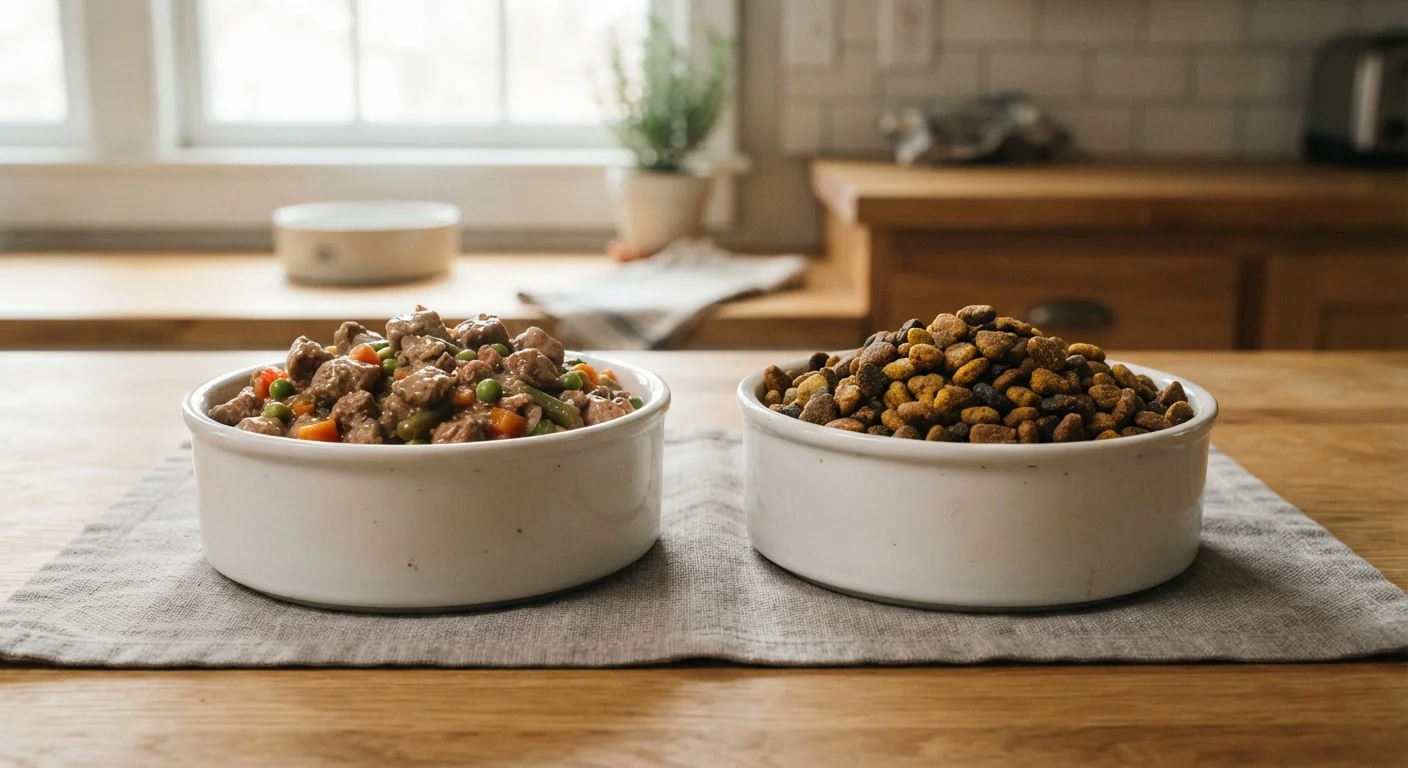
Option A
Wet Pet Food
The moisture-rich, highly palatable option.
Best for: Pets who need extra hydration, picky eaters, and animals with urinary or kidney concerns.
Option B
Dry Pet Food (Kibble)
The calorie-dense, convenient everyday staple.
Best for: Pet owners seeking easy portion control, longer shelf life, and potential dental texture benefits.
If your cat or dog has urinary tract or kidney concerns
Wet Pet Food
The high moisture content in wet food supports urinary tract health and reduces the concentration of waste products the kidneys must process.
If convenience and long-term storage matter most to you
Dry Pet Food (Kibble)
Kibble does not require refrigeration after opening, has a longer shelf life, and is easier to pre-measure and store in bulk.
If your pet is a reluctant or picky eater
Wet Pet Food
Wet food tends to have stronger aroma and a texture many pets find more appealing, which can improve voluntary food intake.
If weight management is a primary concern
Dry Pet Food (Kibble)
Kibble's defined calorie density makes it easier to measure precise portions, though wet food's lower calorie-per-volume ratio can also support satiety.
If you want maximum nutritional flexibility
Wet Pet Food
Combining wet and dry food in appropriate proportions allows pet owners to balance hydration, palatability, and cost under veterinary guidance.
What Actually Differs Between Wet and Dry Food
The most fundamental difference between wet and dry pet food is water content. Wet food - sold in cans, pouches, or trays - typically contains between 70% and 85% moisture. Dry kibble, by contrast, generally contains only 6% to 10% moisture. That gap has real downstream effects on calorie density, palatability, digestion, and how much water your pet needs to drink each day.
On a dry-matter basis (meaning when moisture is removed from the equation), many wet and dry formulas offer comparable protein and fat levels. However, because wet food is so diluted by water, a pet needs to eat a larger volume of it to obtain the same number of calories as a smaller serving of kibble. This affects both portion sizing and cost-per-calorie calculations. For a fuller picture of what nutrients appear on food labels and why they matter, see our guide to core pet food nutrients.
| Criterion | Wet Food | Dry Food (Kibble) |
|---|---|---|
| Moisture content | 70-85% | 6-10% |
| Calorie density (per ounce) | Lower | Higher |
| Palatability | Generally higher | Variable by formula |
| Shelf life after opening | 1-2 days refrigerated | Weeks in sealed container |
| Cost per calorie | Typically higher | Typically lower |
| Dental texture benefit | Minimal | Limited and debated |
| Hydration contribution | Significant | Negligible |
| Portion control ease | Moderate | High |
Hydration: Where Wet Food Has a Clear Edge
Cats in particular evolved as desert animals with a low thirst drive, often relying on prey moisture to meet their fluid needs. This biological tendency means many domestic cats on exclusively dry diets may maintain chronically low fluid intake. Wet food can offset this by delivering a meaningful portion of daily water needs through the food itself.
Dogs are generally better at drinking enough water independently, but animals with specific health conditions - such as chronic kidney disease, lower urinary tract disease, or a history of bladder stones - can benefit significantly from the additional moisture wet food provides. Our companion article on pet hydration and everyday health explains the broader role water plays in organ function and digestion.
A Note on Cats and Chronic Dehydration
Veterinary nutritionists frequently highlight that cats on all-dry diets may produce more concentrated urine than those with higher moisture intake. Over time, concentrated urine is associated with a higher risk of urinary crystals and lower urinary tract disease in some cats. This does not mean dry food is unsafe for all cats, but it is a factor worth discussing with your veterinarian - particularly for male cats, who are anatomically more vulnerable to urinary blockages.
If your pet is on a dry-food diet, access to fresh, clean water at all times is essential. Some pets increase intake when offered a water fountain rather than a static bowl.
Calorie Density, Weight, and Portion Control
Because kibble is far less bulky per calorie than wet food, it is easier to overfeed without realizing it - particularly with free-choice (always available) feeding. A single extra handful of dry food can represent a significant calorie surplus over time. Weight gain in pets compounds quietly and carries real health consequences, including joint stress and metabolic strain.
Wet food, by contrast, has a lower calorie density by volume, which can contribute to a feeling of fullness - useful for pets prone to rapid eating. However, wet food portion sizes are still not unlimited; total daily calorie targets must be respected regardless of format. Feeding guidelines on packaging are starting points, not prescriptions, and individual needs vary by activity level, age, and health status. See how nutritional priorities shift across life stages in our article on life stage feeding for dogs.
70-85%
Moisture in typical wet pet food
Compared to just 6-10% in dry kibble, this difference significantly affects daily fluid intake and calorie density per serving.
~3-4x
Calorie density advantage of dry food by weight
Because kibble contains so little water, it delivers substantially more calories per ounce than most wet food formulas.
Dental Health, Palatability, and Practical Realities
A common claim is that dry kibble mechanically cleans teeth as pets chew. The evidence supporting this is limited - most kibble shatters before creating meaningful abrasive contact with teeth at the gumline. Veterinary dental organizations generally recommend tooth brushing, dental chews that have earned a Veterinary Oral Health Council (VOHC) seal, or professional cleanings as more reliable strategies than relying on kibble texture alone.
Palatability is a legitimate consideration many owners underestimate. Wet food's aroma and texture make it more appealing to most pets, which matters for ill, elderly, or convalescing animals who may otherwise refuse to eat. Dry food, meanwhile, offers convenience: it does not require refrigeration after opening (within a day), is easier to portion in advance, and generally costs less per calorie.
Mixed feeding - offering a combination of wet and dry food - is nutritionally feasible provided the total daily calorie intake is tracked carefully. If you are considering stepping further away from commercial formats, our article on homemade pet food outlines the benefits and real risks involved. For a broader diet review, a practical feeding audit can help you assess whether your current approach meets your pet's full nutritional needs.
This article provides general educational information about pet nutrition and is not a substitute for personalized veterinary advice. Consult your veterinarian before making significant changes to your pet's diet, especially if your animal has existing health conditions.