

Key Takeaways
- Indoor cats typically live significantly longer than cats with outdoor access, primarily due to reduced exposure to traffic and predators.
- Outdoor cats face higher risks of infectious disease, parasites, toxin exposure, and physical injury.
- Indoor cats are more prone to obesity, stress-related conditions, and urinary problems without proper environmental enrichment.
- A supervised or enriched indoor lifestyle can address many of the behavioral and physical needs outdoor access would otherwise fulfill.
- Your veterinarian is the best resource for tailoring a lifestyle plan to your individual cat's age, health, and temperament.
Our Verdict
Neither lifestyle is without trade-offs - indoor cats live longer on average but require intentional enrichment to stay healthy and mentally engaged. Outdoor access exposes cats to a wide range of preventable risks, though environmental and behavioral needs can be met in other ways. The right choice depends on your cat's individual needs, local environment, and your ability to mitigate the specific risks each lifestyle carries.
| Best for | Recommended |
|---|---|
| Owners prioritizing longevity and disease prevention | Indoor lifestyle with enrichment |
| Cats with high prey drive or significant restlessness indoors | Supervised outdoor access or enclosed catio |
| Senior or immunocompromised cats | Indoor lifestyle |
| Cats in low-traffic, low-predator rural environments with owner oversight | Managed outdoor access with preventive care |
How Lifestyle Shapes Feline Health
The question of whether to keep a cat indoors or allow outdoor access is one of the most consequential decisions a cat owner makes - and there's no universally correct answer. Both environments come with distinct health advantages and risks that interact with a cat's individual temperament, age, and baseline health status.
Research consistently suggests indoor cats live longer on average. Some veterinary sources cite median lifespans of 12-18 years for indoor cats compared to estimates as low as 2-5 years for free-roaming outdoor cats, though figures vary widely depending on geography and circumstance. Understanding why those differences exist helps owners make more informed decisions - regardless of which path they choose. This article provides general health information and is not a substitute for personalized veterinary advice.
Outdoor Cats: Real Risks, Real Benefits
Cats allowed to roam outdoors gain meaningful physical and behavioral stimulation. The variety of terrain, smells, and prey-like movement opportunities satisfies instincts that can be difficult to replicate inside. Outdoor activity also supports healthy muscle tone and weight management through natural movement.
However, the hazards are substantial:
- Trauma: Vehicle strikes are among the leading causes of sudden death and serious injury in outdoor cats.
- Infectious disease: Direct contact with other cats increases the risk of feline leukemia virus (FeLV), feline immunodeficiency virus (FIV), and upper respiratory infections.
- Parasites: Fleas, ticks, intestinal worms, and ear mites are far more prevalent in cats with outdoor access.
- Toxin exposure: Antifreeze, rodenticides, and certain plants pose serious poisoning risks outdoors.
- Predators and conflict: Depending on the region, cats face risks from dogs, coyotes, birds of prey, and territorial conflicts with other cats.
Preventive care - including vaccination, parasite control, and microchipping - can meaningfully reduce several of these risks but cannot eliminate them. The article Well-Meaning Habits That Can Quietly Harm Your Pet covers how skipping parasite prevention, even briefly, can have unintended consequences.
| Health Factor | Indoor Cats | Outdoor Cats | |
|---|---|---|---|
| Average lifespan | 12-18 years (typical range) | Often shorter; varies widely by environment | |
| Trauma risk | Very low | High (vehicle strikes, predators) | |
| Infectious disease exposure | Low (limited cat contact) | Higher (FeLV, FIV, URIs) | |
| Parasite burden | Lower with routine prevention | Significantly higher | |
| Obesity risk | Higher without enrichment | Lower with natural movement | |
| Behavioral/stress issues | More common if under-stimulated | Less common with ample stimulation | |
| Toxin exposure | Low (household risks only) | Higher (plants, pesticides, antifreeze) | |
| Preventive care needs | Moderate | High (vaccines, parasite control, microchip) |
Indoor Cats: Underappreciated Risks
Indoor living removes most acute physical dangers, but it introduces a different category of health challenges that owners sometimes underestimate.
Obesity is one of the most common health problems in domestic cats, and indoor cats are particularly vulnerable. Reduced movement combined with unrestricted caloric access creates conditions for weight gain that strains joints, contributes to diabetes, and reduces quality of life. Nutrition choices matter here too - see Wet Food vs. Dry Food: Weighing the Nutritional Trade-Offs for Your Pet for how food type can affect caloric intake and hydration.
Stress and behavioral issues also emerge more frequently in under-stimulated indoor cats. Boredom-driven overgrooming, inappropriate elimination, and anxiety are well-documented in cats lacking sufficient environmental complexity. Cat Training Is Possible - Here's What It Actually Looks Like outlines engagement techniques that can help meet these needs.
Lower urinary tract disease (FLUTD) occurs more frequently in sedentary, stressed, or insufficiently hydrated cats - a combination that indoor environments can inadvertently encourage. Maintaining good water intake is a key preventive measure; Hydration and Pets: The Overlooked Factor in Everyday Health explains why this matters.
Enrich the Indoor Environment Consistently
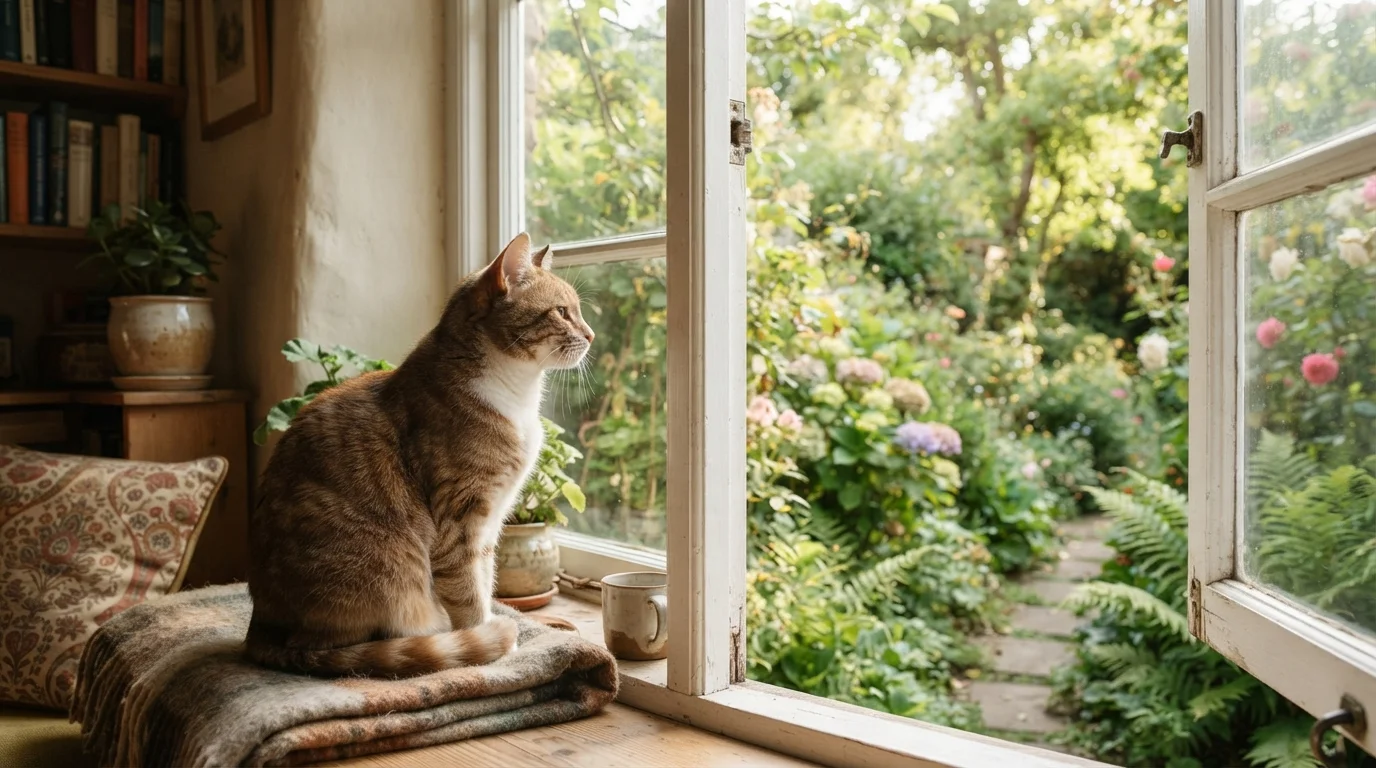
Indoor cats benefit most when enrichment is varied and rotated - the same toy becomes less stimulating over time. Introduce puzzle feeders, rotate play sessions with wand toys, and provide window access to watch birds or passing activity. Even small additions to vertical space, such as a window perch or wall-mounted shelving, can meaningfully reduce stress-related behaviors.
Middle-Ground Approaches
Many owners find that a hybrid approach captures the benefits of both environments while managing the worst risks. Common strategies include:
- Catios (enclosed outdoor enclosures): Allow access to fresh air, sunlight, and outdoor stimuli without exposure to traffic, predators, or roaming cats.
- Harness and leash walks: Some cats adapt well to supervised outdoor exploration on a leash, though individual temperament varies greatly.
- Indoor enrichment: Vertical space (cat trees, shelving), puzzle feeders, window perches, and scheduled play sessions address predatory and exploratory instincts.
As cats age, their risk profile and activity needs shift noticeably. The article Senior Pets and Shifting Health Needs: An Age-by-Age Overview discusses how a lifestyle that suited a young adult cat may need to be revisited as mobility, immunity, and cognition change.
Ultimately, there is no single correct answer for all cats or all households. Discussing your specific situation - including your local environment, your cat's history, and any existing health conditions - with a veterinarian provides the most reliable foundation for this decision.
This article is intended for general educational purposes and does not constitute veterinary or medical advice. Always consult a licensed veterinarian for guidance specific to your pet's health and circumstances.