

Key Takeaways
- Secured debt is backed by a specific asset (collateral); unsecured debt is not.
- Lenders can seize collateral if you default on secured debt, such as foreclosing on a home.
- Unsecured debt generally carries higher interest rates because lenders take on more risk.
- Both debt types affect your credit score, though the consequences of default differ.
- Understanding which type you hold helps you prioritize repayment strategically.
Option A
Secured Debt
The collateral-backed borrowing option.
Best for: Borrowers financing large purchases like homes or vehicles who can offer an asset as loan collateral.
Option B
Unsecured Debt
The flexible, collateral-free credit type.
Best for: Consumers needing flexible credit access - such as credit cards or personal loans - without pledging a specific asset.
If you're financing a home purchase
Secured Debt
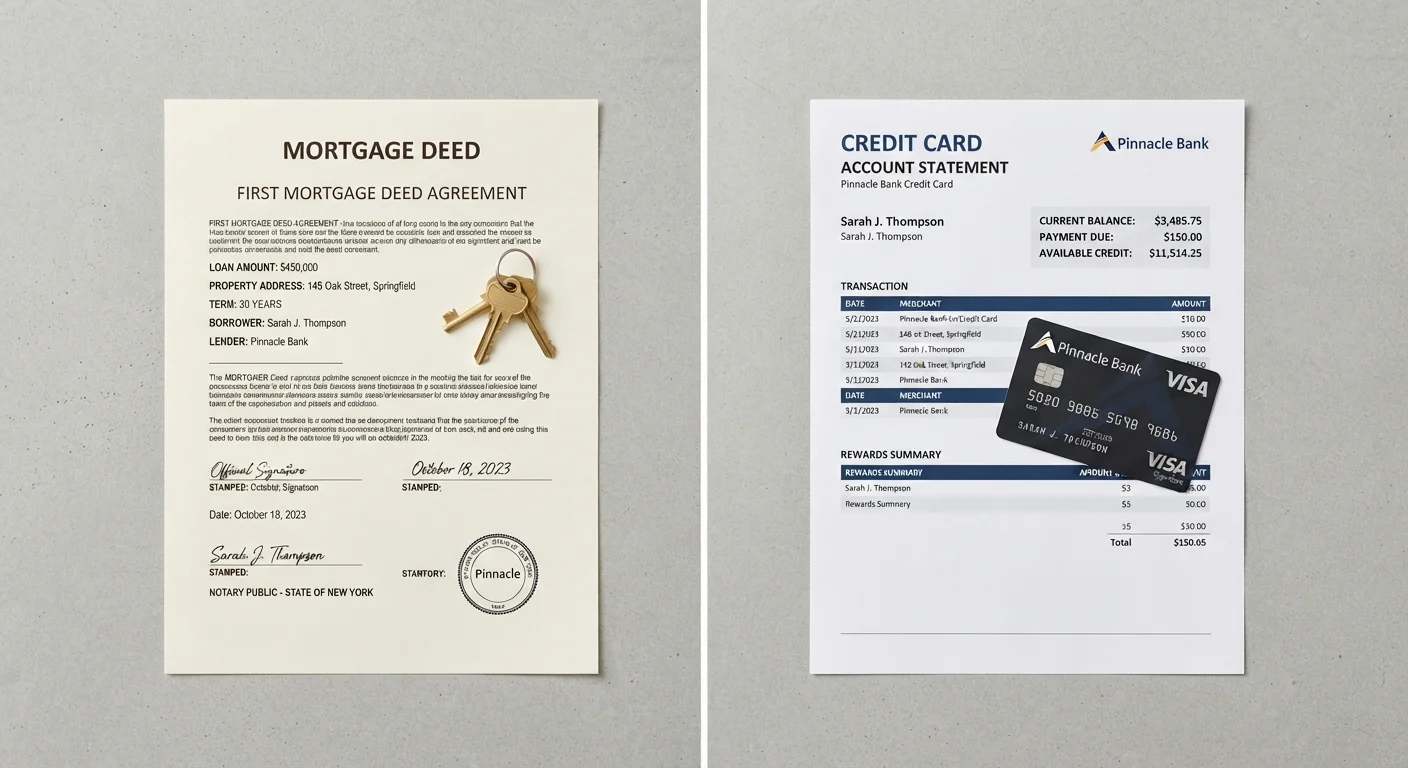
A mortgage is a secured loan - your home serves as collateral, which typically allows lenders to offer lower interest rates than unsecured alternatives.
If you need flexible everyday purchasing power
Unsecured Debt
Credit cards and personal loans require no collateral, making them accessible for everyday expenses or emergencies, though usually at higher rates.
If you want to minimize long-term interest costs
Secured Debt
Because secured loans are lower risk for lenders, they commonly carry lower annual percentage rates (APRs) over the life of the loan.
If you do not own assets to pledge as collateral
Unsecured Debt
Unsecured products like personal loans or credit cards don't require ownership of a home, vehicle, or other asset to qualify.
The Core Distinction: Collateral
Secured debt is any loan backed by a specific asset - called collateral - that the lender can claim if you fail to repay. A mortgage is secured by your home; an auto loan is secured by your vehicle. If you stop making payments, the lender has a legal right to foreclose on the property or repossess the car to recover what they're owed.
Unsecured debt carries no such asset pledge. When you borrow on a credit card or take out most personal loans, the lender extends credit based primarily on your creditworthiness - your credit history, income, and debt-to-income ratio. There is no specific property for the lender to seize if you default. For a refresher on key terms like APR and debt-to-income ratio, see our plain-language credit glossary.
| Criterion | Secured Debt | Unsecured Debt |
|---|---|---|
| Collateral required | Yes - a specific asset | No |
| Typical examples | Mortgage, auto loan, home equity loan | Credit card, personal loan, student loan |
| Interest rate (general tendency) | Lower - less lender risk | Higher - more lender risk |
| Default consequence | Asset seizure (foreclosure, repossession) | Collections, credit damage, possible judgment |
| Credit score impact | Yes - missed payments reported | Yes - missed payments reported |
| Typical loan amounts | Often larger (tied to asset value) | Often smaller or variable |
Interest Rates and Risk: Why They're Connected
Because secured lenders hold a safety net - collateral they can liquidate - they typically charge lower interest rates. The reduced risk translates into savings for borrowers over the loan's life. Unsecured lenders, by contrast, bear the full risk of non-payment, so they compensate by charging higher rates.
This risk-rate relationship explains why credit card APRs are generally much higher than mortgage rates, even for the same borrower. It also explains why personal loans, which are unsecured, tend to carry higher rates than a home equity loan, which uses your home as collateral.
~$12T
Total U.S. mortgage debt outstanding
According to the Federal Reserve's Z.1 Financial Accounts of the United States report, mortgage debt is the largest category of household secured debt.
~$1.1T
Total U.S. revolving credit card debt
The Federal Reserve tracks revolving consumer credit - predominantly credit cards - as the largest unsecured debt category for U.S. households.
20%+
Average credit card APR in recent years
The Federal Reserve's consumer credit data shows average credit card rates have exceeded 20% APR, reflecting the higher risk lenders carry without collateral.
If you're weighing whether to use a personal loan or a credit card for a specific goal, our comparison of personal loans vs. credit cards breaks down the trade-offs in detail.
What Happens When You Can't Pay
The consequences of default differ significantly between debt types. With secured debt, the lender can pursue the collateral directly. Missed mortgage payments can lead to foreclosure; missed auto loan payments can result in repossession. These processes are governed by state law and typically follow a defined timeline, but the outcome can mean losing a critical asset.
With unsecured debt, lenders cannot immediately seize property. Instead, they may report the delinquency to credit bureaus, sell the debt to a collections agency, or pursue a court judgment. A judgment can sometimes lead to wage garnishment, depending on state law. Neither path is consequence-free - both damage your credit score and create financial stress.
Regardless of debt type, a structured repayment strategy can make a real difference. See how the debt avalanche and debt snowball methods compare to find an approach that fits your situation.
Student Loans: A Special Case
Most federal student loans are unsecured - there is no physical asset backing them. However, they have unique protections and limitations not found in typical unsecured debt, including income-driven repayment options and specific rules around discharge. Private student loans vary by lender. Always review the specific terms of any student loan before assuming standard unsecured debt rules apply.
Applying This to Real Decisions
Knowing which category your debt falls into helps you prioritize intelligently. Because missing a secured debt payment puts a physical asset at risk, many financial educators suggest keeping secured obligations current before focusing on unsecured balances. That said, high-rate unsecured debt can grow quickly and create its own urgency - context matters.
When evaluating a major purchase like a vehicle, the secured vs. unsecured distinction also shapes the financing decision itself. Exploring whether to finance or pay cash for a car is a natural next step for anyone weighing an auto loan.
This article provides general financial education and is not personalized financial, legal, or investment advice. Consult a qualified financial professional for guidance specific to your circumstances.