

Key Takeaways
- Passengers can increase crash risk, particularly for novice and teenage drivers.
- Conversation and social pressure are the two primary mechanisms linking passengers to distraction.
- Adult passengers, particularly experienced ones, can actually reduce risk by acting as a second set of eyes.
- Simple cabin rules - like keeping music low and limiting mid-drive conversations - reduce distraction significantly.
- State and provincial graduated licensing laws often restrict teen drivers' passenger numbers for evidence-based safety reasons.
Occupant Dynamics
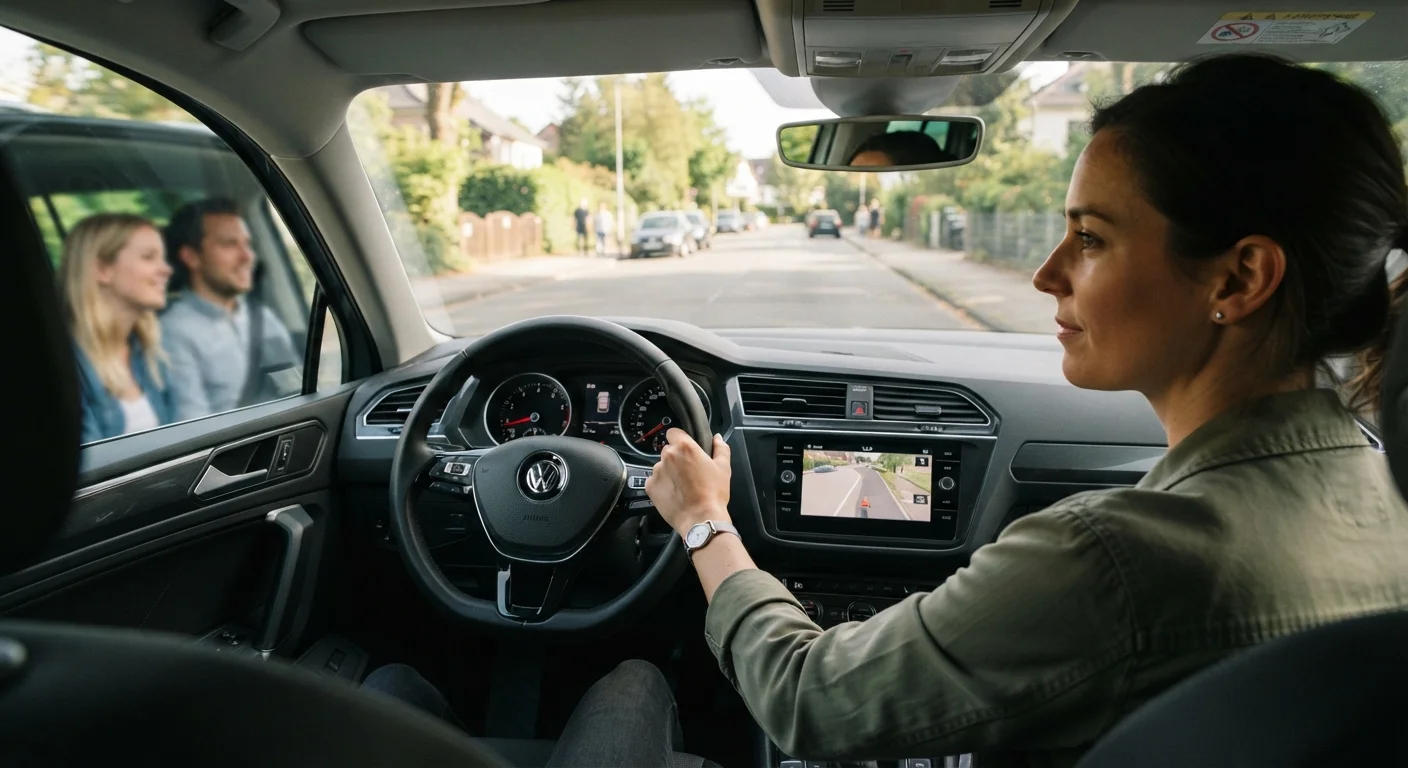
Occupant dynamics refers to how the presence, behaviour, and characteristics of passengers inside a vehicle influence the driver's attention, decision-making, and overall risk level. A car full of people is not the same driving environment as an empty one - social pressure, noise, conversation, and divided attention all play measurable roles in road safety.
Traffic safety researchers use the term 'social facilitation' to describe how an audience - even a silent one - can alter a person's performance on a task, including driving.
Why Passengers Are More Than Just Extra Weight
Most drivers intuitively know that a crying toddler in the back seat is distracting. But the influence of passengers on driver behaviour runs deeper than noise - it involves social psychology, attention science, and, for younger drivers especially, peer pressure dynamics that can override safety instincts.
Traffic safety researchers distinguish between two broad categories of passenger influence: cognitive distraction (conversation and social engagement pulling mental resources away from driving) and social facilitation or inhibition (the way a social audience changes a person's behaviour, sometimes for better, sometimes for worse).
Understanding both mechanisms helps drivers - and their passengers - make smarter choices every time the doors close.
“Passengers are one of the most consistently identified risk factors for young driver crashes - not because passengers are inherently dangerous, but because managing social dynamics while driving is a skill that takes time to develop.”
— Research summary, AAA Foundation for Traffic Safety, US traffic safety research organisation
The Peer Effect: When Passengers Raise Risk
Research published in peer-reviewed traffic safety journals has consistently found that crash rates for teenage drivers increase with each additional peer passenger. One frequently cited area of research suggests the risk of a fatal crash roughly doubles with one teenage passenger and continues to climb with more. The mechanism is not simply that teens talk more - it is that peer presence actively shifts risk tolerance upward.
Teen passengers tend to reinforce one another's bravado. A driver who might slow down on an unfamiliar road when alone may speed up when friends in the car signal approval of fast driving. This dynamic is sometimes called peer-induced risk amplification and is one of the core reasons most US states have adopted graduated driver licensing (GDL) restrictions on passenger numbers for newly licensed drivers.
New licence holders often underestimate how significantly cabin social dynamics can erode the focus they worked hard to build during supervised practice.
~2×
Increased fatal crash risk for teen drivers with one peer passenger
Research cited by the AAA Foundation for Traffic Safety and similar road safety bodies suggests that the presence of a teenage peer passenger can approximately double fatal crash risk for teen drivers.
~50%
Reduction in teen crash deaths attributed to GDL passenger restrictions
Studies evaluating graduated driver licensing programmes have associated passenger restriction provisions with meaningful reductions in teen driver fatalities, though estimates vary by study and jurisdiction.
16-17
Age group with highest passenger-related crash rate
According to US federal traffic safety data, drivers aged 16 to 17 have disproportionately high crash rates when carrying peer passengers compared to any other age group.
When Passengers Can Actually Help
The passenger-as-risk story has an important counterpoint: for experienced adult drivers, a calm, attentive co-passenger can lower risk. An alert front-seat passenger can provide verbal navigation guidance, point out hazards the driver has not yet noticed, and serve as an informal accountability check on speed or following distance.
This is sometimes called the co-pilot effect, and it explains why emergency vehicle crews, long-haul professionals, and many driving instructors value a trained second observer in the cabin. The key distinction is awareness and intent - a passenger actively supporting the driver's task is very different from one demanding social engagement mid-manoeuvre.
If you are driving in challenging conditions, consider asking your front-seat passenger to help monitor traffic or manage navigation. For a deeper look at how environmental conditions interact with driver attention, see our guide on driving in rain, fog, and ice.
Cognitive Distraction: Conversation at the Wheel
Even without any emotional charge, conversation consumes cognitive bandwidth. Driving requires continuous scanning, hazard prediction, speed management, and spatial awareness - what researchers call a high-demand cognitive task. When a driver is engaged in conversation, the brain must time-share across these demands, and some of them lose priority.
Studies on distracted driving have found that verbal conversation - whether with a passenger or via phone - can reduce the area of the visual field a driver actively processes, a phenomenon sometimes described as inattentional blindness. The driver's eyes may be open and pointed forward while the brain effectively misses key visual events.
Importantly, hands-free calling shares this cognitive distraction mechanism with passenger conversation, though in-person passengers have one significant advantage: they can naturally pause the conversation when road conditions become more demanding, whereas a phone caller cannot read those cues.
A Simple Rule for Calmer Journeys
Before any trip with passengers, briefly let them know that you may need to pause conversation during complex traffic situations - merging, intersections, or adverse conditions. Most passengers appreciate the heads-up and are happy to cooperate. Framing it as a normal habit, rather than a reaction to a specific passenger, avoids any awkwardness.
Physical Load and Vehicle Handling
Beyond behaviour and attention, passengers add mass. A vehicle carrying four adults and luggage can weigh significantly more than the same car with a solo driver - affecting braking distances, steering response, and tyre load distribution. While modern vehicles are engineered with passenger loads in mind, the handling differences are real and require adjustment.
Drivers should increase following distances when heavily loaded, brake earlier than usual, and be aware that the vehicle may feel less responsive in sudden manoeuvres. Tailgating is already one of the most common causes of rear-end collisions - and the additional stopping distance required with a full passenger load makes close following even more hazardous.
Tyre pressure should also be checked before long trips with full occupancy, as underinflated tyres under heavy load increase heat buildup and blowout risk.
Practical Steps for Safer Passenger Journeys
Awareness of occupant dynamics is only useful if it translates into concrete habits. The following practices are grounded in what traffic safety research has identified as effective:
- Set expectations before moving off. A brief word - "I need to concentrate on this stretch, let's talk once we're through" - normalises focused driving without creating awkwardness.
- Keep cabin noise manageable. Music volume that prevents hearing sirens, horns, or tyre squeal is too loud. Agree on a comfortable volume before departure.
- Assign a navigator. Letting a passenger handle map guidance removes a major competing demand from the driver.
- Follow GDL restrictions strictly. If you hold a provisional or restricted licence, passenger limits exist for documented safety reasons - not as arbitrary rules.
- Model calm behaviour. Experienced drivers travelling with new drivers can demonstrate that slowing down or asking passengers to quieten for a moment is normal and reasonable.
Combining these habits with broader defensive driving techniques builds the kind of situational awareness that holds up even when the cabin gets busy.