

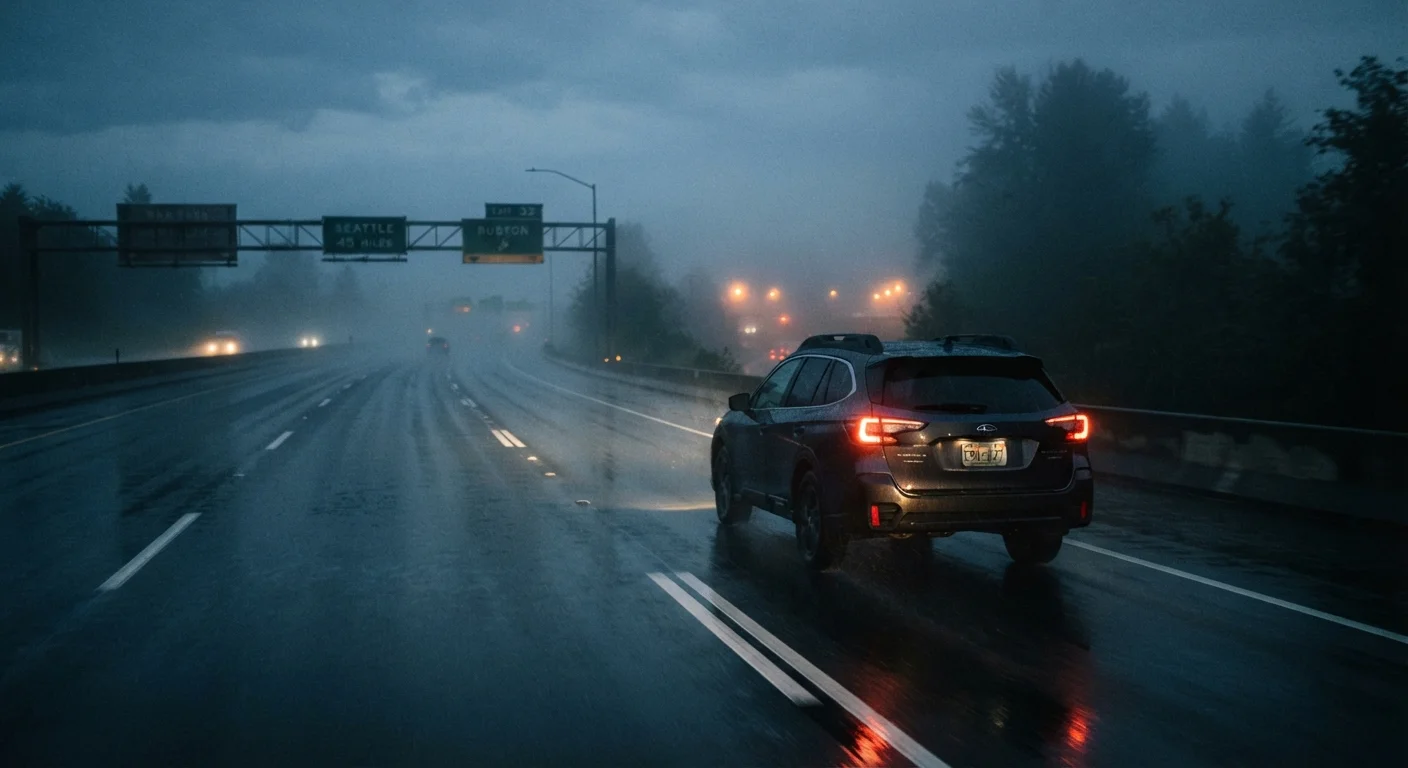
Key Takeaways
- Wet, icy, and foggy conditions each alter vehicle grip and stopping distance in distinct ways.
- Hydroplaning can occur at highway speeds on wet roads - reducing speed and avoiding sudden steering inputs helps prevent it.
- On ice, braking distance can increase tenfold compared to dry pavement - early, smooth inputs are essential.
- Fog demands reduced speed, low-beam headlights, and increased following distance - high beams make visibility worse.
- Tyre condition and tread depth are among the most critical factors affecting safety in all adverse conditions.
- Vehicle preparation before the season starts significantly reduces risk when weather deteriorates.
Why Adverse Conditions Change How Your Car Behaves
Under normal dry conditions, a car's tyres maintain strong friction with the road surface. This friction - called traction - is what allows you to accelerate, steer, and stop reliably. When rain, fog, or ice enters the picture, that relationship between tyre and road surface is disrupted in ways that are sometimes invisible to the driver until a hazard is already unfolding.
Each weather condition introduces its own physical challenges. Rain reduces friction and can cause water to build up between the tyre and road. Ice dramatically reduces the coefficient of friction - the measure of how much grip exists between two surfaces - to a fraction of its dry-road value. Fog doesn't affect the road surface itself but limits how far ahead you can perceive danger, which compresses the time available to respond.
Understanding why these conditions are dangerous, rather than just that they are, helps drivers make better decisions in the moment. See our guide to defensive driving techniques for the anticipatory habits that underpin safe driving in any environment.
Driving in Rain: Traction, Hydroplaning, and Visibility
Rain affects drivers on two fronts simultaneously: reduced traction and reduced visibility. Even a light drizzle can make roads slippery, particularly in the first few minutes of rainfall when water mixes with accumulated oil and dust on the surface to create a slick film.
Hydroplaning
Hydroplaning (also called aquaplaning) occurs when a tyre encounters more water than it can disperse, causing it to ride on top of a layer of water rather than maintaining contact with the road. At that moment, steering and braking become largely ineffective. It can occur at speeds as low as 35 mph on standing water, and the risk increases with worn tyre tread and higher speeds.
If you sense hydroplaning - the steering will feel light and unresponsive - ease off the accelerator gently and hold the wheel straight. Do not brake sharply or turn abruptly. Allow the car to slow naturally until the tyres regain contact.
Maintain Tread Depth for Rain Safety
A quick way to check tread depth in the US is the penny test: insert a penny into a tread groove with Lincoln's head pointing down. If you can see the top of Lincoln's head, the tread is likely too worn for safe wet-road driving. Replace tyres before reaching that point rather than waiting until they fail the test.
Rain also reduces visibility significantly. Use dipped (low-beam) headlights in rain, even during daylight, so other drivers can see you. Keep windshield wipers in good condition and ensure your defroster is working. Increase your following distance to at least four seconds - double the typical dry-road recommendation - to allow more stopping room.
For more on how tyre condition affects safety in wet conditions, see how tyre pressure affects handling and braking.
Driving in Fog: Managing What You Cannot See
Fog is uniquely deceptive. It can appear light and manageable at low speeds, then thicken suddenly - or it can make you feel visibility is adequate when, in practice, you are far too close to any hazard to stop in time at your current speed.
The core rule in fog is to drive at a speed at which you can stop within the distance you can see. This is called driving within your sight line. If your visibility is 80 feet, you need to be travelling at a speed that allows you to stop within 80 feet.
High Beams Make Fog Conditions Worse
Switching to high beams in fog is a common and dangerous mistake. The light reflects back off the water droplets in fog, creating a white-out effect that further reduces what you can see ahead. Always use low-beam headlights - or dedicated fog lights if your vehicle has them - when driving in foggy conditions.
Use low-beam headlights in fog, not high beams. High beams reflect off fog particles and actually reduce what you can see ahead - a phenomenon called backscatter. Some vehicles are equipped with dedicated fog lights mounted lower on the bumper; these are designed to illuminate the road surface beneath the fog layer and can be genuinely useful.
Increase following distance substantially, avoid sudden braking, and be alert to vehicles that may have pulled over without hazard lights. Fog often patches - visibility can improve rapidly and then disappear again. Night driving shares similar visibility challenges and the same principle of adjusting speed to sight distance applies.
Driving on Ice and Snow: The Physics of Low Grip
Ice is the most unforgiving of all common road conditions. On dry pavement, a typical tyre-road friction coefficient might be around 0.7-0.8. On glare ice, that figure can drop to 0.1 or below - meaning stopping distances can increase by roughly ten times. A car that might stop in 150 feet on dry road could need 1,500 feet or more on ice.
Key Adjustments for Icy Roads
- Reduce speed significantly. Speed limits are set for normal conditions. On snow or ice, even half the posted limit may be too fast.
- Increase following distance. Allow at least eight to ten seconds of gap between you and the vehicle ahead.
- Accelerate and brake gently. Sudden inputs are the most common cause of skids. Squeeze the brakes progressively rather than stamping on them.
- Avoid cruise control. On slippery surfaces, cruise control can cause wheelspin when it tries to maintain speed, and it delays your ability to respond to a skid.
If You Start to Skid
In a rear-wheel skid (oversteer), where the back of the car slides out, steer gently in the direction the rear is sliding - a technique often called steering into the skid. In a front-wheel skid (understeer), where the front washes wide, ease off the gas and wait for the tyres to regain grip before trying to steer. Avoid overcorrecting in either case.
Watch for black ice - a thin, nearly transparent ice layer that looks like a wet road. It commonly forms on bridges, overpasses, and shaded spots where the surface cools faster than surrounding road.
Before braking on a suspected icy patch, gently test traction by applying very light brake pressure at a low speed in a safe area. The response - or lack of it - tells you what kind of surface you're on before you need to stop urgently.
Many drivers don't discover ice until they brake hard and the vehicle fails to slow. A proactive micro-test, where conditions allow, gives you critical information before a hazard forces the issue.
When driving in fog on an unfamiliar road, reduce speed more than you think necessary. Even a familiar route changes in fog because landmarks and cues you rely on subconsciously disappear.
Driver familiarity with a route can create a false sense of confidence in fog. Visibility, not familiarity, should dictate speed in low-visibility conditions.
Vehicle Preparation: What to Check Before the Weather Turns
No driving technique compensates fully for poorly maintained equipment. The condition of your vehicle before the weather deteriorates plays a significant role in how safely you can handle adverse conditions.
- Tyres: Check tread depth and condition. Worn tyres have reduced grooves to channel water away, dramatically increasing hydroplaning risk. Many drivers in regions with harsh winters use dedicated winter tyres, which are compounded to stay flexible and grip in cold temperatures where all-season tyres stiffen.
- Brakes: Worn brake pads extend stopping distances even on dry roads. On wet or icy roads, the margin for error is already gone - functional brakes are non-negotiable.
- Windshield wipers and washers: Streaking, skipping wipers impair visibility exactly when you need it most. Replace blades at least annually, or more often if they show signs of wear.
- Lights: Ensure all exterior lights - headlights, taillights, brake lights - are functional. Visibility is a two-way problem: you need to see and be seen.
- Battery: Cold temperatures reduce battery capacity significantly. A battery that starts reliably in summer may fail in winter. Have it tested before temperatures drop.
For a full seasonal checklist, see our seasonal car care guide covering checks for every season. General upkeep habits are also covered in keeping a vehicle in good shape over time.
Adjusting Your Mindset: The Driver's Role in Adverse Conditions
Equipment and technique matter - but the most consistent safety factor in adverse conditions is the driver's willingness to adjust behaviour before a crisis develops. Many collisions in poor weather happen not because conditions were impossible to drive through, but because a driver maintained dry-weather habits when the situation required adaptation.
A few principles worth internalising:
- Speed is a choice. Posted speed limits reflect what's reasonable in normal conditions. In rain, fog, or ice, slower is almost always safer - and legally, drivers can be held responsible for driving too fast for conditions even when under the limit.
- Following distance is time. Think of it as reaction time, not just space. The further back you are, the more seconds you have to perceive and respond to a hazard.
- Eliminate distractions. In clear conditions, distraction is dangerous. In adverse conditions, it can be catastrophic. Give the road your full attention.
- Know when not to drive. Sometimes the safest decision is to delay a trip until conditions improve. There is no driving skill that fully eliminates the risks of a severe ice storm or near-zero-visibility fog.
Adverse-condition driving intersects with many other driving contexts - motorway and urban roads each present distinct challenges that intensify in poor weather. Building consistent situational awareness across all driving environments is the foundation of lasting road safety.