Key Takeaways
- Airport currency exchange rates are typically far worse than those available through your bank or ATM network before departure.
- Hunger, stress, and time pressure at airports combine to drive impulsive spending on food, upgrades, and extras.
- Most avoidable airport costs stem from preparation gaps, not the airport itself — planning ahead closes most of those gaps.
- Dynamic currency conversion at airport card terminals almost always costs more than paying in the local currency.
The Airport Is Designed to Make You Spend
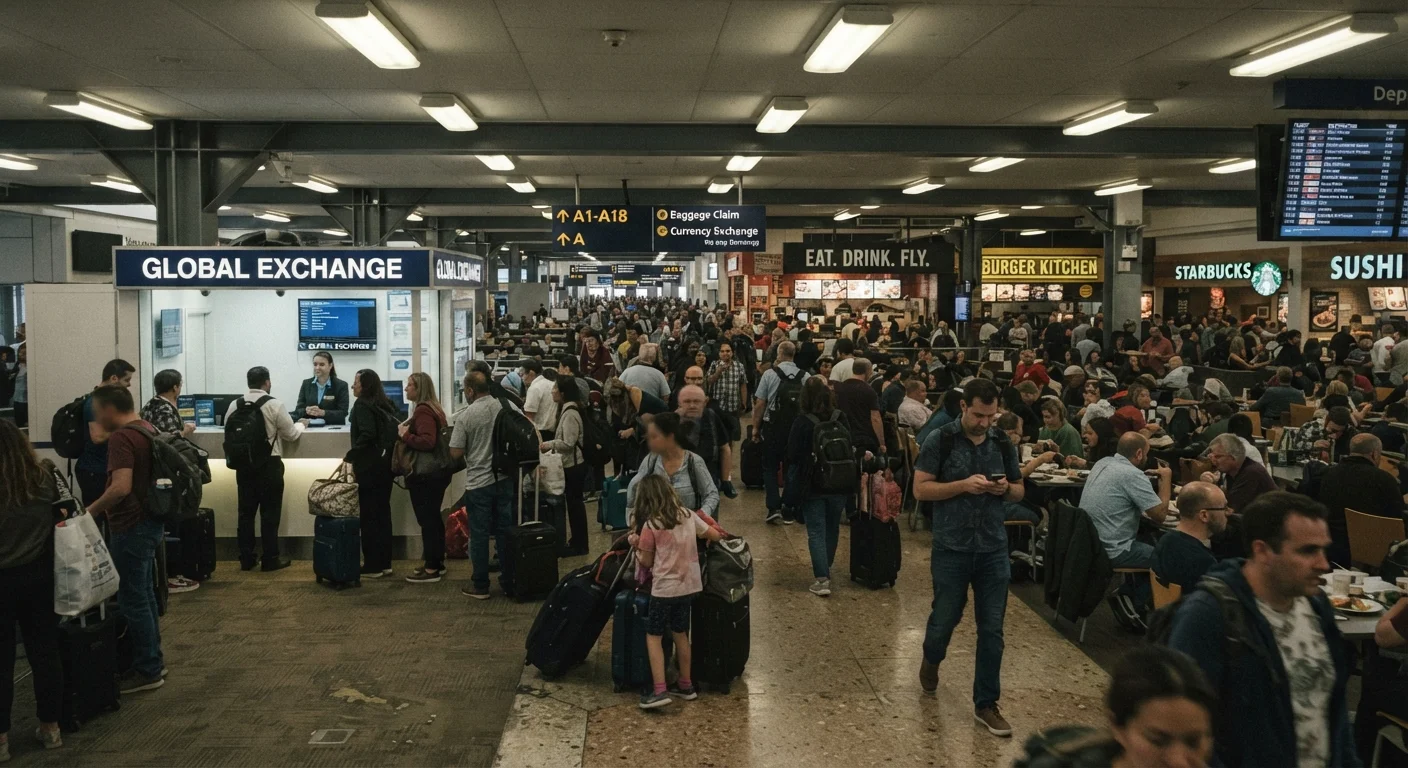
Airports are not neutral spaces. Terminal layouts, limited competition, and a captive audience with time to fill are a reliable formula for elevated prices. Retail and food concessions pay significant rents to airport authorities, and those costs flow directly to travelers through higher price tags. A bottle of water, a sit-down meal, or a last-minute travel pillow all carry a location premium that has nothing to do with quality.
What makes this worse is the psychological state most travelers are in: stressed, possibly sleep-deprived, and operating under time pressure. Research on consumer behavior consistently shows that cognitive load reduces price sensitivity — when your brain is managing logistics, it's less likely to flag an $18 sandwich as unreasonable. Airports exploit this gap without any deliberate malice; it's simply how the economics work.
Understanding the structural reasons behind airport overspending is more useful than willpower alone. Most of the patterns that lead to inflated costs are predictable, which means they're avoidable with a little preparation.
~10–15%
Typical currency exchange markup at airport kiosks
Consumer finance analysts generally estimate airport foreign exchange margins run significantly higher than interbank or ATM rates, often in this range depending on currency pair.
3–5x
Price premium for bottled water inside security
Retail price comparisons between airport concession areas and standard grocery retail consistently show dramatic markups on basic beverages post-security.
Common Mistakes That Drive Up Airport Costs
The mistakes below aren't obscure edge cases — they show up across traveler types and trip budgets. Each one is rooted in a specific preparation gap or a predictable moment of friction.
Exchanging currency at airport kiosks or booths.
Why it happens: Travelers either forget to exchange currency before departure or assume airport rates are competitive because the service is convenient and visible.
Accepting dynamic currency conversion (DCC) at card payment terminals.
Why it happens: Airport card terminals often prompt travelers to pay in their home currency, which feels familiar and safer. In reality, DCC applies the card issuer's exchange rate — typically worse than the local bank's rate.
Buying food and beverages inside the security zone without eating beforehand.
Why it happens: Travelers underestimate how hungry they'll be after check-in procedures or how long they'll wait in the terminal, then face limited and overpriced options once past security.
Paying for last-minute seat upgrades or ancillary add-ons at the gate.
Why it happens: Gate upgrade offers arrive at a moment of fatigue and anticipation, making extra legroom or priority boarding feel worth any price. The airport context inflates perceived value.
Buying travel accessories and toiletries in the terminal.
Why it happens: Travelers forget essential items — a phone charger, travel adapter, or TSA-compliant toiletries — and the airport becomes the only available option.
For a broader look at the fees that compound across a full trip, see hidden fees that quietly inflate your travel budget. And if airfare pricing itself feels opaque, the anatomy of a flight price explains the mechanics behind fare fluctuations.
What These Patterns Have in Common
Every mistake on this list shares a common thread: it happens at a moment when the traveler has fewer options than they would have had with earlier action. Currency exchange at the airport is expensive because you waited. The $14 airport meal happened because you didn't pack a snack or eat before leaving. The upgrade felt necessary because you didn't check in early enough to get a decent seat assignment.
The Cheapest Fix Is Preparation Before You Leave
Almost every avoidable airport expense traces back to a decision — or non-decision — made days before departure. Currency, snacks, seat selection, and packing all have better, lower-cost solutions outside the terminal. Once you're past security, your options narrow and prices rise. Treat pre-trip planning as the primary cost-control tool.
The airport doesn't create these vulnerabilities — it just exploits ones that already exist. Closing preparation gaps before you leave home is the most reliable way to avoid the premium environment airports offer. Travelers who apply durable budget principles consistently spend less at every stage of the journey, including in the terminal. It's also worth stress-testing any assumptions you carry about travel savings — common travel myths can cost money even when they feel like smart moves.