

Key Takeaways
- Every dollar of income is assigned a category before you spend — nothing floats unaccounted.
- A zero balance in ZBB means full allocation, not an empty bank account.
- The method demands active monthly setup, making it more hands-on than percentage-based alternatives.
- ZBB can reveal hidden spending patterns that passive tracking misses.
- It works with any income level; variable earners need to adjust their baseline each month.
- Pairing ZBB with clear savings goals gives each allocated dollar added motivation.
Zero-Based Budgeting
Zero-based budgeting (ZBB) is a method where you assign every dollar of your monthly income to a specific category — expenses, savings, or debt payments — until nothing is left unallocated. The goal is for income minus all assigned dollars to equal zero. That doesn't mean spending everything; it means every dollar has a deliberate purpose before the month begins.
The term originated in corporate finance, where Peter Pyhrr developed the approach at Texas Instruments in the 1970s. In personal finance, it was later popularized by budget educators and app developers as a household cash-flow discipline tool.
How Zero-Based Budgeting Actually Works
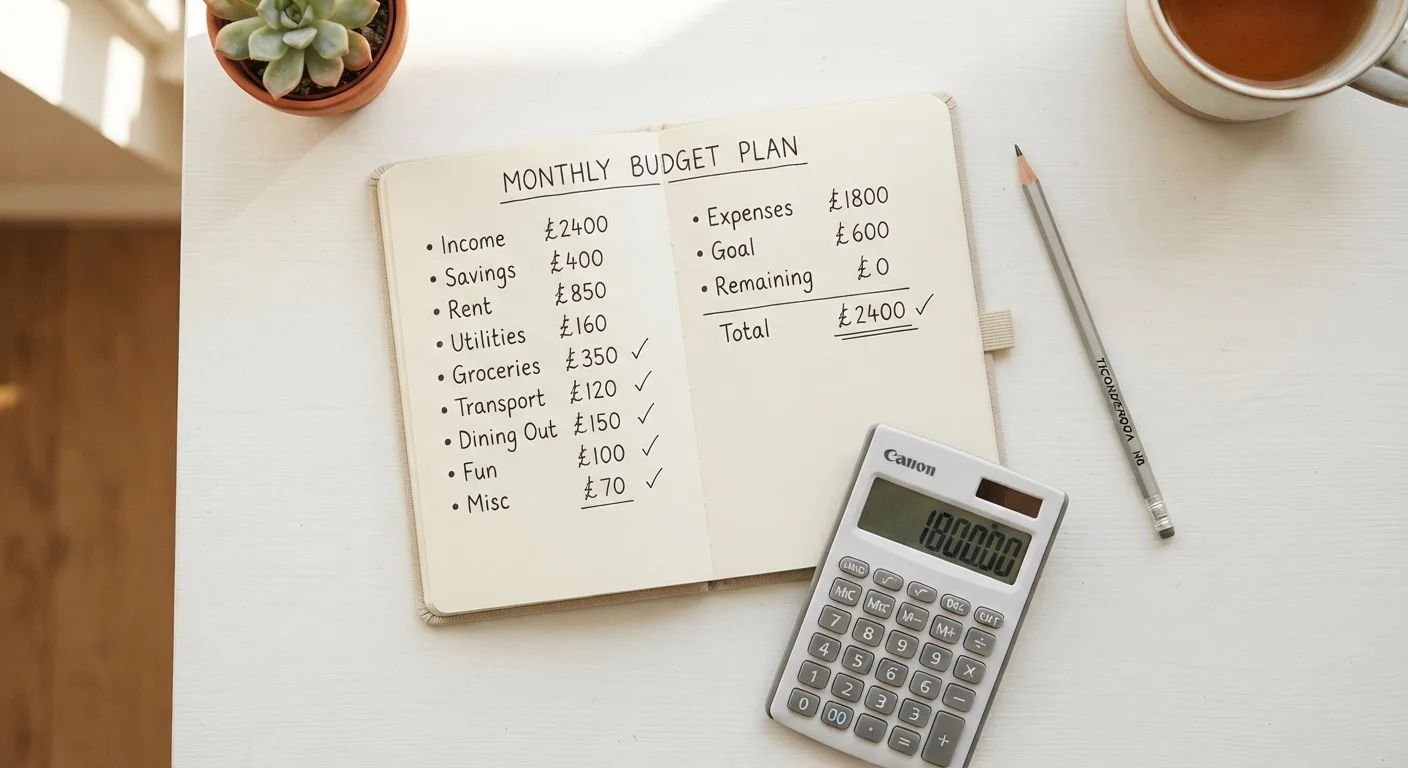
The mechanics of zero-based budgeting are straightforward. At the start of each month — or pay period — you write down your total expected take-home income. Then you list every category where money will go: rent or mortgage, groceries, utilities, transportation, subscriptions, clothing, entertainment, savings, emergency fund contributions, and any debt payments. You assign dollar amounts to each category until those amounts, added together, equal your total income.
The word "zero" refers to the math, not your bank balance. If you earn $3,200 this month, you need to account for all $3,200 — $1,100 to rent, $400 to groceries, $200 to savings, and so on — until the sum reaches $3,200 and nothing remains unassigned. Any leftover dollars at the end of the allocation process get pushed into a category: a savings buffer, an extra debt payment, or a dedicated fun fund. Nothing drifts.
This is what separates ZBB from simply tracking expenses. Tracking tells you where money went. ZBB tells money where to go. For deal-seeking shoppers especially, that distinction matters — it creates a defined "shopping" or "discretionary" envelope that prevents one good sale from quietly unraveling the rest of the month's plan.
Start With Your Fixed Costs First
When building your zero-based budget, always list non-negotiable fixed expenses — rent, loan payments, insurance — before any variable category. This ensures your essential obligations are covered before discretionary allocations compete for the remaining dollars. Variable categories like groceries and dining should follow, with savings treated as a fixed line item rather than whatever's left over.
Why the Method Surfaces Hidden Spending
Most people underestimate spending in vague categories — "eating out," "miscellaneous," or "Amazon." Zero-based budgeting forces specificity. You can't write down "miscellaneous: $300" indefinitely without confronting what that $300 actually covers. Over a few months, patterns emerge: recurring subscriptions you forgot about, seasonal spending spikes, or the slow creep of convenience purchases.
That visibility is the method's core value. When every dollar needs a named destination, categories that felt invisible become concrete line items. Shoppers who use ZBB often report realizing for the first time how much they were spending in a specific area — not because they were careless, but because no system had ever required them to name it before spending it.
~30%
Of U.S. adults with a detailed budget report feeling financially confident
According to the National Financial Educators Council's ongoing consumer surveys, adults who maintain a detailed written or digital budget consistently report higher financial confidence than those without one.
$1,000+
Median unexpected expense that derails monthly budgets
Bankrate's annual emergency savings reports have repeatedly found that a four-figure unexpected expense is enough to push many households off their planned spending trajectory — underlining why a named savings category matters.
60%
Of Americans who don't track their spending in any systematic way
Various consumer finance surveys, including those by the Consumer Financial Protection Bureau, have found that a majority of U.S. households have no formal system for monitoring where their money goes month to month.
If you're new to structured budgeting, starting with a basic monthly budget can help you identify your fixed costs and build the category list ZBB needs. It's also worth checking out common budgeting myths if you've been hesitant to start — many of them dissolve once you see how approachable the process actually is.
The Trade-Offs: What ZBB Demands From You
Zero-based budgeting is more time-intensive than looser methods. It requires resetting your allocations each month, because no two months are identical — irregular bills, seasonal costs, and income fluctuations mean last month's plan rarely maps perfectly onto this one. That monthly rebuild is a feature, not a flaw: it keeps the budget current. But it does require commitment.
The method also demands honesty. If you assign $150 to dining out but actually spend $280, the budget only works if you either adjust the category mid-month (pulling from somewhere else) or acknowledge the overrun and account for it next month. Ignoring the gap defeats the purpose. For people who prefer a less rigid framework, a percentage-based approach may be a better fit — see how ZBB compares to the 50/30/20 method for a direct side-by-side look at both.
Variable-income earners — freelancers, contractors, seasonal workers — can use ZBB successfully, but should budget conservatively, using a lower estimate of expected income rather than an optimistic projection. Any income above that estimate can be allocated when it actually arrives.
ZBB Works Differently for Irregular Expenses
Annual or semi-annual bills — car registration, insurance premiums, holiday spending — don't fit neatly into a single month's budget. A common ZBB strategy is to create 'sinking fund' categories: divide the annual cost by 12 and allocate that amount each month into a dedicated savings bucket. When the bill arrives, the money is already set aside and the month's budget isn't disrupted.
Getting Started: The First Month
Begin by listing all income sources and your realistic take-home total for the month. Then write out every known expense — fixed ones first (rent, loan payments, insurance), then variable essentials (groceries, fuel), then discretionary categories (clothing, hobbies, dining). Include savings as a non-negotiable line item, not an afterthought.
Add up your assigned amounts. If they fall short of your income, assign the remainder to savings, an emergency fund, or a sinking fund for a future purchase. If they exceed your income, trim discretionary categories until the math balances. That balancing act is the work — and it's also where most people have their most revealing conversations with their own spending habits.
For a practical walkthrough of setting up your first plan from scratch — including how to handle irregular costs and shopping goals — this step-by-step spending plan guide is a useful companion. And if you want broader strategies for growing what you save month to month, the saving money hub covers actionable approaches that pair well with ZBB's framework.
This article provides general financial information and education only. It is not personalized financial advice. Consult a qualified financial professional for guidance tailored to your individual circumstances.