

Key Takeaways
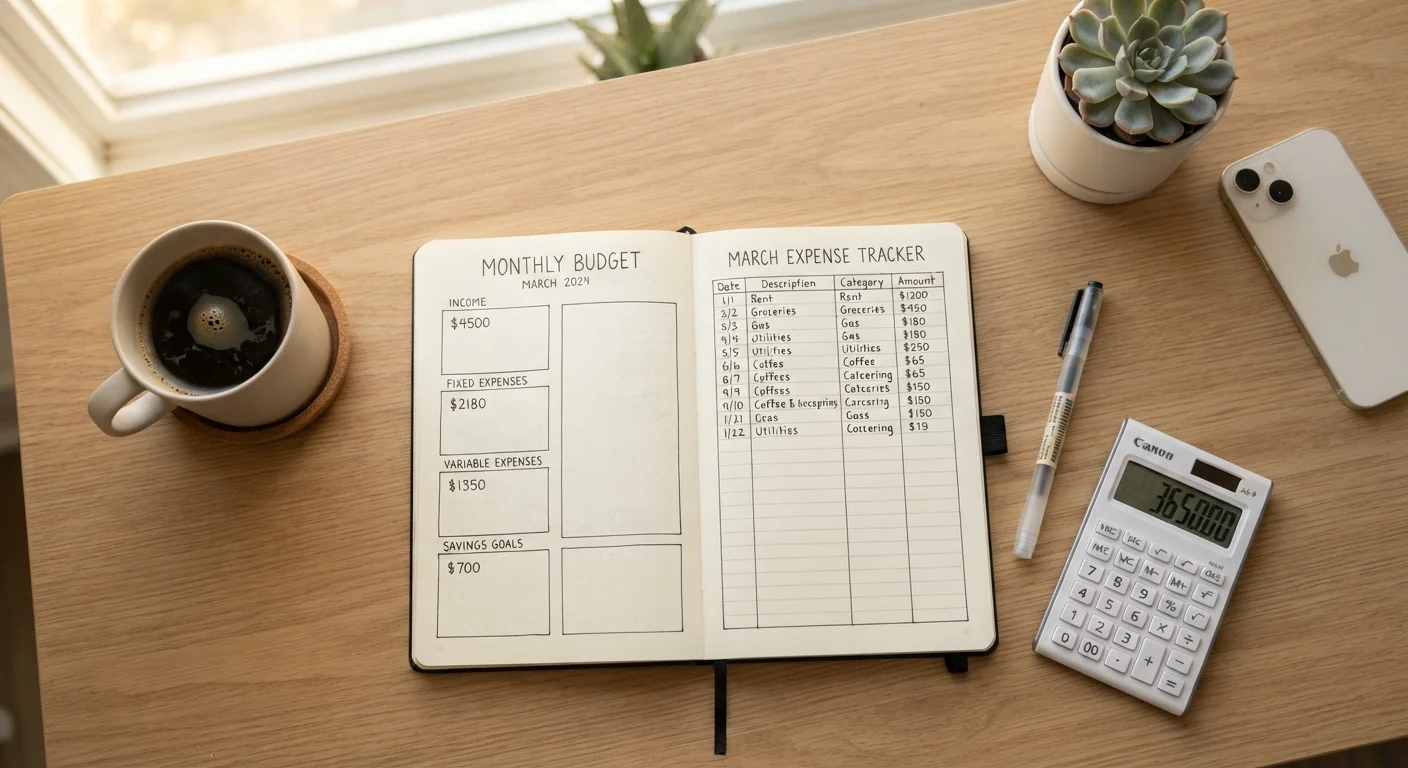
- A budget is simply a written plan for how your money will be used each month.
- Always base your budget on take-home (after-tax) income, not gross pay.
- Splitting expenses into fixed and variable categories makes priorities clearer.
- No budget survives first contact perfectly - monthly reviews keep it realistic.
- Small, consistent adjustments matter more than having a flawless plan from day one.
Start here
Why a Monthly Budget Matters
Next
Step 1: Add Up Your Take-Home Income
Then
Step 2: List Every Fixed and Variable Expense
After that
Step 3: Assign a Spending Limit to Each Category
Finally
Step 4: Track, Review, and Adjust
Why a Monthly Budget Matters
A budget is not a punishment - it is a written plan that tells your money where to go before the month begins. Without one, spending tends to drift, and many people reach the end of the month uncertain about where their paycheck went. A monthly budget creates visibility, which is the foundation of any financial decision.
If you have never built one before, this guide walks through each step using plain language and no assumptions about prior experience. For a broader look at managing everyday purchases, the Smart Budgeting hub is a useful companion.
Take-home income
The amount of money you actually receive after taxes and other deductions are removed from your paycheck. This is the number you use to build your budget.
Fixed expense
A cost that stays the same amount each month, such as rent or a loan payment. You can predict it and plan for it easily.
Variable expense
A cost that changes in amount from month to month, like groceries or gas. These are the categories where you have the most control.
Budget category
A labeled group of related expenses - for example, 'food' or 'transportation' - used to organize and limit spending in a specific area.
Net pay
Another term for take-home income. It is your gross (total) pay minus taxes, Social Security, and any other payroll deductions.
Discretionary spending
Money spent on things you want but don't strictly need - dining out, entertainment, or hobbies. This is usually the most flexible part of a budget.
Step 1: Add Up Your Take-Home Income
Start with what actually lands in your bank account each month - this is your take-home income, sometimes called net pay. It is the amount after taxes, Social Security contributions, and any other payroll deductions have already been removed. Using gross (pre-tax) pay as your starting point is a common beginner mistake that leads to budgets that look fine on paper but fall short in practice.
List every income source: your primary job, any side work, freelance income, or regular transfers from other sources. If your income varies month to month, use a conservative estimate - the lower end of what you typically earn - so your plan stays achievable even in a slow month.
Use Last Month's Statements as a Starting Point
Rather than guessing your income and expenses from memory, pull up your last one to two bank or credit card statements. Real numbers from recent months are far more accurate than estimates, and they often reveal spending patterns you hadn't noticed. This turns your first budget from a guess into an evidence-based plan.
Step 2: List Every Fixed and Variable Expense
Once you know your income, write down every expense you expect this month. Separate them into two groups:
- Fixed expenses stay the same each month - rent or mortgage, car payment, insurance premiums, and subscription services you pay a set amount for.
- Variable expenses shift in amount - groceries, dining, gas, clothing, and entertainment typically fall here.
Go back through two or three months of bank or credit card statements to catch anything you might forget, such as annual fees that hit quarterly or irregular bills. Missed expenses are the most common reason first budgets fall apart mid-month.
Step 3: Assign a Spending Limit to Each Category
Now subtract your total expenses from your take-home income. If the result is positive, you have room to direct money toward savings or debt repayment. If it is negative, you are spending more than you earn - and your budget has just given you specific data about where to adjust.
Group your expenses into four to six broad categories to keep things manageable: housing, transportation, food, utilities, personal/discretionary, and savings/debt. Assign each category a monthly dollar limit based on what you actually spent in recent months, adjusted toward what you want to spend going forward.
One widely referenced framework is the 50/30/20 guideline - roughly 50% of take-home income toward needs, 30% toward wants, and 20% toward savings and debt. Treat this as a starting reference point, not a rigid rule. Your own numbers and obligations will shape what makes sense for you. A monthly budget audit checklist can help you fine-tune these limits over time.
Don't Forget Irregular Expenses
Annual, quarterly, or semi-annual bills - like car registration, insurance renewals, or holiday gifts - can wreck a monthly budget if they are not planned for. Divide each irregular expense by 12 and set aside that amount every month so the money is ready when the bill arrives. This technique is sometimes called 'sinking funds.'
Step 4: Track, Review, and Adjust
Writing the budget is only the beginning. Track your actual spending throughout the month - even briefly logging purchases in a notes app or notebook keeps you aware of where you stand. At month's end, compare what you planned to spend with what you actually spent in each category.
Expect to adjust. A first budget is essentially an educated guess backed by partial data. Some categories will run over; others will have room left. Each monthly review makes the next month's plan more accurate. For more on building sustainable savings habits alongside your budget, the savings-from-scratch guide covers the next natural step.
This article provides general financial information for educational purposes only. It is not personalized financial advice. Consider consulting a qualified financial professional for guidance specific to your situation.