

Key Takeaways
- You don't need a large income to start saving - consistency matters more than the amount.
- An emergency fund covering three to six months of essential expenses is the cornerstone of financial stability.
- Tracking where your money goes is the essential first step before setting any savings goal.
- Automating even a small transfer each payday removes the willpower barrier to saving.
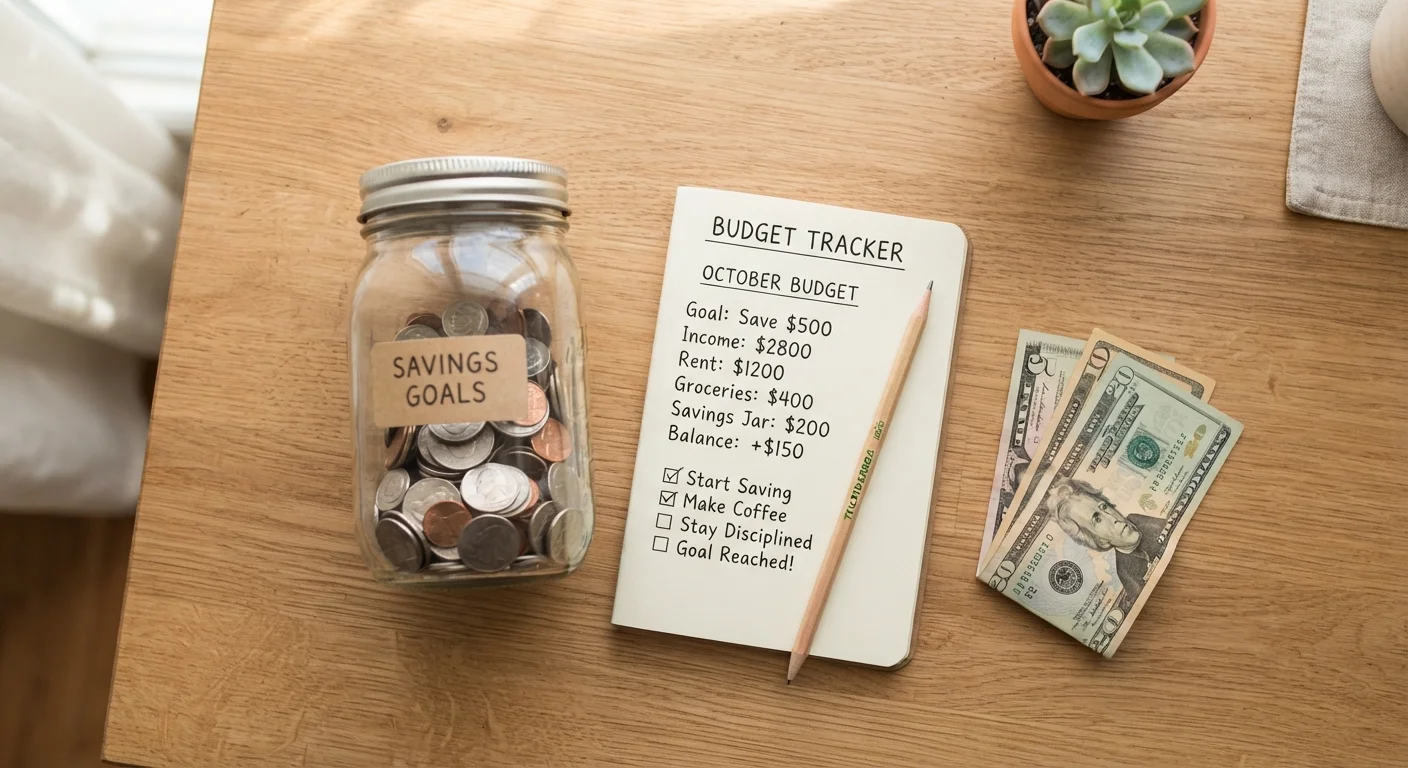
- A basic budget doesn't require special software - a pen and paper works fine to begin.
Start here
Why Saving Feels Hard (And Why That's Normal)
Next
The First Move: Know What You Have
Build your base
Build Your Emergency Fund First
Make it automatic
Simple Habits That Make Saving Stick
When you're ready
What to Do Once You Have a Foundation
Why Saving Feels Hard (And Why That's Normal)
If you've never had a savings plan, you're far from alone. For many households, the paycheck covers the bills and not much more, leaving saving feeling like a luxury reserved for people with higher incomes. That belief is one of the most common barriers to getting started - and one of the most inaccurate.
Saving is less about how much you earn and more about building a deliberate habit. The psychological friction is real: spending feels immediate and rewarding, while saving feels abstract and distant. Understanding that this tension is normal - not a personal failing - is actually the first step forward.
Emergency fund
A dedicated pool of money set aside only for genuine unexpected expenses, kept separate from everyday spending money.
Margin
The amount of money left over after all monthly expenses are subtracted from monthly income - the starting point for any savings plan.
Fixed expense
A cost that stays the same from month to month, such as rent or a loan payment, making it easy to predict and plan around.
Variable expense
A cost that changes each month depending on your choices and circumstances, like groceries, fuel, or entertainment spending.
Automatic saving
A scheduled, recurring transfer of a set amount from your checking account to a savings account, removing the need to make an active decision each time.
Spending audit
A review of your recent bank or card statements to see exactly where your money goes each month - often the first step in any saving or budgeting effort.
The First Move: Know What You Have
Before you can save a single dollar intentionally, you need a clear picture of your current finances. That means listing all income you reliably receive each month and all the expenses that consistently leave your account. This exercise is sometimes called a spending audit, and it routinely surprises people.
You don't need software to do this. A notebook, a bank statement, and 30 minutes will cover the basics. Organize your expenses into two columns: fixed (rent, utilities, insurance - amounts that don't change much) and variable (groceries, gas, entertainment - amounts that shift month to month). The gap between your total income and total expenses is your margin - the raw material of any savings plan.
If you've never put this on paper before, our plain-language budget guide walks through each step in detail. You can also explore building a monthly spending plan from scratch for a practical worksheet-style approach.
Build Your Emergency Fund First
Financial educators broadly agree on one priority for new savers: build an emergency fund before anything else. An emergency fund is money held in a separate, accessible account that exists only for genuine unexpected expenses - a broken appliance, an urgent car repair, a gap in employment.
Without this cushion, any financial disruption tends to derail progress or push people into high-interest debt. The commonly cited target is three to six months of essential living expenses, but that number can feel paralyzing if you're starting from zero. A more useful first milestone is $500 to $1,000. That single buffer handles the majority of everyday financial surprises.
Set a Dollar Goal, Not a Percentage
If your income is variable or tight, saving a fixed percentage of each paycheck can feel abstract and hard to track. Instead, commit to a specific dollar amount - say, $20 per week - and increase it only when your budget genuinely allows. A concrete target is easier to automate and easier to measure.
For a realistic, step-by-step approach to reaching that first milestone even on a tight budget, see our guide on building an emergency fund while sticking to a tight budget.
Simple Habits That Make Saving Stick
Once you know your margin and have a target, the challenge becomes consistency. Research in behavioral economics consistently shows that people save more reliably when they remove the decision from the moment. The most practical way to do this is automatic saving: scheduling a transfer from your checking account to your savings account on the same day each payday, even if the amount is small.
- Start smaller than feels meaningful. A $15 automatic transfer you never cancel is worth far more than a $100 transfer you stop after two weeks.
- Audit recurring charges. Subscriptions and recurring fees are often forgotten but continue draining accounts. Canceling even one unused service frees up real money every month.
- Use cash-back or rewards on purchases you'd make anyway - but only if you're not spending more to earn them. Apply any returns directly to savings.
These low-friction habits compound over time. For more routines built around the same principle, see small daily habits that quietly build your savings.
What to Do Once You Have a Foundation
Once your emergency fund reaches its initial target and automatic saving is part of your routine, you're ready to think about what comes next. This might mean growing your emergency fund toward the three-to-six-month goal, saving toward a specific purchase, or beginning to understand longer-term tools like retirement accounts.
It's also worth taking time to learn the language of personal finance. Terms like APY, compound interest, and liquidity are central to understanding how savings work over time. Our reference guide to savings terminology defines these clearly and without jargon.
For a broader, more comprehensive view of saving strategies as your situation evolves, The Complete Picture of Personal Saving covers goal-setting, psychology, and trade-offs across different life stages.
The most important thing to know about building financial stability from scratch is that no single step is too small. The goal is to move from reactive - handling money after it arrives - to intentional, where savings have a place before spending begins.
This article is for general informational and educational purposes only and does not constitute personalized financial advice. For guidance tailored to your specific circumstances, consult a qualified financial professional.