
Key Takeaways
- Genuine discounts during sales events do exist, but inflated reference prices are a common tactic.
- Price history tools help distinguish real markdowns from manufactured urgency.
- A pre-planned shopping list is the most reliable guard against overspending during sales.
- High-demand items often sell out quickly, making preparation more valuable than spontaneity.
- Return policies and product quality can shift during major sales periods — always check before buying.
Genuine category discounts on planned purchases
Certain product categories — particularly large appliances and consumer electronics — do see verifiable price reductions during major sales periods. Shoppers with a planned need in these categories can realize real savings.
Opportunity to layer multiple savings mechanisms
Sales events often coincide with active cashback portals, loyalty point multipliers, and stackable coupon codes, making the total discount greater than any single mechanism alone would deliver.
Wide product availability in one window
A broad range of product types goes on promotion simultaneously, allowing shoppers to address several planned purchases in a single session rather than timing separate purchases across months.
Accelerated inventory clearance on older models
Retailers use sales events to move prior-season or outgoing inventory, which can represent genuine value for shoppers who don't need the latest version of a product.
Inflated reference prices obscure real savings
Some retailers raise a product's listed regular price before a sale period so the displayed discount percentage appears larger. Without a price history check, shoppers have no reliable way to distinguish these manufactured discounts from real ones.
Artificial urgency drives impulsive decisions
Countdown timers, limited-stock indicators, and flash-sale windows are deliberate design choices that compress decision-making time and increase the likelihood of purchases that wouldn't survive slower consideration.
Popular items frequently sell out early
High-demand products in genuinely discounted categories often sell out within hours of a sale opening, leaving late arrivals with either no stock or only the less-desirable options that remain.
Return windows and policies may be stricter
Sale and clearance items frequently carry modified return conditions, including shorter return windows, store credit only, or no returns at all. Shoppers who don't check these terms upfront can find themselves stuck with unsuitable purchases.
Total spend can easily exceed planned budget
Even if each individual item represents a fair deal, the cumulative effect of buying several discounted items can produce a total spend that exceeds what the shopper intended to allocate — a common but underappreciated risk.
Our Verdict
Sales events are neither pure opportunity nor pure hype — they're a mixed landscape where informed shoppers can find legitimate value and unprepared ones can overspend. The difference almost always comes down to preparation: knowing what you need, what it normally costs, and which discount labels actually reflect real savings. Approached strategically, sales events can meaningfully reduce spending on planned purchases; approached impulsively, they can quietly expand it.
Shoppers who arrive with a defined list, verified price histories, and a firm budget ceiling are best positioned to benefit from major sales events.
What Sales Events Actually Promise (And Deliver)
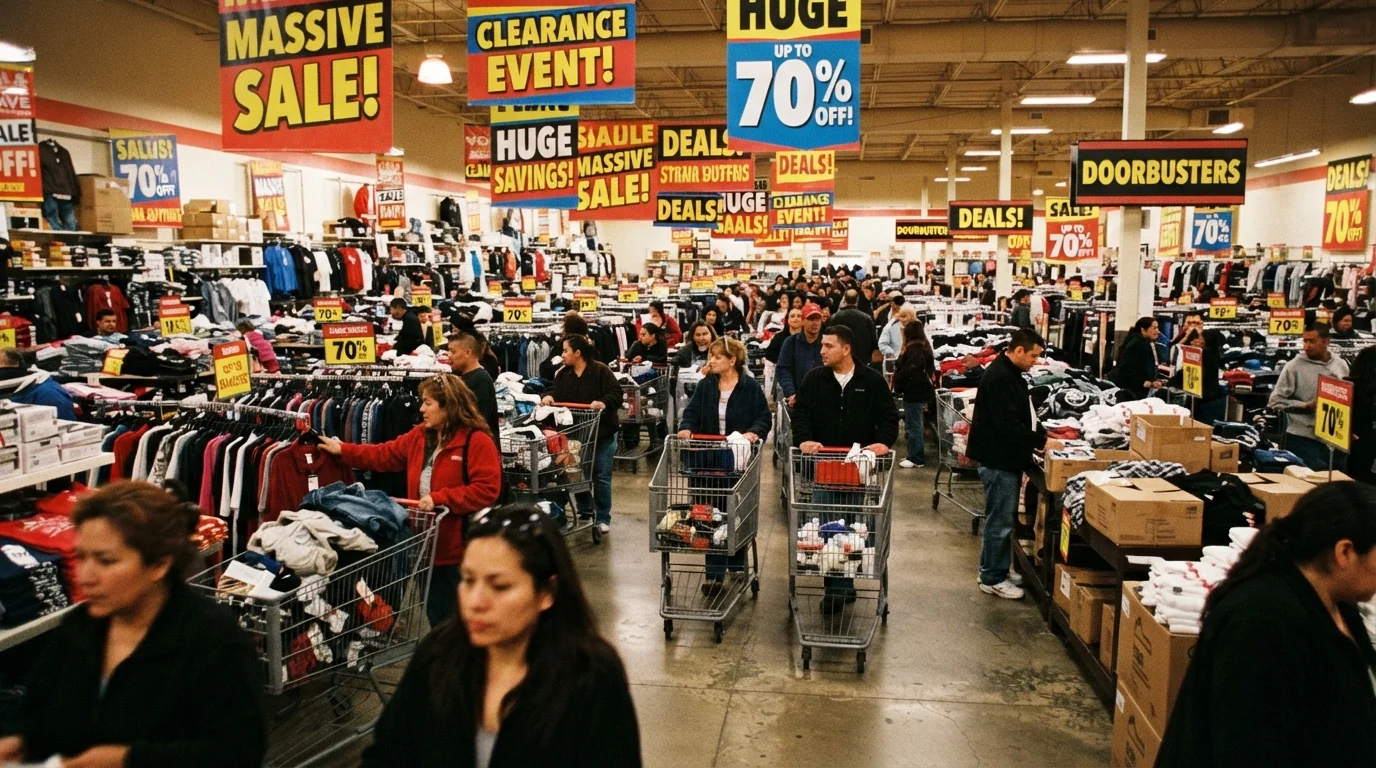
Major retail sales events — spanning seasonal clearances, holiday shopping periods, and single-day promotional windows — draw enormous consumer participation. The appeal is straightforward: prices appear dramatically reduced, and the time pressure feels real. But the actual savings picture is more varied than the marketing suggests.
Some categories consistently deliver meaningful discounts during these windows. Electronics, bedding, and large appliances have historically shown genuine price reductions during major sales periods, according to consumer price-tracking data. Other categories — particularly toys, fashion accessories, and small kitchen gadgets — often see shallower discounts dressed up with high-visibility signage.
Understanding how online pricing works is the foundation for navigating any sales event. Dynamic pricing means a listed "sale price" may not reflect a genuine markdown from a stable regular price — some reference prices are set high specifically to make a discount appear larger than it is.
~30%
Share of holiday purchases made on impulse
Consumer behavior research consistently finds that a significant proportion of purchases during promotional events were not planned before the event began.
Up to 6 weeks
How far in advance some reference prices are raised
Price-tracking analyses have documented cases where retailers increase listed regular prices weeks before a sale to widen the apparent discount margin.
The Real Advantages of Shopping During Sales Events
When approached with preparation, sales events offer advantages that are hard to replicate at other times of year.
Genuine category discounts on planned purchases
Certain product categories — particularly large appliances and consumer electronics — do see verifiable price reductions during major sales periods. Shoppers with a planned need in these categories can realize real savings.
Opportunity to layer multiple savings mechanisms
Sales events often coincide with active cashback portals, loyalty point multipliers, and stackable coupon codes, making the total discount greater than any single mechanism alone would deliver.
Wide product availability in one window
A broad range of product types goes on promotion simultaneously, allowing shoppers to address several planned purchases in a single session rather than timing separate purchases across months.
Accelerated inventory clearance on older models
Retailers use sales events to move prior-season or outgoing inventory, which can represent genuine value for shoppers who don't need the latest version of a product.
For shoppers who plan ahead, the ability to stack discounts across multiple savings mechanisms — such as combining a site-wide sale with cashback and a loyalty reward — can produce genuinely significant reductions on planned purchases.
The Pitfalls That Cost Shoppers Money
Sales events are also environments carefully engineered to increase total spending, not just per-item savings. Recognizing the structural disadvantages is as important as spotting the genuine deals.
Inflated reference prices obscure real savings
Some retailers raise a product's listed regular price before a sale period so the displayed discount percentage appears larger. Without a price history check, shoppers have no reliable way to distinguish these manufactured discounts from real ones.
Artificial urgency drives impulsive decisions
Countdown timers, limited-stock indicators, and flash-sale windows are deliberate design choices that compress decision-making time and increase the likelihood of purchases that wouldn't survive slower consideration.
Popular items frequently sell out early
High-demand products in genuinely discounted categories often sell out within hours of a sale opening, leaving late arrivals with either no stock or only the less-desirable options that remain.
Return windows and policies may be stricter
Sale and clearance items frequently carry modified return conditions, including shorter return windows, store credit only, or no returns at all. Shoppers who don't check these terms upfront can find themselves stuck with unsuitable purchases.
Total spend can easily exceed planned budget
Even if each individual item represents a fair deal, the cumulative effect of buying several discounted items can produce a total spend that exceeds what the shopper intended to allocate — a common but underappreciated risk.
The tactics that disguise spending as saving — bundle thresholds, free-shipping minimums, and limited-quantity counters — tend to appear most aggressively during high-traffic sales events, precisely because heightened excitement lowers critical thinking.
How to Shop Sales Events More Effectively
A few consistent habits separate shoppers who come away with real value from those who leave with buyers' remorse.
- Build your list before the event opens. Knowing exactly what you intend to buy — and at what price you'd consider it a fair deal — removes the pressure that sale environments are designed to exploit.
- Check price history in advance. Browser extensions and dedicated price-tracking tools record historical pricing for individual products, making it easy to verify whether a sale price is genuinely lower than recent norms. The online deal-finding playbook covers these tools in depth.
- Read return policies before purchasing. Some retailers apply stricter or shorter return windows to sale items. Confirm these details before committing, especially on higher-value purchases.
- Set a firm budget ceiling. Even genuine discounts can derail a budget if the total spend exceeds what was planned. A budget ceiling keeps individual good decisions from collectively becoming a financial problem — a pattern explored in why deals can still wreck a budget.
What Flash Sales and Clearance Labels Actually Mean
Not all sale labels carry the same meaning. Flash sales, clearance events, and standard markdowns each signal different things about why a price has changed and how reliable that change is. Understanding what each discount label actually signals helps you evaluate whether a promoted price is worth acting on or simply well-branded noise.
Finally, consider comparing both channels before committing. Online and in-store prices each have their own advantages during sales periods, and the better deal isn't always where the loudest promotion is.