
Key Takeaways
- Discount stacking — using coupons, cashback, and loyalty points together — is legal and widely supported by retailers.
- The order in which discounts apply affects how much you actually save; understand the sequence before checkout.
- Cashback is typically calculated on the amount you actually pay, so apply coupons first to maximize it.
- Most loyalty programs allow points to stack with store coupons, but rarely with third-party promo codes.
- A simple pre-purchase checklist prevents missed savings without adding significant time to your shopping.
What you will need
Why Stacking Works — and Where Shoppers Leave Money Behind
Most shoppers use one discount method at a time: they apply a coupon code or activate cashback, but rarely both together. The result is that a meaningful slice of potential savings goes unclaimed on every purchase. Stacking — layering multiple discount types on a single transaction — is not a loophole; it's a shopping strategy that most retailers explicitly support.
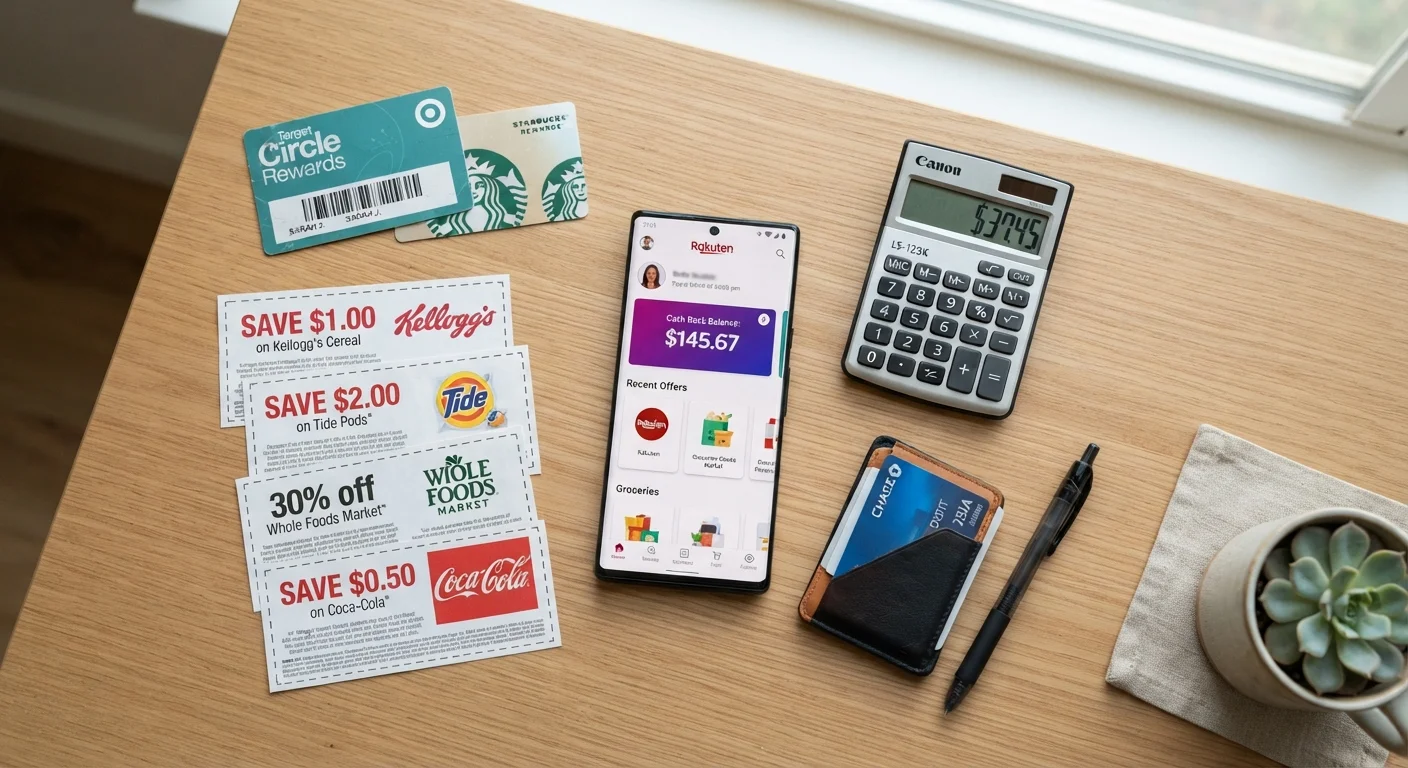
The three core savings layers are coupons (a direct price reduction at checkout), cashback (a percentage returned to you after purchase through a portal, card, or app), and loyalty points (currency earned within a retailer's rewards program). Each operates at a different stage of a transaction, which is exactly what makes them combinable. If you're new to how online pricing and discount mechanics work generally, this primer on online pricing is a solid place to start.
Build a Pre-Purchase Checklist
A quick five-item mental checklist — portal activated, loyalty account logged in, store coupon applied, card selected, payment confirmed — takes under two minutes and consistently prevents the most common stacking mistakes. Over dozens of purchases, these small steps compound into real savings.
One genuine risk to watch for: some discount stacking setups — particularly aggressive coupon strategies tied to manufactured spend — can push you toward buying things you wouldn't otherwise need. Keep the focus on items already on your list. See our look at impulse-buying traps disguised as deals for context.
How to Stack Discounts: Step-by-Step
Follow these steps in order for any planned purchase. The sequence matters: applying discounts in the wrong order can reduce your cashback payout or disqualify a loyalty earn.
Identify all available discount layers before you shop
Before opening the retailer's site, list every discount mechanism available to you: active coupons or promo codes, any cashback portal or card benefit tied to that retailer, and your current loyalty status. Check the retailer's own site for member-only coupons, which are often stackable with other offers and easy to overlook.
Activate your cashback portal or card benefit first
Click through your cashback portal to the retailer's site, or confirm your cashback credit card is set as your payment method. This step must happen before you add items to your cart or apply any codes — most portals track sessions from the click, and starting a session outside the portal breaks the tracking cookie.
Apply store and manufacturer coupons at checkout
With your cashback session active, apply eligible coupons at checkout. Prioritize coupons sourced directly through the cashback portal or the retailer's own loyalty program, as these are least likely to conflict with your cashback earn. Enter codes one at a time and verify each one applies correctly before adding the next.
Redeem loyalty points strategically
If you have loyalty points to redeem, check whether the program calculates new points earned on the post-redemption total or the pre-redemption total. Redeeming a large block of points on a single purchase can reduce the points you earn on that same transaction. In some programs, it's more efficient to redeem points in smaller increments across multiple purchases.
Choose a payment method that adds a final layer
Pay with a credit card that offers a rewards category bonus for this retailer or purchase category — groceries, gas, general merchandise, and online purchases often have elevated earn rates. This is a separate layer from your cashback portal and your loyalty program, and it stacks with both in most cases.
Verify and record your expected cashback and points
After completing the purchase, note the expected cashback amount shown in your portal account and the loyalty points earned. Both often appear as 'pending' for several days. Keep your order confirmation until both post as confirmed. If cashback doesn't appear within the expected window, most portals have a claim submission process — you'll need your order number and purchase date.
For a deeper comparison of cashback portals versus browser coupon tools — and guidance on when to rely on each — see Cashback Sites vs. Coupon Extensions. If you're applying these techniques during a major sale event, Shopping During Sales Events covers what actually works and what doesn't under those conditions.
Common Stacking Limits and How to Work Within Them
Retailers set their own stacking rules, and they vary widely. A few patterns hold across most programs:
- Store coupons vs. manufacturer coupons: Many retailers allow one of each to be used on the same item.
- Loyalty points and store coupons: Usually stackable. Points are typically calculated on the post-coupon subtotal.
- Third-party promo codes and loyalty earn: Often cannot be combined. Using an external code may suppress your points earn for that order.
- Cashback portals and discount codes: Activating a cashback portal and then applying a promo code from outside that portal can void the cashback. Always source the promo code through the portal itself when possible.
When in doubt, check the retailer's rewards program FAQ before checkout — it typically lists exactly which discount types can be combined. For travel-related purchases, the same stacking logic applies to rewards cards and portals; Travel Rewards Points vs. Cashback breaks down how those programs differ from standard retail rewards. Stacking discipline also fits naturally into a broader smart budgeting approach — knowing your ceiling before you shop keeps savings from becoming overspending.
Watch for Cashback Exclusions on Sale Items
Cashback portals frequently exclude certain product categories or items already marked down by the retailer — electronics, gift cards, and clearance items are common exclusions. Review the portal's exclusion list for each retailer before assuming cashback will apply. If an item is excluded, your other discount layers still work; only the cashback component drops out.