
| Flash Sale Duration | Typically a few hours to 48 hours |
| Clearance Purpose | Liquidate discontinued or excess stock |
| Markdown Type | Permanent price reduction, no expiry |
| Reference Price Regulation | Varies by state; not uniformly enforced across U.S. retail |
| Best Way to Verify a Deal | Check price history before purchasing |
Three Labels, Three Different Signals
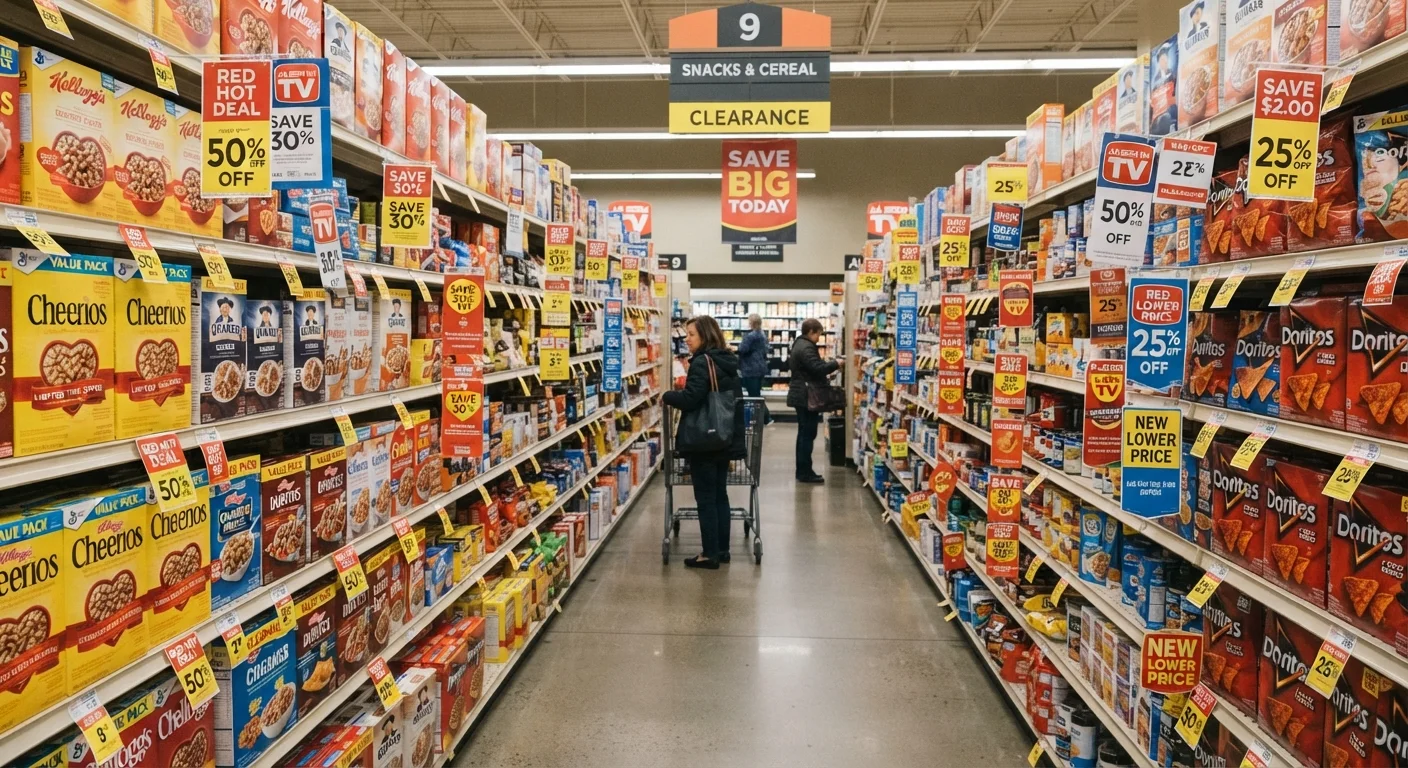
Walk through any online or physical retailer and you'll encounter a parade of discount language: flash sale, clearance, markdown. These terms are often used interchangeably in marketing copy, but each one describes a distinct pricing situation - and confusing them can lead to purchases that feel like wins but aren't.
| Flash Sale Duration | Typically a few hours to 48 hours |
| Clearance Purpose | Liquidate discontinued or excess stock |
| Markdown Type | Permanent price reduction, no expiry |
| Reference Price Regulation | Varies by state; not uniformly enforced across U.S. retail |
| Best Way to Verify a Deal | Check price history before purchasing |
Flash sales are time-limited promotions, typically running anywhere from a few hours to 48 hours. The discount is real in the sense that the price is lower than the retailer's current listed price - but that listed price may itself be inflated, a practice sometimes called reference price manipulation. Flash sales are primarily a tool to generate urgency and move traffic, not necessarily to offer the deepest or most meaningful discount. Urgency tactics like these deserve scrutiny before you commit.
Clearance signals that a retailer is attempting to liquidate stock - usually because a product line is being discontinued, replaced by a newer model, or the season is ending. Clearance prices are often genuinely reduced because the retailer's goal is to recover shelf space and warehouse costs rather than margin. That said, clearance doesn't guarantee the item suits your needs; it means the retailer has decided to stop stocking it.
Markdowns are the most routine of the three. A markdown is simply a permanent reduction from a previous selling price. Retailers apply markdowns regularly as part of inventory management and competitive pricing. Unlike flash sales, there's no expiration pressure. Unlike clearance, the item may continue to be stocked after the price drops.
What These Labels Don't Tell You
None of these labels tells you whether the pre-discount price was fair to begin with. A 40% flash sale discount on a product that was already overpriced relative to comparable options is less useful than a 15% markdown on a consistently well-priced item. This is why price history matters more than the percentage shown on a tag.
Flash Sale
A time-limited promotional event, typically lasting a few hours to two days, during which a retailer reduces the listed price on select items. The urgency is intentional and designed to accelerate purchasing decisions.
Clearance
A pricing strategy used when a retailer wants to liquidate stock it no longer intends to carry. This can occur when a product is discontinued, superseded by a newer version, or at the end of a seasonal cycle.
Markdown
A permanent reduction from a product's previous selling price, applied as a routine part of inventory management or in response to competitive pricing. No artificial time limit is attached.
Reference Price
The 'original' or 'was' price displayed alongside a discounted price. Reference prices are not always regulated, and can be set high initially to make a subsequent discount appear larger than it is.
Price History
A record of how a product's actual selling price has changed over time. Consulting price history helps shoppers determine whether a current discount represents a genuine low point or a return to a normal price.
Dynamic Pricing
An algorithmic pricing approach in which a product's price changes frequently based on demand, competitor pricing, time of day, or user behavior. Common in online retail, it means the same item can have different prices at different moments.
Price tracking tools solve this problem directly: they log a product's actual selling price over weeks or months, so you can see whether today's "sale" price is genuinely lower than the norm or just dressed up to look that way.
Clearance items carry their own caveats. A clearance label does not indicate the product is defective, but it also doesn't confirm the opposite. Check whether the item is being discontinued because a superior version is available - in which case the clearance price may reflect real value - or because demand was weak, which may hint at quality or satisfaction issues. Thin product descriptions on clearance listings are a particular red flag worth examining.
For markdowns, the key question is whether the price dropped due to competitive pressure (generally a reliable signal of fair value) or due to slow sales after an initial over-pricing (less meaningful). Reviewing customer reviews over time - not just at the point of purchase - can reveal whether satisfaction has held steady or declined.
Understanding these labels is one part of a larger skill set. How online pricing works at a structural level - including dynamic pricing and algorithmic adjustments - gives you the broader context to interpret any discount label you encounter. And before acting on any sale, it's worth checking whether major retail sales events are approaching, since prices sometimes drop further during those windows.
Finally, discount labels frequently work alongside psychological nudges - bundle offers, spend thresholds, free shipping minimums - that can push total spending higher than intended. Recognising those traps before you reach checkout is just as important as decoding the label itself.