

| Total essential vitamins | 13 (4 fat-soluble, 9 water-soluble) (National Institutes of Health, Office of Dietary Supplements) |
| Essential dietary minerals | At least 16 recognized as essential (Dietary Reference Intakes, National Academies of Sciences) |
| Most common deficiency worldwide | Iron deficiency anemia (World Health Organization) |
| Vitamin D - widespread shortfall | Approximately 1 in 4 U.S. adults have insufficient levels (National Health and Nutrition Examination Survey (NHANES)) |
| B12 - plant-based diet risk | Found almost exclusively in animal-derived foods (National Institutes of Health, Office of Dietary Supplements) |
| Folate importance in pregnancy | Recommended before conception and in early pregnancy to support neural tube development (CDC, U.S. Public Health Service) |
What Are Micronutrients and Why Do They Matter?
Micronutrients are the vitamins and minerals your body needs in relatively small amounts to carry out thousands of essential biological processes - from converting food into energy to building bone, repairing tissue, and supporting immune defense. Unlike macronutrients (carbohydrates, proteins, and fats), micronutrients provide no calories. What they provide instead is the regulatory machinery that makes everything else work. For a broader look at how macros and micros fit together, see our guide to macronutrients.
The defining characteristic of micronutrients is that your body either cannot synthesize them at all, or cannot produce enough on its own. That means diet - and, in some cases, carefully considered supplementation under professional guidance - is your primary source. Consistent shortfalls can lead to deficiency conditions with real health consequences, while a varied, whole-food diet typically covers most people's needs without special effort.
| Total essential vitamins | 13 (4 fat-soluble, 9 water-soluble) (National Institutes of Health, Office of Dietary Supplements) |
| Essential dietary minerals | At least 16 recognized as essential (Dietary Reference Intakes, National Academies of Sciences) |
| Most common deficiency worldwide | Iron deficiency anemia (World Health Organization) |
| Vitamin D - widespread shortfall | Approximately 1 in 4 U.S. adults have insufficient levels (National Health and Nutrition Examination Survey (NHANES)) |
| B12 - plant-based diet risk | Found almost exclusively in animal-derived foods (National Institutes of Health, Office of Dietary Supplements) |
| Folate importance in pregnancy | Recommended before conception and in early pregnancy to support neural tube development (CDC, U.S. Public Health Service) |
The Core Vitamins: What They Do and Where to Find Them
Vitamins fall into two categories based on how the body handles them:
- Fat-soluble vitamins (A, D, E, K) are absorbed with dietary fat and stored in body tissues. Because they accumulate, consistently excessive intake - usually from high-dose supplements - can reach toxic levels. Food sources rarely pose this risk.
- Water-soluble vitamins (C and the eight B vitamins) are not stored in significant amounts. Excess is generally excreted in urine, making toxicity from food sources uncommon, though very high supplement doses of some B vitamins (notably B6) can cause adverse effects.
Fat-Soluble Highlights
- Vitamin A
- Supports vision, immune function, and skin integrity. Found as preformed vitamin A in liver and dairy, and as provitamin A carotenoids in orange and dark-green vegetables such as sweet potato, carrots, and kale.
- Vitamin D
- Critical for calcium absorption and bone health; also plays roles in immune regulation. Few foods are naturally rich in it - fatty fish and egg yolks contribute modest amounts. The skin synthesizes vitamin D from sunlight exposure, though many factors (geography, skin tone, season, sunscreen use) affect how much is produced.
- Vitamin K
- Essential for blood clotting and bone metabolism. Leafy greens - spinach, collards, broccoli - are the most concentrated food sources.
Water-Soluble Highlights
- Vitamin C
- An antioxidant that supports immune function, collagen synthesis, and helps the body absorb non-heme (plant-based) iron. Citrus fruits, bell peppers, and strawberries are excellent sources.
- B Vitamins
- This group - including B1 (thiamin), B2 (riboflavin), B3 (niacin), B5, B6, B7 (biotin), B9 (folate), and B12 - collectively support energy metabolism and nervous system function. Folate is especially important during early pregnancy. B12 is found almost exclusively in animal products, making it a key consideration for people following plant-based diets.
Micronutrient
A vitamin or mineral required by the body in small amounts to support normal physiological function. Unlike macronutrients, micronutrients yield no calories.
Fat-soluble vitamin
Vitamins A, D, E, and K, which are absorbed alongside dietary fat and stored in body tissues. They do not need to be consumed daily but can accumulate to harmful levels with excessive supplementation.
Water-soluble vitamin
Vitamins C and the B-complex group, which dissolve in water. They are not stored in significant amounts and excess is generally excreted, so regular dietary intake is important.
Heme vs. non-heme iron
Heme iron comes from animal sources and is more efficiently absorbed by the body. Non-heme iron comes from plant sources and is less readily absorbed, though vitamin C consumed alongside it can improve uptake.
Dietary Reference Intake (DRI)
A set of reference values established by the National Academies of Sciences that guide recommended daily amounts of nutrients for different population groups in the United States.
Fortified food
A food to which vitamins or minerals have been added during processing, often to replace nutrients lost during production or to address common population-level deficiencies.
Key Minerals and Their Roles
Minerals are inorganic elements absorbed from food and water. They support structural roles (like calcium in bone), fluid balance, nerve signaling, and enzyme function.
| Mineral | Primary Role | Food Sources |
|---|---|---|
| Calcium | Bone and tooth structure; muscle contraction | Dairy, fortified plant milks, tofu, leafy greens |
| Iron | Oxygen transport in red blood cells | Red meat, lentils, beans, fortified cereals |
| Magnesium | Enzyme activation; muscle and nerve function | Nuts, seeds, whole grains, legumes, dark chocolate |
| Potassium | Fluid balance; blood pressure regulation | Bananas, potatoes, beans, yogurt |
| Zinc | Immune response; wound healing; protein synthesis | Meat, shellfish, legumes, pumpkin seeds |
| Iodine | Thyroid hormone production | Iodized salt, seafood, dairy |
| Selenium | Antioxidant defense; thyroid function | Brazil nuts, tuna, eggs, whole grains |
Iron from plant sources (non-heme iron) is less readily absorbed than iron from meat (heme iron). Pairing plant iron sources with vitamin C-rich foods can improve absorption - a simple, practical habit worth adopting.
Special Populations Have Different Needs
Children, pregnant individuals, older adults, and people managing chronic conditions often have micronutrient requirements that differ from general population guidelines. For example, folate needs rise significantly during early pregnancy, and older adults may absorb B12 and calcium less efficiently. If you fall into any of these groups, consult a registered dietitian or physician before making significant changes to your diet or adding supplements.
Eating for Micronutrient Coverage
No single food delivers everything. Nutritional variety across food groups - vegetables, fruits, whole grains, legumes, dairy or fortified alternatives, and lean proteins - is the most reliable strategy for adequate micronutrient intake without needing to track every nutrient individually.
A few practical principles grounded in nutrition research:
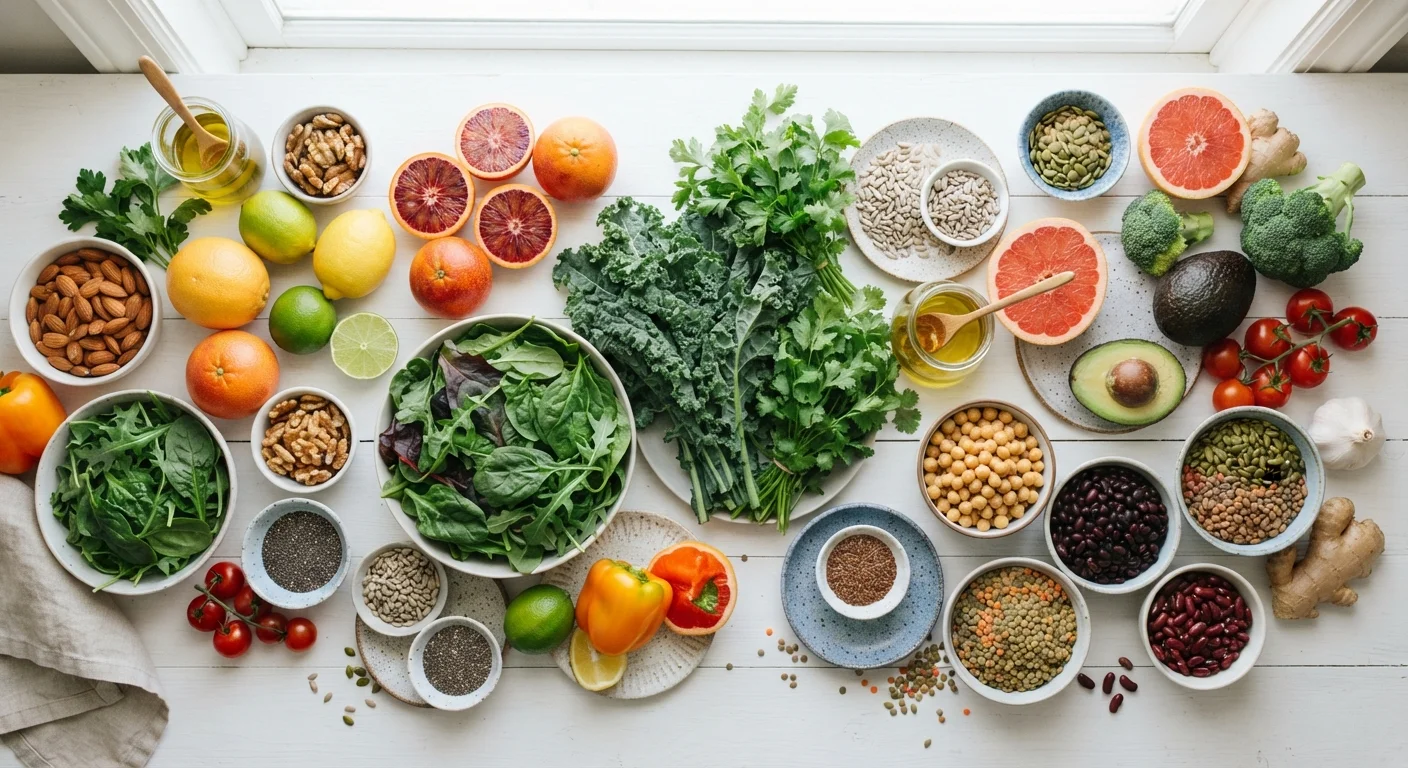
- Eat across the color spectrum. Different pigments in produce signal different phytochemicals and micronutrients. Orange foods tend to be rich in carotenoids; dark greens in folate and vitamin K; red and purple fruits in vitamin C and anthocyanins.
- Don't skip fortified foods. Many staples - breakfast cereals, plant milks, breads - are fortified with nutrients that are harder to obtain naturally, such as B12, D, and iron. Reading nutrition labels can help you identify them. For a clear breakdown, see our guide to reading nutrition labels.
- Consider your personal context. Pregnant individuals, older adults, people with restricted diets, and those with certain health conditions may have elevated needs or absorption challenges. A registered dietitian can assess your specific situation far more accurately than any general guide.
- Supplements are not a substitute for food. They can address specific, identified gaps but are best used under professional guidance rather than as insurance against a poor diet.
When building your shopping routine around nutrient density, our practical grocery guide offers a useful checklist framework.
This article is for general informational and educational purposes only. It is not a substitute for professional medical or dietary advice. If you have questions about your nutritional needs or health status, consult a qualified healthcare provider or registered dietitian.