

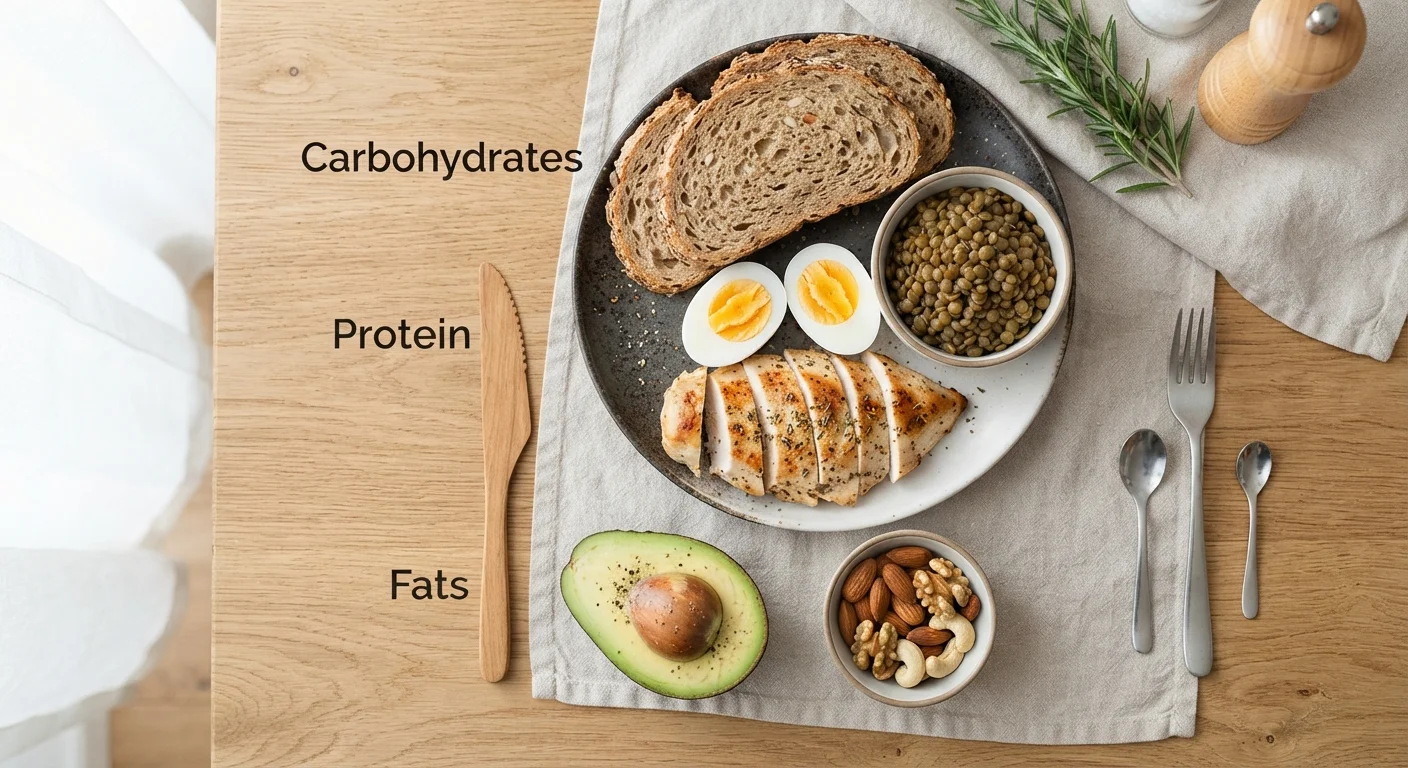
Key Takeaways
- Carbohydrates are the body's primary and most readily used energy source.
- Proteins supply amino acids essential for building and repairing tissues, including muscle.
- Fats support hormone production, brain function, and absorption of fat-soluble vitamins.
- All three macronutrients work together; eliminating any one group can disrupt overall health.
- Whole food sources of each macronutrient generally offer additional nutritional benefits over processed alternatives.
- Personal macronutrient needs vary by age, activity level, and health status - consult a professional for individualized guidance.
Macronutrients
Macronutrients are the three major categories of nutrients your body needs in relatively large amounts every day: carbohydrates, proteins, and fats. Each one supplies energy - measured in calories - and performs specific functions that keep your body working properly. Unlike vitamins and minerals, which are needed in much smaller quantities, macronutrients form the bulk of what you eat.
Each macronutrient provides a distinct caloric density: carbohydrates and proteins supply approximately 4 calories per gram, while fats supply approximately 9 calories per gram.
Why Macronutrients Are the Foundation of Your Diet
Every time you eat, you're delivering a combination of carbohydrates, proteins, and fats to your body. These three macronutrients are the raw materials your cells use to generate energy, build structures, and regulate biological processes. Unlike micronutrients such as vitamins and minerals, which support specific reactions at very small doses, macronutrients are consumed in quantities measured in grams throughout the day.
No single macronutrient is a villain or a miracle. Each evolved to meet distinct bodily needs, and a well-functioning diet draws on all three. Understanding what each one does - rather than following trends that demonize one group - gives you a more durable and evidence-grounded relationship with food.
4 kcal/g
Energy provided by carbohydrates and protein
Both carbohydrates and protein supply approximately 4 calories per gram, according to standard nutritional chemistry.
9 kcal/g
Energy provided by dietary fat
Fat is the most energy-dense macronutrient, supplying roughly 9 calories per gram - more than twice that of carbs or protein.
9
Essential amino acids humans must obtain from food
Of the 20 amino acids used in human physiology, 9 cannot be synthesized by the body and must come from dietary protein sources.
Carbohydrates: Your Body's Preferred Fuel
Carbohydrates are broken down into glucose, which cells - particularly brain cells and red blood cells - rely on as their primary energy currency. When you eat carbs, your digestive system converts them into glucose, which enters the bloodstream and is either used immediately or stored in the liver and muscles as glycogen for later use.
Not all carbohydrates behave identically. Simple carbohydrates, like sugars in candy or white bread, digest quickly and cause faster rises in blood glucose. Complex carbohydrates, found in whole grains, legumes, and vegetables, digest more slowly and come packaged with fiber, which supports digestive health and helps moderate blood sugar response.
Fiber - technically a carbohydrate - is worth special mention. The body doesn't fully digest it, but it feeds beneficial gut bacteria, promotes satiety, and is associated with healthy cholesterol levels. Good sources include oats, beans, vegetables, and fruits.
Proteins: The Body's Builders and Maintainers
Protein is made up of smaller units called amino acids, which the body uses to construct and repair virtually every tissue - from muscle and skin to enzymes and immune proteins. Of the 20 amino acids involved in human physiology, nine are classified as essential, meaning the body cannot synthesize them and must obtain them through food.
Complete protein sources - such as eggs, meat, poultry, fish, and dairy - contain all nine essential amino acids in adequate proportions. Many plant foods are lower in one or more essential amino acids, but eating a variety of plant proteins across the day (beans, lentils, soy, nuts, seeds, whole grains) makes it straightforward to meet needs without animal products.
Beyond muscle, protein is critical for producing enzymes that drive chemical reactions, antibodies that defend against pathogens, and hormones like insulin. It also contributes to satiety, which is why higher-protein meals often feel more filling.
Building a Balanced Plate Without Overthinking
Rather than counting grams of each macronutrient, many nutrition professionals suggest a simpler visual approach: aim to fill roughly half your plate with vegetables and fruit, one quarter with a protein source, and one quarter with a whole grain or starchy vegetable, adding a small amount of healthy fat in cooking or dressing. This pattern naturally provides all three macronutrients without precise tracking.
Fats: More Than Just an Energy Reserve
Dietary fat has a complicated public reputation, but the science is clear that fat is essential. It serves as a concentrated energy store, insulates and protects organs, and is the structural backbone of every cell membrane in your body. Fat is also required for absorbing fat-soluble vitamins - A, D, E, and K - which means eating vegetables with a small amount of fat actually improves how well you absorb their nutrients.
Fat type matters. Unsaturated fats - found in olive oil, avocados, nuts, and fatty fish - are broadly associated with favorable cardiovascular outcomes in research. Saturated fats, abundant in red meat and full-fat dairy, are a topic of ongoing nutritional research; current guidance generally suggests moderation. Trans fats, largely artificial and found in some processed foods, are widely considered the most problematic. For a more detailed breakdown, see our article on types of dietary fat.
Fat also plays a key role in hormone synthesis - including sex hormones and stress hormones - and in brain health, given that the brain is roughly 60% fat by dry weight.
How the Three Macronutrients Work Together
In real meals, carbohydrates, proteins, and fats rarely arrive in isolation. A bowl of lentil soup contains all three. So does a meal of grilled salmon with roasted vegetables and quinoa. This natural overlap is by design - whole foods deliver mixed macronutrients because the body is built to use them together.
For example, pairing fat with carbohydrates slows glucose absorption, moderating blood sugar response. Eating protein alongside carbs can similarly blunt the glycemic impact and extend satiety. These interactions are why dietary patterns - the overall mix of foods over time - matter more than the precise quantity of any single nutrient at any single meal.
Popular diets often emphasize one macronutrient at the expense of another, but many nutrition myths stem from oversimplifying this balance. The evidence consistently points toward variety, whole food sources, and eating patterns rather than rigid macronutrient ratios as the strongest predictor of long-term dietary quality.
This article is for general informational and educational purposes only and does not constitute medical or nutritional advice. Consult a registered dietitian or qualified healthcare professional for guidance tailored to your individual health needs.