

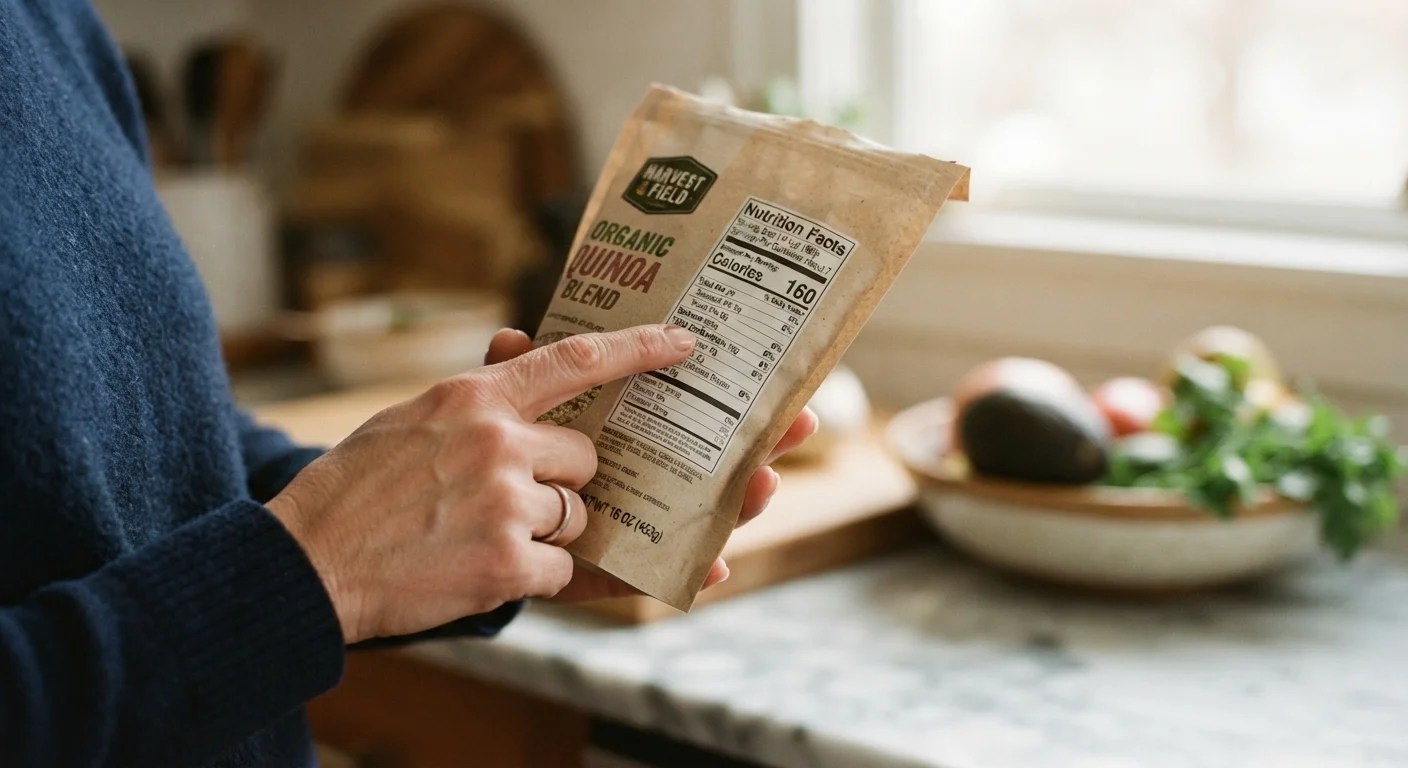
Key Takeaways
- Serving size is the first number to check - all other values on the label are based on it.
- Percent Daily Values (%DV) use a 2,000-calorie reference diet and help you quickly gauge nutrient amounts.
- Aim to limit saturated fat, sodium, and added sugars; look for more fiber, vitamins, and minerals.
- The ingredients list is ordered by weight - the first few ingredients dominate the product.
- Front-of-package claims are not always regulated the same way as the Nutrition Facts panel itself.
What you will need
Why Nutrition Labels Can Feel Confusing
The Nutrition Facts label has been a required feature of packaged food in the United States since 1994, updated most recently in 2016 by the FDA to reflect current nutritional science. Despite its familiarity, many shoppers find it confusing - not because the data is hidden, but because it's easy to focus on the wrong numbers or misread what they represent.
If you're newer to thinking about nutrition more broadly, our beginner's nutrition foundation guide is a good starting point before diving into label specifics. For those ready to apply this knowledge at the store, our grocery shopping with nutrition in mind article turns label literacy into a practical shopping checklist.
This Is General Information, Not Medical Advice
The guidance in this article is intended for general educational purposes only. Individual nutritional needs vary based on age, health status, activity level, and medical history. If you have a specific health condition or dietary concern, please consult a registered dietitian or qualified healthcare professional before making significant changes to your diet.
The steps below walk through the label in the order that makes the most interpretive sense - starting with the numbers that give all other numbers their meaning.
What you will need
Putting It All Together at the Store
Once you're comfortable reading individual panels, the real skill is comparison. When choosing between two similar products, align them on serving size first, then compare %DV for the nutrients you're tracking. A product with lower sodium or higher fiber per equivalent serving is generally a more favorable choice - without needing to calculate anything complex.
Nutrition Facts Panel
The standardized FDA-regulated section on packaging that lists calories, macronutrients, micronutrients, and %DV per serving.
Ingredients List
Lists every ingredient in descending order by weight, helping you understand what a product is primarily made of.
Magnifying Glass or Phone Camera
Useful for reading small-print labels, especially on compact packaging.
Keep in mind that fats are another area where label literacy pays off. Not all fats carry the same associations - saturated and trans fats behave differently in the body than unsaturated fats. Our guide to dietary fat types explains these distinctions clearly.
Front-of-Package Claims Can Be Misleading
Terms like 'natural,' 'light,' or 'multigrain' are not always strictly defined by regulation and can appear on products with less-than-ideal nutritional profiles. Always flip to the Nutrition Facts panel and ingredients list for the most reliable information. The FDA regulates the Nutrition Facts panel specifically, while front-label marketing language operates under different - and sometimes looser - standards.
Reading labels consistently - rather than perfectly - is the practical goal. Over time, the panel becomes a quick-reference tool rather than a puzzle, and that knowledge travels with you to every grocery trip.
This article is for general informational and educational purposes only and does not constitute medical or dietary advice. Individual nutritional needs vary. Please consult a registered dietitian or qualified healthcare professional for guidance specific to your health circumstances.