

Key Takeaways
- Consistent, small habits outperform occasional ambitious meal plans for long-term healthy eating.
- Batch cooking and strategic pantry stocking reduce daily decision fatigue around food choices.
- Prioritizing protein and fiber at each meal supports satiety without requiring strict calorie tracking.
- Convenience foods can be nutritious - the key is knowing which shortcuts don't sacrifice quality.
- Consulting a registered dietitian is the most reliable path for personalized nutrition guidance.
Why Busy Schedules and Good Nutrition Feel at Odds
Most people already know the broad strokes of eating well: more vegetables, less ultra-processed food, adequate protein, plenty of water. The gap isn't knowledge - it's execution under real-life time pressure. When a meeting runs long or the kids need homework help, reaching for something quick wins over cooking something balanced.
Research consistently shows that food environment and friction - not willpower - drive most eating decisions. The practical implication: making nutritious choices easier to access than less nutritious ones is more effective than relying on motivation. This article focuses on structural habits that reduce that daily friction, drawing on established nutrition science rather than trend-driven advice. It is intended as general health information, not a substitute for personalized guidance from a qualified healthcare professional.
Core Habits That Actually Hold Up
The following practices are grounded in widely accepted principles of nutrition and behavior science. None require an elaborate routine - they are designed to integrate into a schedule that's already full.
Anchor each meal around a protein and a fiber source before anything else.
Protein and dietary fiber are the two nutrients most consistently associated with satiety - the feeling of fullness that prevents overeating later. Building meals around these two components first reduces the likelihood of energy crashes and impulsive snacking. This approach doesn't require calorie counting or tracking apps.
Dedicate one 60-90 minute window per week to batch cooking foundational ingredients.
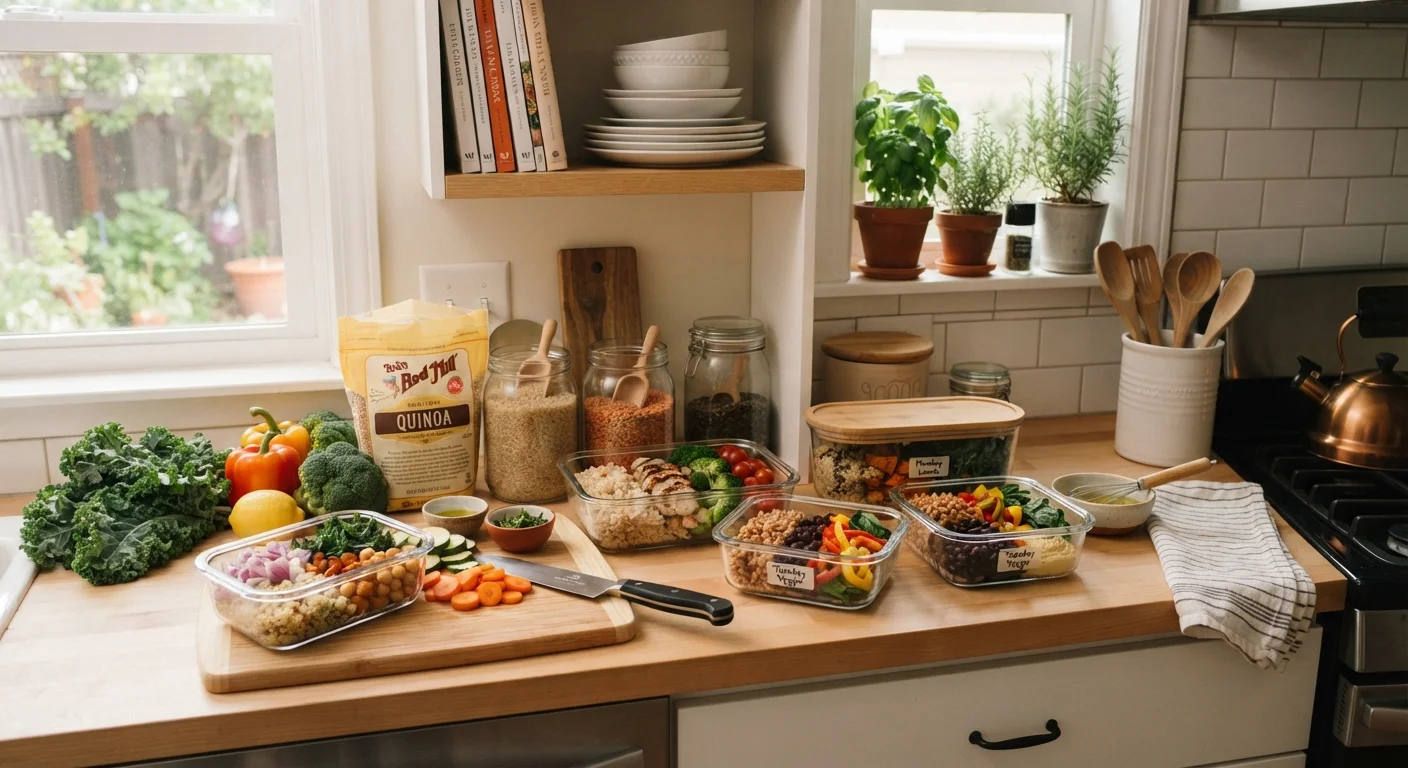
Cooking whole grains, roasting a sheet pan of vegetables, or preparing a large pot of legumes once a week creates a 'building block' inventory that makes assembling meals on weeknights fast and flexible. This strategy reduces reliance on takeout without requiring nightly cooking sessions.
Stock your pantry and freezer with nutritionally dense shelf-stable staples.
When fresh ingredients run out mid-week, a well-stocked pantry prevents a default to fast food. Shelf-stable staples like canned tomatoes, lentils, oats, nut butters, and frozen vegetables are nutritionally sound and ready when fresh options aren't available.
Plan one or two 'template meals' you can execute on autopilot.
Decision fatigue is real: the more choices you face after a long day, the less likely you are to choose well. Having two or three reliable meal templates - combinations you know by heart - removes the decision entirely and still produces a nutritionally adequate result.
Reframe breakfast as a protein opportunity rather than a convenience habit.
Many quick breakfast options are high in refined carbohydrates and low in protein, which can contribute to mid-morning hunger. Shifting breakfast toward protein-forward options supports steadier energy levels through the morning without requiring extra time.
Smart Shortcuts Worth Taking
Not every convenient food is a nutritional compromise. Frozen vegetables retain most of their nutrients because they are flash-frozen shortly after harvest. Canned legumes - rinsed to reduce sodium - deliver fiber and protein with zero prep time. Rotisserie chicken, pre-washed salad greens, and individually portioned nuts are all examples of time-saving options that don't meaningfully undercut nutritional quality.
When grocery shopping with nutrition in mind, scanning ingredient lists for added sugars and sodium in packaged foods takes seconds and pays dividends throughout the week. Pairing smart shopping habits with the batch-cooking approach described above means most weeknight meals can come together in under 15 minutes.
Reading Labels Without Getting Overwhelmed
You don't need to scrutinize every number on a nutrition facts panel. Focus on three things: added sugars, sodium, and the ingredient list length. A shorter ingredient list with recognizable items is generally a reliable shorthand for less processing. For packaged foods marketed as 'healthy,' checking these three points takes under 30 seconds.
If keeping food costs manageable is also a priority, the principles in cutting grocery costs without cutting nutrition align closely with the habits described here - buying in bulk, choosing seasonal produce, and planning ahead all serve both goals simultaneously.
Building Momentum Without Burning Out
Sustainable eating habits follow the same logic as sustainable exercise habits: consistency over intensity. A modest improvement maintained for months beats a perfect plan abandoned after two weeks. This is especially relevant for anyone who has tried restrictive approaches before - why crash diets tend to backfire is well-documented in the nutrition literature, and the answer is rarely more willpower.
Nutrition also doesn't exist in isolation. Adequate sleep, movement, and stress management all influence hunger hormones and food choices. Exploring small movement habits that add up over time and a sustainable daily self-care routine can reinforce the nutritional habits described here. What you eat also affects how much water your body needs - understanding the connection between food and hydration rounds out a practical everyday wellness picture.
This article is for general informational purposes only and does not constitute medical or nutritional advice. For guidance tailored to your individual health needs, consult a registered dietitian or qualified healthcare professional.