
Hydration and Food: The Connection Between What You Eat and How Much Water You Need

Key Takeaways
- Food typically provides 20-30% of a person's total daily fluid intake.
- Fruits and vegetables are among the highest water-content foods, often exceeding 90% water by weight.
- High-sodium and high-protein diets generally increase your body's need for water.
- Soups, stews, smoothies, and dairy foods all count toward daily fluid balance.
- Individual hydration needs vary based on diet, activity level, climate, and health status.
- No single daily water target applies to everyone - dietary patterns are an important variable.
Food-Sourced Hydration
Food-sourced hydration refers to the water your body absorbs through the foods you eat, not just the beverages you drink. Many fruits, vegetables, soups, and dairy products contain high percentages of water by weight, contributing meaningfully to your total daily fluid intake. Nutrition science recognizes food as a significant - and often overlooked - source of everyday hydration.
Research published by nutrition scientists estimates that food contributes roughly 20-30% of total daily water intake for most adults, though this varies considerably by dietary pattern.
Why Hydration Is About More Than What You Drink
Most conversations about hydration focus exclusively on beverages - how many glasses of water you drink each day, whether coffee counts, or whether sports drinks are necessary. But fluid balance is also shaped by what you eat. Nutrition science has long recognized that a meaningful portion of the body's daily water needs can be met through food alone.
For readers already thinking about foundational nutrition principles, understanding the hydration-diet connection adds another practical layer to everyday food choices. The foods on your plate don't just deliver energy, protein, and micronutrients - they also deliver water.
This matters because it means your hydration needs aren't fixed. They shift based on your dietary pattern, activity level, environment, and health status. A person eating a diet rich in fruits, vegetables, and soups has different baseline drinking needs than someone relying heavily on dry, processed, or high-sodium foods.
~20-30%
Daily water intake from food
Nutrition researchers estimate that food accounts for roughly 20-30% of total daily fluid intake for most adults following typical Western diets.
>90%
Water content in cucumber by weight
Cucumbers, along with lettuce, celery, and watermelon, are among the highest water-content foods, according to USDA food composition data.
~3.7 L / 2.7 L
Total daily water intake (men / women)
The National Academies of Sciences suggests adequate total daily water intake (from all sources) of about 3.7 litres for men and 2.7 litres for women, on average.
Foods That Contribute Most to Fluid Intake
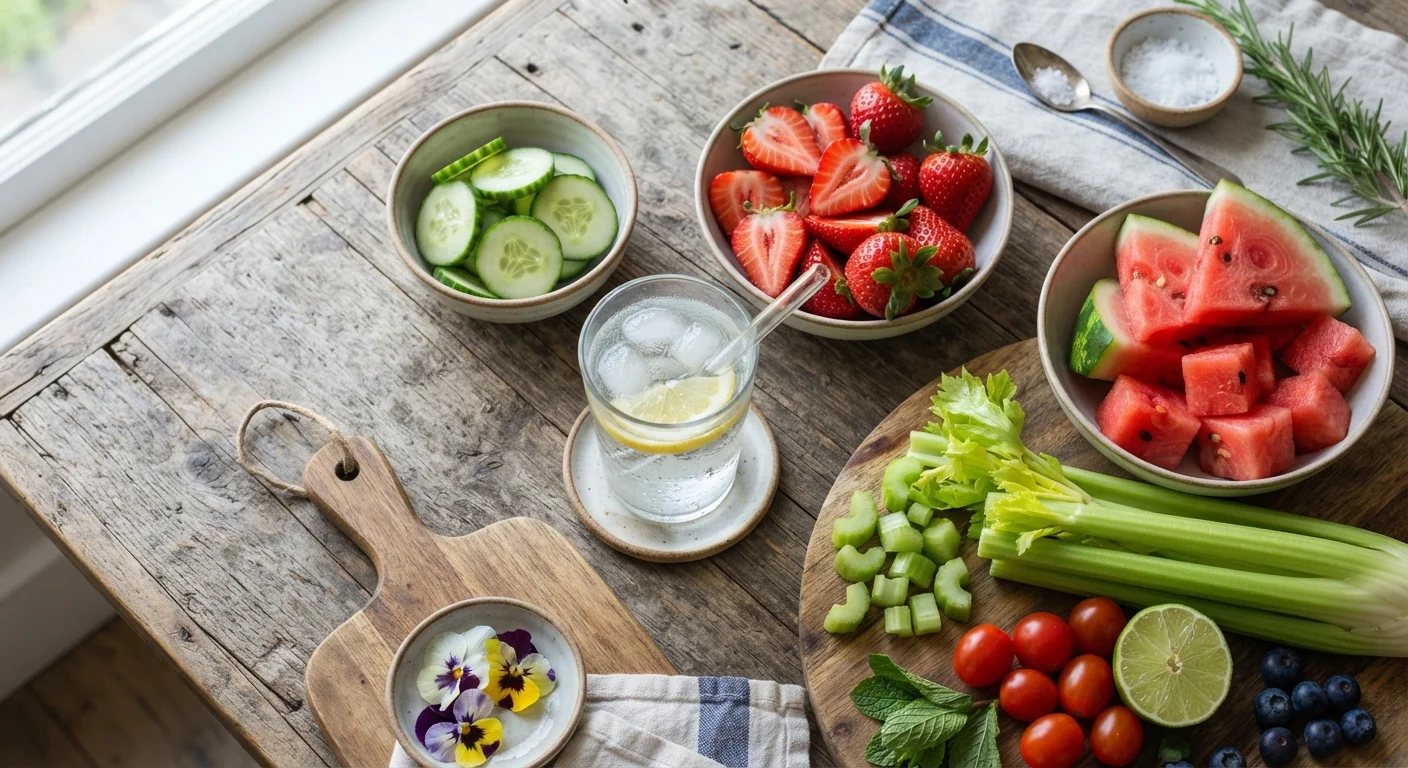
Water content varies enormously across food categories. At the high end, many raw fruits and vegetables are composed of more than 90% water by weight. Cucumbers, lettuce, celery, tomatoes, watermelon, zucchini, and strawberries are well-known examples. These foods hydrate as you eat them - a large salad or a bowl of watermelon contributes genuine fluid to your daily balance.
Cooked foods shift somewhat, since heat can reduce water content, but soups, stews, and porridges remain high-water options. Dairy products like plain yogurt and milk also contribute meaningfully. Even whole grains, legumes, and cooked vegetables - while lower in water content than raw produce - contain more water than dry, shelf-stable snack foods.
At the other end of the spectrum, highly processed snacks, crackers, dried fruits, and cured meats are low in water and often high in sodium, which can actually increase the body's fluid requirements.
How Your Diet Affects How Much Water You Need
Dietary composition influences hydration needs in several direct ways. Sodium intake is one of the most significant. Sodium regulates fluid balance in the body - higher intake prompts the kidneys to excrete more water to maintain equilibrium, which means higher-sodium diets generally increase your need for fluid replenishment. Processed and packaged foods are among the largest contributors to sodium intake in the US diet.
Protein intake also plays a role. Metabolizing protein produces nitrogen-containing waste products that the kidneys must dilute and excrete. This is why people following higher-protein diets may find their thirst increases, and why adequate fluid intake is considered especially important in that context.
Fiber intake works differently - dietary fiber absorbs water in the digestive tract, which supports healthy digestion and regular bowel function. Increasing fiber without also increasing fluid intake can sometimes cause digestive discomfort, which is why nutrition guidance often pairs fiber and fluid recommendations together.
For practical support on building balanced eating habits that account for these patterns, see our article on eating well on a busy schedule.
Use Food as a Hydration Strategy
If you find it difficult to drink enough water throughout the day, lean on high-water foods as a practical supplement. Starting meals with a broth-based soup or including raw fruits and vegetables as snacks can meaningfully increase your fluid intake without requiring more beverages. This approach works especially well for people who struggle with the habit of regular water drinking.
Putting It Into Practice
You don't need to calculate water percentages in every meal. A more practical approach is to let food quality serve as a proxy. Diets built around whole fruits, vegetables, legumes, and minimally processed foods tend to deliver more dietary water naturally, while also keeping sodium in a more moderate range - both of which support fluid balance.
Urine colour remains the most commonly cited everyday indicator of hydration status: pale yellow is generally considered adequate, while consistently dark yellow may suggest a need for more fluid. That said, certain foods (like beets), supplements (like B vitamins), and medical conditions can affect urine colour, so it's not a definitive measure for everyone.
If you have specific health conditions - including kidney disease, heart conditions, or diabetes - your hydration needs may differ significantly from general guidelines. In those cases, guidance from a qualified healthcare provider is essential rather than optional.
This article is for general informational and educational purposes only and is not a substitute for professional medical or dietary advice. Always consult a qualified healthcare provider about your individual health needs.