

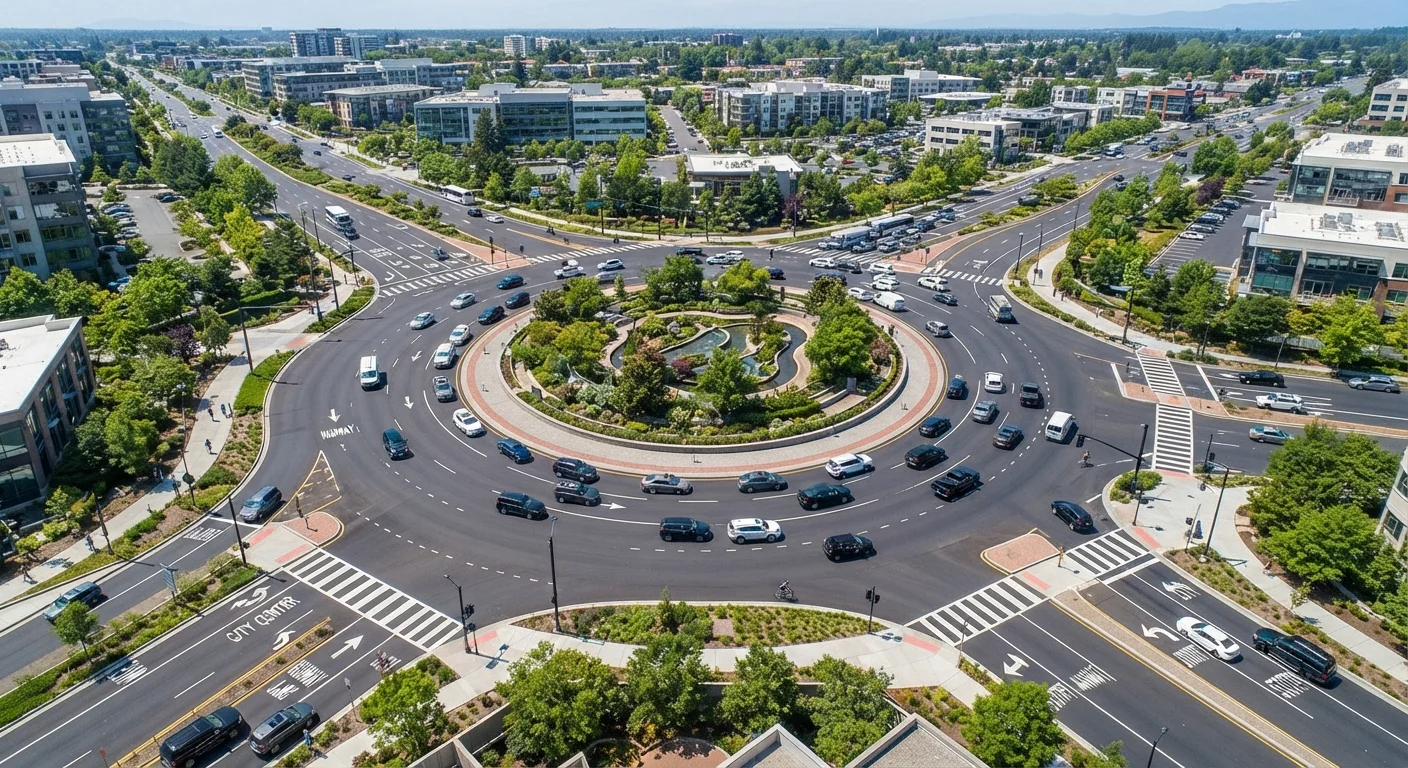
Key Takeaways
- Yield to circulating traffic before entering a roundabout; never assume right of way.
- Signal your exit clearly and early so other road users can anticipate your movement.
- Check mirrors, signal, and check your blind spot before every lane change.
- Match the speed of merging traffic rather than forcing other drivers to brake.
- Choosing the correct lane before a junction reduces dangerous last-minute manoeuvres.
- Consistent signalling protects you and the drivers around you in all three scenarios.
What you will need
Why These Three Manoeuvres Trip Drivers Up
Roundabouts, merges, and lane changes account for a disproportionate share of non-fatal collisions on US roads, according to traffic safety research. What they share is a demand for simultaneous tasks: reading road signs, monitoring surrounding vehicles, communicating your intentions, and executing a physical manoeuvre - all within seconds. Most errors are not caused by recklessness but by gaps in understanding the correct sequence of actions.
Drivers who learned in one state may encounter different road layouts when travelling, and roundabouts in particular are far less common in the US than in the UK or continental Europe, leaving many drivers uncertain of the yield rules. Meanwhile, the rise in multi-lane expressways means merge and lane-change skills are needed more often than ever.
For broader context on how different road environments change the decisions you need to make, see our guide to motorway versus urban driving. If you're newer to independent driving, road safety fundamentals for new drivers is also worth reviewing before working through the steps below.
Plan Your Route Before You Drive
Knowing whether a junction ahead requires a left exit or a right exit lets you choose the correct lane well in advance. A quick route review before you set off - using a map or navigation app - dramatically reduces the need for rushed last-minute manoeuvres. This habit is especially useful in unfamiliar towns or city centres.
The steps that follow treat each manoeuvre in sequence. Work through them in order, then practise each one deliberately in low-traffic conditions before applying them in busier environments.
What you will need
Equipment and Preparation
Safe execution of roundabouts, merges, and lane changes depends less on special equipment and more on ensuring your vehicle's basic systems are functioning and set up correctly before you drive.
Properly adjusted mirrors
Minimise blind spots so you can safely monitor surrounding traffic before lane changes and merges.
Working turn signals
Communicate your intentions to other drivers at roundabouts, during merges, and for lane changes.
Road atlas or sat-nav
Helps you identify upcoming junctions and roundabouts in advance so you can position yourself correctly.
Mirror adjustment is the easiest preparation step to overlook. Sit in your normal driving position, then set each mirror so you can see the widest possible arc of the lane beside you with minimal overlap into the cabin. Even perfectly adjusted mirrors leave a blind spot, which is why the physical shoulder check in Step 6 remains essential.
Don't Cut Across Lane Markings
At multi-lane roundabouts, straddling or cutting across marked lanes is illegal in most US states and a common cause of side-swipe collisions. Stay within your chosen lane throughout the roundabout arc, even if your intended exit feels closer from an adjacent lane. If you miss your exit, continue around rather than cutting across traffic.
Step-by-Step: Roundabouts, Merges, and Lane Changes
Follow the steps below in sequence. Each builds on the last, and the mirror-signal-blind spot habit introduced in the lane-change steps applies equally to roundabout exits and merges. Consistency in the sequence is what makes it reliable under pressure.
Approach the roundabout in the correct lane
Read the road signs and lane markings well before the roundabout, ideally as soon as they appear. As a general rule: use the left lane for exits up to and including the first left turn, the right lane for exits beyond the 12 o'clock position (straight through or right), and follow any additional markings for multi-lane roundabouts. Reduce your speed smoothly - do not brake sharply.
Yield to circulating traffic and enter safely
At the give-way line, pause and observe vehicles already inside the roundabout. They have priority. Wait for a gap that gives you enough time to accelerate to roundabout speed without forcing anyone to brake. Do not edge forward or creep into the path of circulating traffic. When the gap is clear, join smoothly and maintain your lane.
Signal and exit the roundabout correctly
As you pass the exit before the one you want, activate your left signal to indicate you are leaving. This tells drivers waiting at the entry that you are exiting, allowing them to enter safely. Check your nearside mirror for cyclists or motorcyclists who may be tracking the outer edge of the roundabout, then exit in a smooth, controlled arc.
Position yourself correctly before a highway merge
When approaching a merge onto a highway or expressway, use the full length of the acceleration lane. The acceleration lane exists specifically to let you build speed before joining flowing traffic. Identify a gap in the target lane early - do not wait until the last few feet of the ramp. Begin matching the speed of highway traffic while still in the acceleration lane.
Merge smoothly by matching traffic speed
Once you have matched the speed of the lane you are joining and identified a suitable gap, activate your signal and move into the gap in one fluid motion. Avoid stopping in the acceleration lane unless absolutely forced to - a stationary vehicle in a merge zone creates a serious hazard. Highway drivers in the target lane should avoid unnecessary braking if safe to do so; smooth cooperative merging benefits everyone.
Use the mirror-signal-blind spot check for lane changes
Before changing lanes anywhere - urban streets, highways, or multi-lane roundabouts - follow this sequence every time: (1) Check your centre mirror to understand overall traffic flow. (2) Check the door mirror on the side you intend to move toward. (3) Activate your signal. (4) Physically turn your head to check the blind spot beside and slightly behind your vehicle. (5) If clear, move across gradually and cancel your signal once settled in the new lane.
Time your lane changes early and avoid last-minute moves
Last-minute lane changes - darting across two lanes because a junction appeared sooner than expected - are among the most preventable causes of side-swipe collisions. If you miss a turn, proceed to the next safe opportunity to redirect. The extra minutes are always worth more than the risk of a rushed manoeuvre. Planning your route in advance, as noted in the prerequisites, is the most effective prevention.
Blind Spots Are Real and Dangerous
No mirror system eliminates every blind spot. Before any lane change or merge, always physically turn your head to check the zone alongside and slightly behind your vehicle. This brief shoulder check is the final safety layer that mirrors alone cannot provide. Skipping it - even once - significantly raises collision risk.
For a deeper look at the anticipatory habits that underpin all three of these skills, our article on defensive driving techniques used by professionals explains how experienced drivers read traffic before a hazard develops. New or recently licensed drivers may also find value in safe driving habits that new licence holders often skip.